A motorcycle, a highway, and the long shadow of US counter-terrorism in northwest Syria
A second US assassination strike in Idlib in weeks signals a counter-terrorism posture that has not waited for the new Syria's new politics to stabilise.
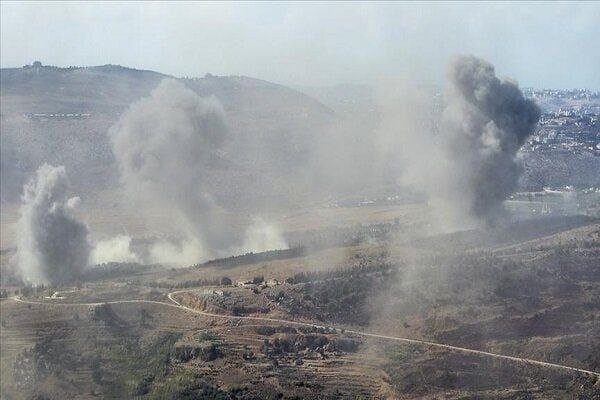
On the evening of 19 June 2026, multiple drone strikes hit a motorcycle carrying two individuals on the Mashhad Ruhin–Deir Hassan highway in the Idlib countryside of northwest Syria, according to initial reporting from two separate open-source intelligence channels monitoring the area. The strikes — attributed by both channels to the U.S.-led international coalition — are the latest in what has become a near-weekly pattern of targeted killings along the same road network, carried out without on-the-record acknowledgement from either the Pentagon or US Central Command.
What makes the 19 June strike worth a second look is not the strike itself but the road it happened on. Mashhad Ruhin sits on a corridor that, for more than four years, has served as a kind of transit lane for foreign fighters, smugglers, and Syrian opposition-linked operatives moving between the Turkish border and the rear of Idlib province. The coalition has hit that corridor so many times that local observers have begun to track it as a fixed route rather than a chain of incidents.
A counter-terrorism routine that does not adapt to the politics on the ground
Since the December 2024 fall of the Assad regime, Syria's transitional government has been negotiating, in public and in private, what shape its security relationship with Washington will take. The transitional authorities want a phased drawdown of US forces, a halt to coalition air operations over Syrian sovereign airspace, and a role for Damascus in vetting the targets the coalition still hits. None of those asks has been publicly answered. The 19 June strike is the signal that, in the absence of a written arrangement, business continues as usual — which in practice means a quiet US-led kill chain that reports to no Syrian institution.
Reporting from the two channels monitoring the strike gives essentially the same picture: a motorcycle, two individuals, a highway, no casualties named, no group claimed responsibility by the victims, and no coalition press release. That absence of paperwork is itself the story. By Washington's own legal framework, the post-2017 AUMF authorising operations against al-Qaeda and associated forces does not automatically extend to every armed group operating in Idlib — many of which are Turkish-backed, Syrian-led, and have no operational relationship with al-Qaeda central. The strikes therefore rest either on a classified designation list that has not been updated for the post-Assad security landscape, or on the looser claim that any armed man on a motorcycle in Idlib is a target of opportunity. Neither reading is reassuring.
The local read
For Syrian opposition commentators, the strikes are framed straightforwardly as assassinations on Syrian soil without Damascus's consent — and, in the post-Assad environment, that framing carries more weight than it did a year ago. For Syrian Kurdish outlets, the strikes are read through the older lens of US behaviour in the northeast: a partner that strikes when convenient and withholds protection when politically expensive.
The regional read is harder to summarise. Ankara, which retains observation posts across Idlib as part of the 2020 ceasefire architecture, has historically objected to coalition strikes that kill Turkish-aligned Syrian opposition figures — a complaint that has grown louder since 2024 as Turkey's own security posture in northern Syria has hardened. Tehran has used the strikes as evidence in its broader argument that US military presence in the Arab east is unbounded and unaccountable. Riyadh and Abu Dhabi have stayed publicly silent, as they have on every Syria question since the transition began.
What the structural picture actually shows
Step back from the rhetoric and the picture is duller but more useful. The coalition's Idlib strike cadence did not change in December 2024. It did not change in 2025 when Syria's transitional authorities took over in Damascus. It has not changed in the first half of 2026. The default operating tempo of a US counter-terrorism task force, once set, has a half-life measured in years, not months. New governments come and go; the targeting cycle persists.
This is the larger pattern the 19 June strike sits inside: a US counter-terrorism architecture built for a Syria that no longer exists, still being applied to a Syria that does. The strikes are individually defensible under a 2017 framework written for a different war. Cumulatively, they amount to a continuing exercise of extraterritorial lethal authority that the new Syrian state has not consented to and that no Syrian court has reviewed. Until that gap is closed — by a status-of-forces arrangement, by a target-sharing protocol with Damascus, or by a public congressional reauthorisation — every motorcycle on the Mashhad Ruhin highway is a reminder that the old rules are still running on autopilot.
What remains genuinely uncertain is who the two individuals killed on the evening of 19 June actually were. The channels that reported the strike did not name them, did not cite a claims-of-responsibility statement from any group, and did not publish the kind of geolocated photographic evidence that would let independent analysts confirm identities. The sources do not specify whether the targets were Syrian, foreign, or a mix; whether they were affiliated with a specific faction; or whether any civilians were hurt. Until that picture fills in, the strike is best read as one more entry in a longer log — and the longer log is the news.
This publication framed the strike around the gap between Syria's transitional politics and a US counter-terrorism posture that has not been re-baselined for the post-Assad environment. The open-source intelligence feeds reported the strike; the structural read is Monexus's own.
Wire provenance
This editorial synthesis draws on the following public wire/social posts:
- https://t.me/wfwitness
- https://t.me/rnintel
- https://t.me/rnintel