US intelligence warns Netanyahu likely to undercut Trump's Iran deal push
A Washington Post report carries an unusual warning from US intelligence: that Prime Minister Netanyahu is likely to take steps that complicate the Trump administration's effort to lock in a lasting arrangement with Tehran.
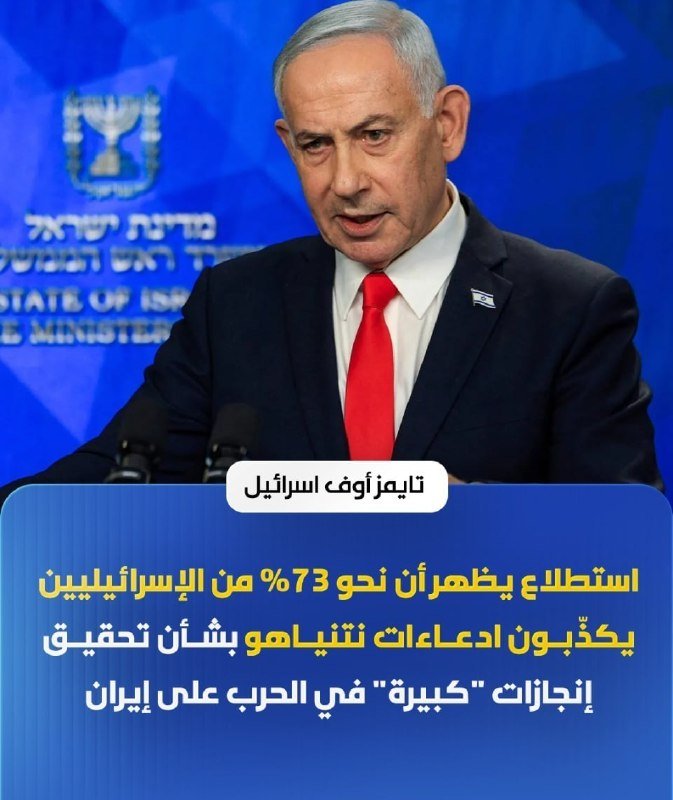
The Washington Post reported on 19 June 2026 that US intelligence agencies have warned the Trump administration that Israeli Prime Minister Benjamin Netanyahu is likely to take steps that will undermine President Donald Trump's effort to reach a lasting peace deal with Iran. The assessment, as paraphrased by channels tracking the report, frames Netanyahu as a probable spoiler inside a diplomacy track the White House is trying to close. The warning is the kind of inter-agency product that US administrations often keep private; its surfacing in a major American newspaper puts a public marker on a tension that has otherwise played out behind closed doors.
The immediate context is a White House push for an arrangement with Tehran that Trump himself has presented as historic. In a separate development on the same day, Iran's Fars News reported that Trump, in an interview with NBC on Friday, claimed he had spoken by phone with an Israeli official about Lebanon — a conversation the US president described in terms that suggested active US brokering on a second regional front. The convergence of the two stories is striking: even as the White House tries to lock in the Iran track, it is also managing a parallel Lebanon conversation that risks cross-pressuring the same Israeli government the intelligence community now sees as an obstacle.
What the assessment says, and what it does not
The Post report, as relayed by the wire channels that pulled from it, is narrow in its claim. It does not accuse Netanyahu of plotting to sabotage the deal in any formal sense. It says US intelligence agencies have warned the Trump administration that the Israeli prime minister is likely to take steps that will complicate the diplomatic effort. That phrasing — probabilistic, behavioural, about steps rather than intentions — is the standard register of a US intelligence assessment. It is closer to a forecast than to an indictment, and it leaves the White House room to act on the warning without publicly picking a fight with Jerusalem.
Iranian state media read the report through its own lens. Tasnim, the English-language service of Iran's IRGC-linked news apparatus, summarised the Post story as evidence that Netanyahu is "seeking to weaken the understanding between Iran and America." The framing is not new — Iranian outlets have long cast Netanyahu as the principal opponent of any US-Iran accommodation — but the timing gives the claim more weight. An American newspaper, citing American spooks, is now putting on the record something Tehran has been saying for years.
Why the warning is unusual
US intelligence agencies are not in the business of publicly flagging allied leaders as likely deal-breakers. The relationship between the American intelligence community and the office of the Israeli prime minister is a long, intimate one, shaped by joint operations, shared technology, and decades of institutional habit. A formal warning that the head of an allied government is likely to act against stated US policy is, in that context, a costly signal. The Trump administration is now on notice that if the Iran track collapses in the coming weeks, the default Washington explanation will not be Iranian intransigence alone.
The wire channels that carried the story — BRICS News, Insider Paper, Open Source Intel, the Ukrainian-operational channel that often translates Western reporting, and Tasnim — disagree on framing but agree on the underlying fact. The convergence across ideologically distant aggregators is itself a tell: the Post report is the load-bearing element, and the rest is interpretation.
What Netanyahu's government might actually do
The sources do not specify the steps. Reading from what Israeli governments have done in analogous moments — during the Obama-era Joint Comprehensive Plan of Action fight, during earlier Iran-track debates in the 2000s — the catalogue of plausible moves is well known: public statements rejecting the deal's terms, accelerated settlement or military activity that changes facts on the ground, lobbying of US congressional allies to impose new conditions, and the political-leverage option of calling early elections to harden a coalition position. None of these are named in the Post report. All of them are within the standard repertoire of an Israeli prime minister who has built a political career on opposing exactly the kind of arrangement the White House is now pursuing.
A second-order risk sits underneath. If the Trump team concludes that Jerusalem will not be a quiet partner, it has two basic choices: it can slow-walk the deal to give Israel room to align, or it can press ahead on a timeline that effectively compels Israeli buy-in. The intelligence warning, by being public, makes the second option harder to execute quietly and the first option harder to defend politically.
The Lebanon thread
The Lebanon phone call, as Fars described it, is the second front. Trump's claim of a direct conversation with an Israeli counterpart about Lebanon suggests that the administration is also trying to manage the northern Israel–Hezbollah line in parallel with the Iran nuclear file. In the standard Israeli security framing, the two files are not separable: a deal with Tehran that does not constrain Hezbollah's reconstitution is, from Jerusalem's perspective, not a deal at all. The intelligence assessment, on this reading, is the formal version of a complaint Israeli officials have been making in private for months.
The risk for the administration is that the two tracks pull against each other. A Lebanon arrangement that soothes the north could slow the Iran file; an Iran breakthrough that sidelines Israeli concerns could blow up the Lebanon track. Trump's reported instinct — direct presidential phone calls, public claims of progress, personal diplomacy on multiple fronts at once — is precisely the style that works best when allies are aligned and worst when they are not.
What this tells us about the structure of the moment
A hegemonic transition does not always look like one. Sometimes it looks like a Washington Post report quoting American intelligence officials telling an American president that a foreign head of government he is trying to accommodate will probably act against him. The substance of the warning is bilateral, but the underlying pattern is the slow erosion of a postwar settlement in which the United States sets the terms and its allies line up behind them. The 2026 Iran file is the cleanest test of whether that settlement still holds in the Middle East, and the answer that is being delivered, in cautious bureaucratic language, is that it does not — not automatically, not without cost.
For Iran, the report is validation of a position Tehran has held since the JCPOA era: that the principal obstacle to a US-Iran deal is not the regime in Tehran but the politics in Washington and Jerusalem. For Israel, the report is an exposure of a tension it has managed for years. For the Trump administration, it is a warning shot across its own negotiating position, fired by the people whose job it is to read the map.
What remains uncertain
The Post report, as carried in the wire, is short on operational detail. It does not name the intelligence agencies that produced the assessment, does not identify the specific Israeli steps the warning anticipates, and does not say how the Trump administration has responded. It is also worth noting that the framing — Netanyahu as probable spoiler — is the framing of an American source about an Israeli actor; the Israeli government's account of the same period is not in the available reporting, and the gap matters. The Lebanon phone call, similarly, is described from the US side via an Iranian wire; the Israeli and Lebanese accounts of what was actually discussed are not in the record available to this publication. The underlying diplomatic picture is moving fast enough that the next 72 hours will probably do more to clarify the trajectory than any single day's reporting can.
Desk note: Monexus ran the Post report through four ideologically distinct wire channels (BRICS News, Insider Paper, Open Source Intel, a Ukrainian-operational feed) and the Iranian Tasnim service; all five carried the same load-bearing facts with different framing, which is the strongest available corroboration short of reading the Post article directly. The Lebanon phone call rests on Fars News's read of an NBC interview and should be treated as single-source until NBC transcripts are verified independently.
Wire provenance
This editorial synthesis draws on the following public wire/social posts:
- https://t.me/insiderpaper/
- https://t.me/bricsnews/
- https://t.me/osintlive/
- https://t.me/operativnoZSU/
- https://t.me/tasnimnews_en/
- https://t.me/FarsNewsInt/
Follow the event.
These dated source records provide context. They do not retrospectively verify this archive article.
Separate what the nuclear watchdog reported from what it could not determine after the June 2025 strikes.