After the Strait: What the US–Iran Pact Actually Resolves, and What It Leaves Open
Six tankers moved through Hormuz within hours of the US–Iran memorandum; the price of crude moved too, in the same direction. The harder questions sit beneath the waterline.
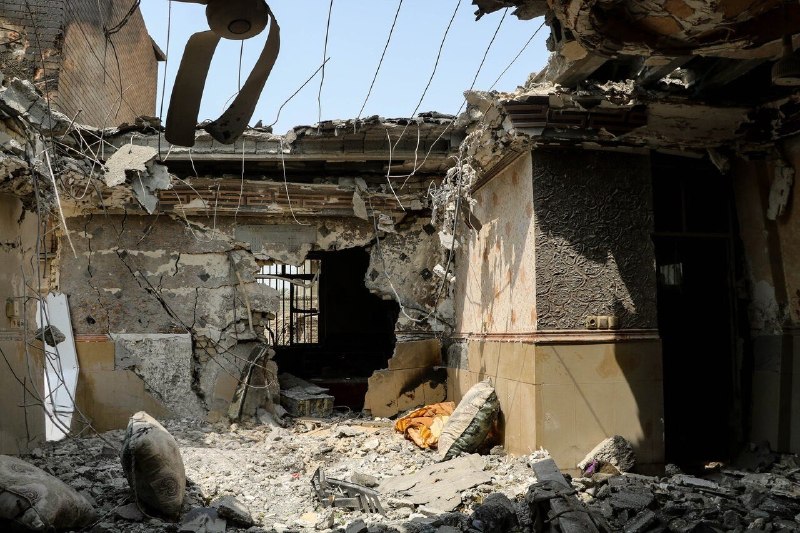
On 18 June 2026, the day after Washington and Tehran signed a memorandum of understanding halting weeks of open hostilities, at least six oil tankers moved through the Strait of Hormuz and resumed their run toward Asian and European buyers. The US military declared the maritime blockade lifted the same day, per Cointelegraph's wire of the announcement; Reuters reported that crude prices fell as supply began to move again through the chokepoint that handles roughly a fifth of the world's seaborne oil. Within twelve hours the wartime premium embedded in Brent had begun to unwind — a fast, mechanical read of the new arrangement, and an incomplete one. Oil's retreat tells you what the deal was priced for. It does not tell you what the deal is.
What the memorandum appears to resolve is the most visible problem: free movement of commercial shipping through a 21-mile-wide corridor that, at its narrowest navigable point, is closer to two. What it does not yet resolve is the question that produced the war in the first place — the terms under which Iran's energy exports, and the revenues those exports generate, re-enter the global financial system. The pattern is familiar: a kinetic phase ends, a transit phase opens, and the harder economic and legal phase begins. The first two are easy to film. The third is where the agreement will be tested.
The deal on the water, and the price it cleared
The basic shape of the arrangement, as it emerged on 18 June 2026, is narrow. The United States agreed to lift its maritime blockade of the Strait. Iran agreed to halt the actions — fast-attack craft seizures, mine-laying, anti-ship missile emplacements along its coast — that had, by mid-June, made the corridor effectively uninsurable for commercial tonnage. Neither side, in the early readouts, has committed in writing to a longer political settlement. The memorandum is operational, not strategic.
The market read it that way. Reuters reported on 19 June 2026 that oil prices fell as supply moved through the Strait after the pact, and the Nikkei Asia wire of 18 June noted that at least six tankers had cleared the strait in the hours after the deal was signed — a meaningful first signal that underwriters would re-enter and that demurrage bills, which had run into the tens of millions of dollars per vessel per week, would start to roll back. The lift in the blockade announced by the US military, per Cointelegraph, removed the legal pretext for interception of any commercial tonnage moving through the corridor under standard flag-state rules.
That is real. It is also the easy half. The difficult question is what "halted" means in the text the two governments initialed, and what it does not mean. There is no public readout, as of this writing, of a binding timeline for Iranian crude to return to documented export markets, no charter for unfreezing Iranian-held funds abroad, and no clarity on whether the sanctions architecture of the previous decade is, in any meaningful sense, suspended, narrowed, or simply not enforced while the memorandum holds.
The counter-narrative, including the one from inside the United States
The domestic US political reading, in the hours after the deal, is sharply more skeptical than the market's. US Senator Chris Murphy, in remarks circulated by PressTV on 19 June 2026, argued that the United States is "in a fundamentally worse position after the war with Iran and now has to make multimillion-dollar payments to Iran to reopen the Strait of Hormuz." PressTV is Iranian state media, and the framing — payments, concessions, a worsened strategic posture — is the line Tehran's information apparatus wants to amplify. The quote itself, however, is from a sitting US senator, and the underlying complaint is one a reader does not have to share PressTV's editorial line to find substantive: that the United States fought a war, won the kinetic phase, and is now structuring a payment — directly or through unfreezing of assets, or through a relaxation of enforcement — to the same government it was bombing a week earlier.
There is a more charitable read of the same facts. A blockade that has to be enforced ship-by-ship is expensive; the cost of keeping a carrier strike group on station in the Gulf, the cost of re-routing allied tonnage, the cost to global commodity prices, all of those were ticking higher each day the memorandum was delayed. A negotiated end to the maritime phase of the war, on terms that look like a payment to Iran, can equally be read as a payment to global oil consumers and to the US Treasury, which would otherwise have absorbed the fiscal consequences of a longer closure. The two readings are not mutually exclusive. Which one a reader finds more persuasive depends on whether they think the United States had a viable path to a more complete victory in the timeframe available, and on whether they trust the operational durability of whatever was signed.
There is also the Iranian counter-narrative, which has been consistent since the war began: that the Strait is an international waterway, that the US blockade was an act of war, and that the memorandum restores something close to the legal status quo ante. The Iranian framing of the deal, in MFA briefings and in commentary carried by state outlets, is that Iran conceded nothing of substance, since the actions it has agreed to suspend were responses to an illegal siege in the first place. This publication's view is that the legal question of who violated which norm first is real but unresolvable in the abstract; what matters is which side now has the easier path to escalation, and which has the harder one. On the current text, both sides retain options.
The structural frame: chokepoints, dollars, and the unwritten part of every oil deal
The Strait of Hormuz is, in the most literal sense, infrastructure. It is the kind of infrastructure — like the Suez Canal, like the Malacca Strait, like the Taiwan Strait — that the global economy has built itself around without ever quite pricing the political risk of its closure. A memorandum that reopens it does not change that underlying geometry. It only changes whether the geometry is, this month, in dispute.
The deeper architecture is financial. Iran's oil exports during the years of maximum-pressure enforcement were routed through a patchwork of mechanisms — ship-to-ship transfers in the Gulf of Oman, refineries in third countries that accepted discounted crude, a Chinese demand-side willingness to absorb volume that no other major buyer would touch. That infrastructure did not disappear during the war. It thinned, and it was repriced at wartime premia, but the counterparties and the methods are largely intact. Reopening the Strait does not, by itself, route Iranian crude back through the formal dollar-cleared system. It only removes the maritime interdiction layer.
This is the part of the deal that will define whether it holds. If Iranian volumes re-enter the market through the same opaque channels that operated under sanctions, the memorandum stabilises shipping without changing the underlying sanctions regime, and Washington can claim it has opened the Strait while still denying Tehran the dollar revenue that would meaningfully rebuild state capacity. If, on the other hand, the memorandum is a backdoor to broader sanctions relief — formal or informal — then the strategic picture is closer to what Senator Murphy described: a wartime cost paid to an adversary to end a war the United States could have continued to wage, but at a price the US political system was no longer willing to pay. The available reporting does not yet resolve which of those the text says. The reporting does establish that the market is pricing the first interpretation, and that the US domestic political conversation is anchored on the second.
Precedent: what past Hormuz episodes did and did not settle
The Strait has been at the centre of crisis before, and the history is instructive. The 1980s tanker war phase ended in a reflagging arrangement, not a treaty. The 2012–2015 nuclear-deal era produced a formal multilateral agreement that resolved, for a time, the financial and enrichment questions, but did not produce a maritime security architecture durable enough to survive the deal's collapse. The 2019–2020 incidents, including the seizure of commercial tankers and the downing of a US drone, were managed through ad hoc deconfliction channels, not through any written framework. In none of those episodes did the resolution of a single incident produce a comprehensive settlement. In each, the underlying tensions reasserted themselves within a window measured in months to a few years.
The 2026 memorandum, on the early read, fits that pattern. It is an operational document, not a political one. It addresses the symptom most visible to global markets — the inability of commercial tonnage to transit — and leaves the systemic questions of Iranian export capacity, sanctions enforcement, and regional security architecture for a later round, or for none. That is not a critique of the negotiators. It is, plausibly, all that was achievable in the time available and with the political mandates on both sides. It is, however, a reason for caution in declaring the crisis over. The historical base rate for Hormuz crisis-management agreements is that they hold until the next trigger event, and that the underlying disagreement resurfaces within a year or two.
Stakes: who wins, who loses, and what to watch next
The clearest immediate winners are oil buyers in Asia, who during the war phase paid wartime premia and faced allocation risk; insurance underwriters, who can resume writing Strait transit cover at non-wartime rates; and the Iranian government, which retains revenue from any exports that move through the reopened corridor. The clearest immediate losers are US domestic political constituencies that read the deal as capitulation, and Gulf states — notably the UAE and Saudi Arabia — whose own export infrastructure was partially displaced during the crisis and whose long-term position depends on a more durable regional security framework than a maritime memorandum provides.
The medium-term stakes are larger. If the memorandum is the first step toward a broader arrangement that brings Iranian crude back into formal markets and unfreezes Iranian-held funds, it is a structural event in global energy — comparable in scale to the 2015 nuclear deal, with consequences for OPEC+ cohesion, for Russian revenue, and for the political leverage of Gulf producers. If it is, instead, a tactical pause that leaves the sanctions architecture and the underlying dispute intact, it is a relief rally for oil markets and a deferred crisis. The next thirty to ninety days will tell, on three indicators: whether Iranian crude begins to move through formal channels at scale, whether any sanctions enforcement actions are visibly relaxed, and whether the rate of maritime incidents in the Gulf returns to a baseline. The first two are observable in shipping and financial data. The third will be visible in the Lloyd's List incident reports and in the operational tempo of regional navies.
What remains genuinely uncertain, as of 19 June 2026, is the text of the memorandum itself. The reporting available in the wire window describes its effects — tankers moving, oil falling, the blockade lifted — but does not yet publish the document or a substantive summary of its terms beyond the operational layer. That gap is not unusual in the immediate aftermath of a deal signed under wartime conditions. It is, however, the gap that the next round of reporting will have to close, and until it is closed, both the bullish oil-market read and the Murphy-style critique are operating on incomplete information.
Desk note: The wire's framing on 18–19 June has tilted toward the kinetic-to-market transition — blockade lifted, tankers moving, prices falling. Monexus keeps that read at the top of the article and pushes harder on the second-order question, which is the financial architecture the memorandum does and does not change. PressTV appears here as a source for a sitting US senator's quoted remarks, with the outlet's editorial line flagged in the body.
— Monexus Staff Writer
Wire provenance
This editorial synthesis draws on the following public wire/social posts:
- http://reut.rs/4esoNrK
- https://t.me/NikkeiAsia
- https://t.me/cointelegraph
- https://t.me/presstv
- https://t.me/CryptoBriefing