Switzerland off: Why the U.S.–Iran talks hit pause over Lebanon
A planned U.S.–Iran meeting in Switzerland collapsed within hours on 19 June 2026 after Tehran conditioned any resumption on a halt to hostilities in Lebanon, leaving JD Vance's diplomatic debut tangled in the region's unfinished war.
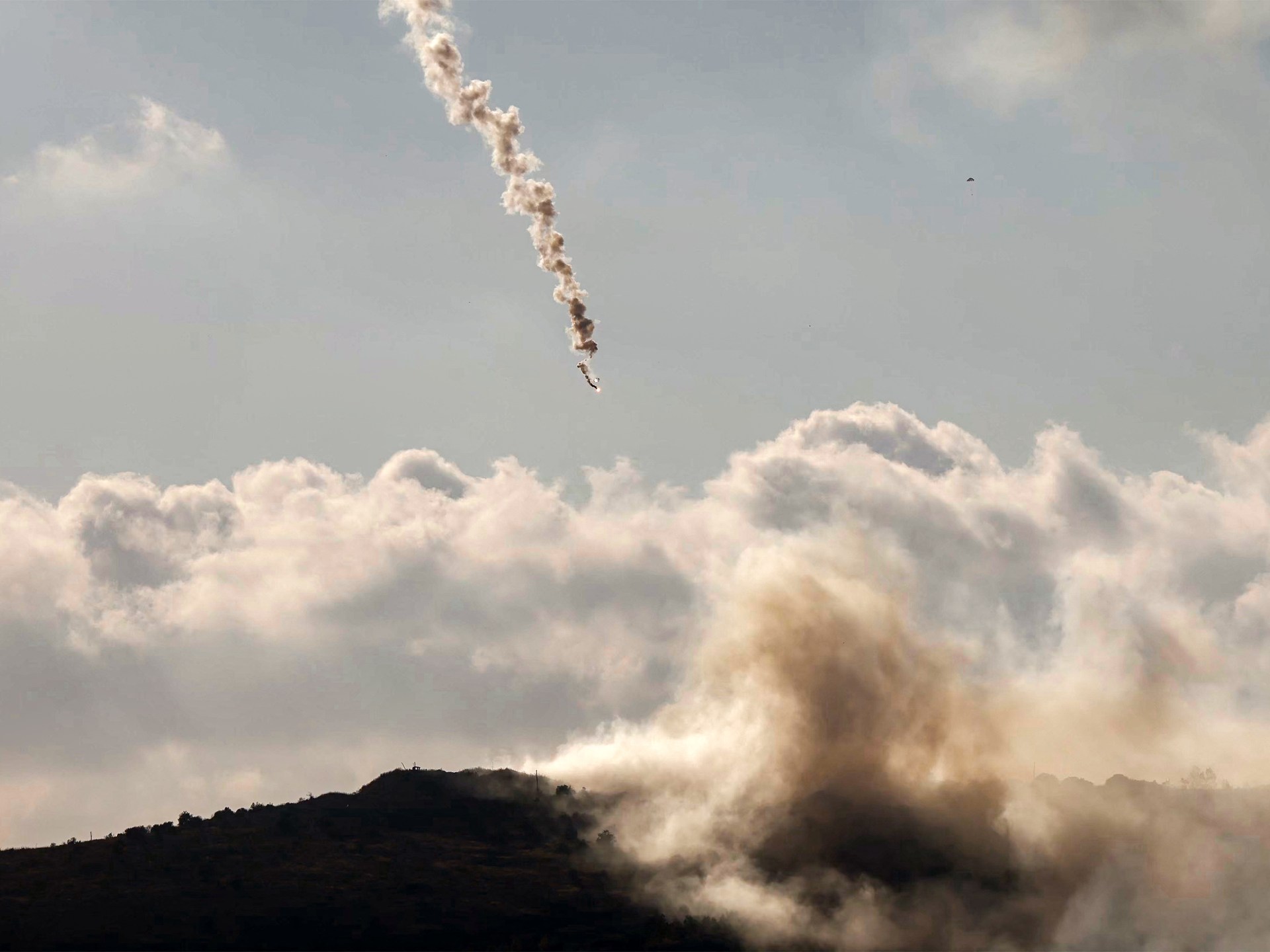
By 09:01 UTC on 19 June 2026, the diplomatic script that Washington had spent the previous week staging had already come apart. Reuters reported that the U.S.–Iran talks scheduled for that day in Switzerland had been postponed, and that Vice President JD Vance had dropped plans to travel. Within five minutes, a second wire — this one circulating via the Telegram channel Clash Report — added the substantive reason: Tehran had asked for assurances that hostilities in Lebanon would end, in line with what it called an existing agreement, before Iranian negotiators would sit back down with the American side. NPR's morning news brief at 08:51 UTC framed the episode as the latest in a string of false starts, noting that the Vice President had become "the face" of U.S. negotiations with Iran.
The sequence matters because it converts a procedural postponement into a substantive impasse. A cancelled flight is a logistical story; a precondition around a third country is a story about whose leverage actually holds inside the room.
What was supposed to happen in Switzerland
The Swiss venue had been positioned, in the days leading up to 19 June, as the most concrete diplomatic step between Washington and Tehran since the collapse of the previous round of indirect talks. The American negotiating face for this phase was Vice President JD Vance, whose elevation onto the Iran file — confirmed in NPR's morning brief at 08:51 UTC — signalled an unusually direct White House investment in the channel. Vance's planned travel was the visible evidence of that investment; its cancellation is the first hard data point.
Two facts from the 19 June reporting anchor the picture. First, Reuters, as carried by the Telegram channel WFWitness at 09:01 UTC, put the postponement on the record and confirmed that the Vice President would not be travelling. Second, Clash Report, citing Iran, at 08:56 UTC set out Tehran's condition: the Lebanese front has to go quiet first.
That second point is the load-bearing one. The U.S. delegation arrived at the negotiating table with one set of subjects — nuclear constraints, sanctions sequencing, regional de-escalation writ large. Iran arrived with a narrower, harder demand: that the file be opened with the Lebanon question, not closed with it.
Why Lebanon is the real negotiating table
Lebanon is not a sidebar to the U.S.–Iran track; in this round, it is the track. The fighting between Israel and Hezbollah has been running in parallel with nuclear-file diplomacy for the better part of two years, and each time a senior American delegation has tried to put the Iranian nuclear portfolio on a separate sheet of paper, Tehran has insisted on stapling the Lebanese file to the back of it.
The Telegram-sourced Iranian position on 19 June — that hostilities must cease "in line with the existing agreement" — implies that Tehran believes a working understanding is already on paper, and that the burden of compliance belongs to the other signatories and guarantors, not to Iran. That is a non-trivial framing. It moves the dispute from "will the parties agree" to "who is in breach." It also gives Washington a face-saving answer should it choose to use one: if hostilities are framed as a violation of an existing compact, an American push to enforce that compact can be sold domestically as rule-enforcement, not as concession.
The counter-narrative, the one that will be heard in Israel and in much of the U.S. Congress, is that the Iranian demand is a tactical device to extract a Hezbollah ceasefire without trading any nuclear ground. On that read, Tehran is leveraging an Israeli security concern to reopen a file the West had wanted to ring-fence. Both readings are present in the 19 June reporting; neither has been resolved by it.
What Vance's elevation tells us about Washington's posture
NPR's brief flagged the political read most clearly: JD Vance has become the face of U.S. negotiations with Iran. That is not a personnel detail. It is a signal about how the White House wants the file to be sold to a domestic audience that is skeptical of another Iran deal and to a regional audience that wants to know whether the United States is willing to spend political capital on this channel.
Vance brings two things to the role that a State Department lead negotiator would not. First, the implicit weight of the presidency — a Vice President who cancels a trip cancels the Oval Office's plan B for the day. Second, a political brand that allows the administration to argue, if it wants to, that no one can accuse this team of being soft on Tehran. Both attributes are useful only if a deal is, in fact, being pursued. The 19 June postponement is the first public test of whether the White House is willing to pay the domestic price of sitting in the same room with the Iranian delegation when the Israeli-Lebanese track is live and unresolved.
The structural frame is plain enough without recourse to academic vocabulary. A hegemonic patron is trying to run two diplomatic clocks at once — a nuclear clock and a regional-de-escalation clock — while the counter-party insists the clocks cannot be separated. The patron's instinct is to disaggregate; the counter-party's leverage depends on aggregation. The 19 June collapse is what that friction looks like when the patron has flown a Vice President across the Atlantic to make disaggregation stick.
The plausible alternative read
The dominant Western wire framing is that Tehran is raising preconditions to stall. A second reading deserves equal airtime: that Tehran is being sincere about the sequencing. The argument runs as follows. Iran's negotiating leverage in any nuclear file is bounded by what its regional posture can sustain. If the United States cannot deliver an Israeli commitment to halt hostilities in Lebanon, the Iranian delegation has nothing to sell to its domestic audience when it returns from Switzerland. A bad deal in this environment is worse than no deal, because it would be read in Tehran as another Western-imposed freeze rather than a reciprocal arrangement.
That second reading does not require any particular sympathy for Tehran's regional posture; it requires only accepting that an Iranian negotiator who signs a nuclear instrument while the Lebanese front remains hot is signing his own political death warrant at home. If that structural fact is real — and the 19 June postponement is the strongest signal yet that Tehran is acting as if it is — then the U.S. delegation is negotiating not with one counterpart but with two: the Iranian state and Iranian domestic viability.
Whether the dominant framing or the alternative holds is genuinely uncertain on the 19 June evidence. The reporting tells us what Tehran asked for. It does not tell us how badly Tehran wanted the meeting, or what concession Washington was prepared to offer in exchange for Tehran dropping the Lebanon condition.
Stakes over the next 72 hours
Three concrete forward-looking questions follow from the postponement.
First, whether the Israeli-Lebanese track produces a verifiable de-escalation event — a halt to strikes, a prisoner exchange, an agreed framework — before any new Swiss date is set. If it does, the Swiss channel reopens on something closer to U.S. terms. If it does not, the postponement stretches into an open-ended suspension and the Vice President's elevation onto the file begins to look like a sunk cost rather than a lever.
Second, whether Washington widens the channel. The 19 June reporting describes a bilateral postponement. It does not yet describe the involvement of Omani, Qatari, or Swiss mediators who have historically served as the conveyor belt for indirect U.S.–Iran contacts. If those back-channels activate visibly in the next 48 hours, the postponement is tactical. If they do not, the postponement is structural.
Third, what JD Vance does in public between now and any rescheduled meeting. A Vice President who has been publicly named as the face of the channel cannot afford a long silence. Either he is deployed to make the case domestically that the pause is strategic patience, or he is redeployed away from the file and the channel is quietly downgraded. The choice will tell observers more about White House intent than any further communique from Geneva or Bern.
What remains genuinely uncertain
The 19 June sources agree on three things: the meeting did not happen, Vance did not travel, and Iran wants the Lebanese file addressed before talks resume. They do not agree — because they cannot — on what the U.S. side offered in return, on whether a rescheduled date is already pencilled in, or on whether the Israeli government was consulted on, or warned about, the Lebanese condition Tehran has now put on the table. NPR's brief flags the Vice President's prominence without quantifying the diplomatic distance still to be covered. Reuters, as relayed by WFWitness, confirms the postponement without naming a substitute venue. Clash Report's Iranian-sourced framing of an "existing agreement" on Lebanon is asserted, not independently corroborated in this thread. A reader using these sources alone cannot verify which side, if either, is closer to a deal — only that a deal that was supposed to happen today is no longer happening today.
That uncertainty is the story. The diplomatic channel is real, it has a named American face for the first time in this administration, and it has just hit its first visible wall. Whether the wall is a speed bump or a terminus is the question the next 72 hours will answer.
Desk note: Monexus leads on the Lebanese precondition rather than the cancelled flight, because the precondition is the substantive diplomatic fact and the cancellation is its symptom. Iranian-sourced material is cited with attribution rather than as stand-alone fact, in line with the publication's standing treatment of state-aligned outlets.
Wire provenance
This editorial synthesis draws on the following public wire/social posts:
- https://t.me/wfwitness
- https://t.me/ClashReport
Follow the event.
These dated source records provide context. They do not retrospectively verify this archive article.
Separate what the nuclear watchdog reported from what it could not determine after the June 2025 strikes.