Vance's Geneva trip pauses as US-Iran talks slip into a holding pattern
Washington said on 19 June 2026 that logistics for talks with Tehran 'have never been simple or predictable,' even as Japanese executives warned supply chains are unlikely to snap back to pre-conflict norms.
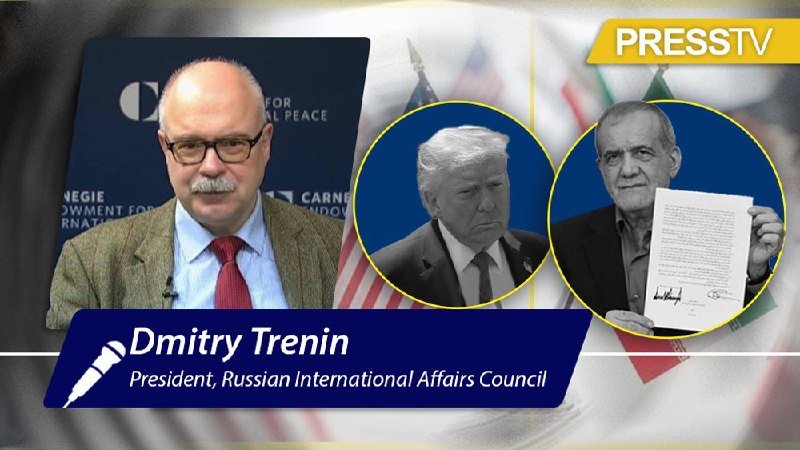
The US-Iran diplomatic track, marketed for weeks as imminent, slipped on 19 June 2026 into something closer to suspended animation. A planned Switzerland trip by Vice-President JD Vance was delayed, the White House acknowledged that plans for US-Iran talks had not been finalised, and an internal read of the situation — that "logistics of the talks with Iran 'have never been simple or predictable'" — confirmed that the calendar is no longer driving the policy. The slippage came without a public re-negotiation of any of the underlying positions Tehran and Washington have staked out, which is the part that should worry planners in Tokyo, Geneva and the Gulf most: nothing has changed except the venue list.
What is moving is not the dispute but the choreography around it. The deferral, sourced by Polymarket to a White House statement and corroborated in reporting carried by The Epoch Times, is the kind of procedural stutter that markets learn to read after a few cycles of Middle East deal-making. The substantive dispute — over nuclear capacity, sanctions sequencing, regional armed clients and the future security architecture of the Strait of Hormuz — has not been resolved by the delay; it has merely been re-scheduled. The risk is that an indefinite postponement hardens the gap between what each side says it can accept.
Logistics, not policy
The White House's framing on 19 June was deliberately narrow. Asked about the Vance trip, officials said plans for US-Iran talks had not been finalised and pointed to the persistent unpredictability of the channel. There was no announced breakdown, no walk-out, no public ultimatum. The diplomatic equivalent of "hold my calls" — administratively real, politically reversible.
The Polymarket dispatch at 02:18 UTC noted only the cancellation of the Switzerland leg and the lack of a confirmed venue. The Epoch Times wire at 11:03 UTC added the contextual line that logistics "have never been simple or predictable," attributed to the White House. Read together, the two items describe a process the administration is choosing to keep close rather than one it is preparing to walk away from.
That distinction matters. Coverage that treats any postponement in this dossier as a collapse misreads how previous rounds — including the 2015 framework negotiations and the indirect talks of 2021-22 — were run. Both tracks saw windows close and reopen with little public explanation, often because intermediaries in Muscat, Doha or Geneva needed time to manage the optics on each side.
Corporate Japan reads the calendar differently
If Washington can live with delay, Corporate Japan increasingly says it cannot. Nikkei Asia reporting dated 05:01 UTC on 19 June captured the verdict of Japanese supply-chain executives: the disruption set off by the conflict period is "unlikely to ease quickly and may never fully return to pre-conflict norms." That language — "new normal" — is the vocabulary of an industrial base that has stopped expecting a clean snap-back.
Japanese exposure to the Gulf shipping lanes and to Strait of Hormuz transit is older and more concentrated than the headline figures suggest. Refiners, petrochemical complexes and the long downstream chain into electronics and automotive parts have spent the past decade building redundancy in case the lanes tighten. The executives quoted in the Nikkei dispatch are now telling counterparties that the redundancy is no longer a contingency — it is the operating model. Inventory policy, dual-sourcing, nearshoring and tanker routing decisions are being made on the assumption that the cost premium for resilience is permanent.
This is the part of the story that does not show up in US wire framing. In Washington, the question is whether a deal can be cut. In Tokyo, the question is whether a deal — once cut — can restore what the planners had before. The Nikkei reporting suggests the answer is no. Japanese executives are explicitly hedging against an outcome in which negotiations eventually succeed but the structural pressures on shipping, insurance and through-route pricing do not unwind.
What the silence on substance means
The procedural stutter is itself a story about the gap between the two sides. A working channel usually protects its timetable even when the substantive gap is wide: principals fly, intermediaries shuttle, communiqués are drafted in advance. When a schedule slips with the gap still open, it is usually because one side judges that the cost of being seen at the table now exceeds the cost of waiting.
The sources in the public thread do not say which side is leaning into the delay. That is the first thing a serious reader should flag. The Epoch Times line — "logistics have never been simple or predictable" — is a White House framing, not an agreed characterisation. Iranian state media, which would normally be cited as the counterweight, is not represented in the available inputs. Absent that, the most defensible read is agnostic: the channel is paused, neither side has admitted it is breaking, and each is letting the other absorb the diplomatic cost of the latest non-meeting.
Stakes, and what to watch next
The near-term stakes are concrete and measurable. A diplomatic track that drifts from June into late summer raises the probability that a separate event — an incident in the Strait, a sanctions-designation cycle, a domestic political pivot in either capital — does the work the negotiators are not currently doing. That is the standard failure mode of stalled Middle East diplomacy: the channel does not collapse; it gets overtaken.
For Corporate Japan, the calculation is already being written into capex plans. If supply-chain executives are correct that the new cost premium is structural, the next eighteen months will see capital move toward redundancy even as headline rhetoric in Washington suggests an eventual return to a "normal" that the underlying freight data no longer supports. Politicians will be able to claim a deal; treasurers will price as if the deal did not change much.
The honest position is that no one outside the small group running the channel knows whether the next announcement will be a new venue, a re-formatted agenda or a quiet withdrawal. The Polymarket-flagged Vance delay and the Epoch Times-carried White House line tell the same story — the calendar is no longer driving the file. Until a venue reappears with principals attached, the better read of the facts is that the talks are paused, not broken, and that the surrounding economies are already re-pricing for the pause.
Monexus framed this against the procedural signal rather than the substance gap. Wire coverage is likely to lead on whether a "deal is in trouble"; the supply-chain data captured in the Japanese press suggests the more durable story is what a deal — if and when one lands — will and will not be able to restore.
What we verified / what we could not
Verified: the 19 June 2026 delay of the Vance Switzerland trip (Polymarket wire, 02:18 UTC); the White House characterisation that talks have not been finalised and that logistics "have never been simple or predictable" (Epoch Times wire, 11:03 UTC); the Nikkei Asia reporting that Japanese executives now treat supply-chain disruption as a structural "new normal" rather than a temporary shock (Nikkei Asia, 05:01 UTC).
Not verified from the available sources: the specific date and venue of any rescheduled talks; the identity of any third-party intermediary currently active in the channel; the precise content of the Iranian negotiating position as of 19 June; any named Japanese executive on the record beyond the framing carried in the Nikkei summary; any Iranian-state-media response in the same window.
What remains contested: whether the pause reflects a US preference for delay, an Iranian preference for delay, or a genuine logistical jam. The available wire does not let us adjudicate this. We have therefore reported the delay as procedural and the gap between the two sides as substantive, without assigning motive.
Wire provenance
This editorial synthesis draws on the following public wire/social posts:
- https://t.me/s/NikkeiAsia
- https://t.me/s/nikkeiasia
- https://x.com/polymarket/status/