"Putin is weakening": What Zelensky's latest signal reveals about the war's next chapter
In a single morning of interviews, Ukraine's president sketched a paradox: a weakened Kremlin doubling down on bombing, even as Kyiv signals readiness to talk. The frame says more about the war's trajectory than any battlefield update.
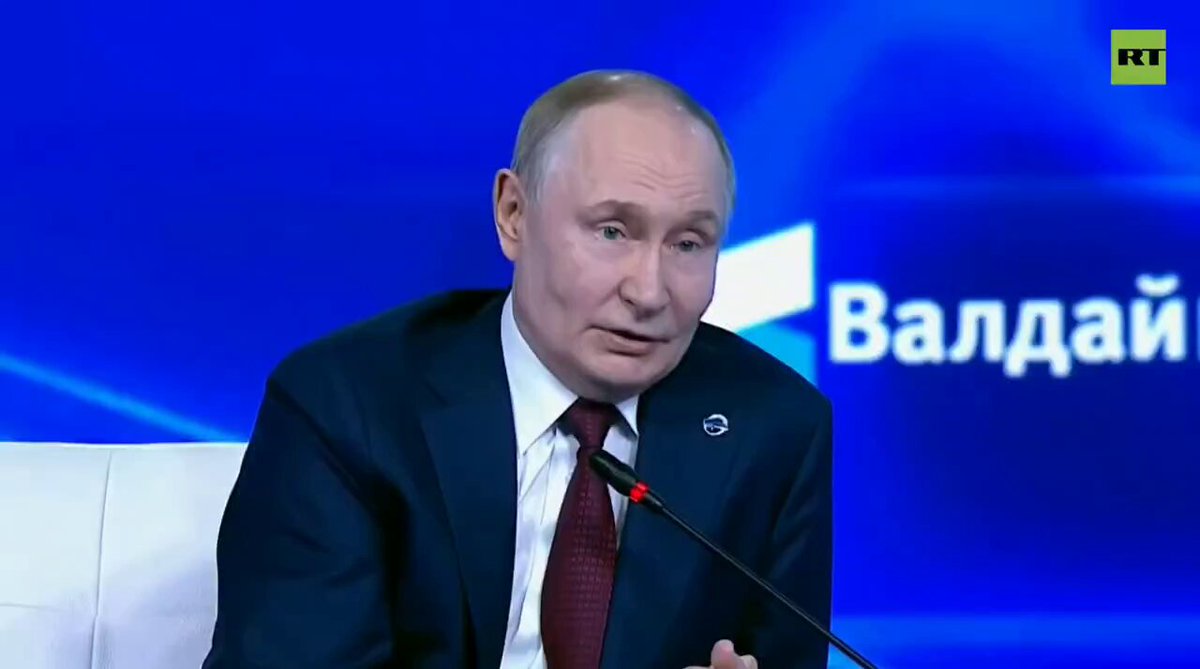
In the space of four hours on the morning of 19 June 2026, Volodymyr Zelensky offered two framings of Vladimir Putin that, taken together, amount to the most precise read yet of where this war is going. The first, delivered to TSN at 06:14 UTC, identified the Russian leader's core fear as the reason fighting continues. The second, told to Operativno ZSU at 05:45 UTC and amplified by Andriy Tsaplienko's coverage at 05:36 UTC, was blunter still: "Putin wants everything to burn in our country, and he is a madman" — yet Ukraine, Zelensky insisted, remains ready to negotiate. The third beat, carried by Tsaplienko, carried the strategic punchline: because Putin is weakening, the strikes on Ukraine may intensify.
Three interviews, one morning, one coherent thesis. A cornered Kremlin is not a Kremlin preparing to negotiate; it is a Kremlin preparing to burn what it cannot hold. Ukraine is betting that the world will read the difference before the next round of bombardment makes the distinction academic.
The reading: weakening at the top, escalating at the front
The framing Zelensky laid out is internally consistent. A leader whose position is eroding — by his own account, and by the evident logic of the talks underway — has every incentive to accelerate the destruction of what he cannot keep. The strikes, in this reading, are not a sign of strength but of compressed time. Each salvo is a claim on a future Kyiv cannot quietly accept, and a pressure point on Western publics whose patience is finite.
This is the read that matters for anyone outside Ukraine trying to make sense of the nightly barrage pattern. The conventional Western instinct — that more bombing means more Russian capability, that escalation equals confidence — is exactly backwards here. The signal travels the other direction. Strikes intensify when the centre believes its hold is shortening.
That is also why Kyiv's negotiating posture, on the face of it, looks perverse. A country being bombed harder than at any point in the war is publicly signalling readiness to talk to the man doing the bombing. The contradiction resolves once you accept Zelensky's premise: that the war's end will be negotiated, not won in the field, and that the worst possible moment to enter talks is the one when Russian weakness has not yet translated into Western leverage.
The counter-reading: signal, or rope for Moscow?
The framing is not without risk, and it is worth naming the alternative read in its strongest form. Critics in Kyiv and in European capitals will argue that Zelensky is doing Moscow's work for it — putting "weakness" and "madness" into the same sentence gives the Kremlin a permission structure for any escalation. If Putin is both weakening and a madman, the West's plausible response is to pre-emptively accommodate him, on the logic that a cornered animal is dangerous.
That reading is not frivolous. It tracks with how a war-weary European public might process the language, and it tracks with how an American administration focused on transaction costs might price the next round of sanctions. It is also the read that Russian state media will pick up and amplify: a Ukrainian president openly describing his counterpart as unhinged is a gift to anyone arguing that the war is unwinnable.
The reason the dominant framing holds, however, is that Zelensky is not speaking to Moscow. He is speaking to three other audiences at once: Kyiv's partners, who need to understand the timeline they are funding; Ukraine's own public, which has to be prepared for talks whose optics will be ugly; and the domestic Russian audience whose information environment is the one variable Putin cannot fully control. Calling a leader a madman who wants everything to burn is not diplomatic language — it is a frame designed to make any eventual deal legible as containment, not appeasement.
The structural pattern: wars end on the loser's clock
What the day's interviews reveal, more than any tactical claim, is a structural fact about how protracted wars close. The decisive phase does not belong to the side advancing fastest. It belongs to the side whose internal erosion most constrains its options. Vietnam, Algiers, Kabul in 2021, the Soviet withdrawal from Afghanistan in 1989 — in each case the war's end was shaped less by battlefield outcomes than by what the dominant power's leadership could sustain at home.
This war is now visibly in that phase. The pattern of intensified bombardment is the signature, not the cause. When a state's leadership believes its hold on the narrative is shortening, its actions at the front tend to harden, not soften. The bombing tells the world — and the home audience — that the alternative to negotiation is endless destruction, which is supposed to make negotiation look like relief.
The trap, for Ukraine and its partners, is that this logic works. It worked in Vietnam; it worked in Afghanistan. A Western public presented with the choice between an ugly deal now and an open-ended commitment later will, given enough time, take the deal. The question Zelensky's framing answers is whether the deals are made on Kyiv's terms or on Moscow's — and the answer, in his telling, depends on whether partners understand that "weakening" is a clock, not a comfort.
The precedent: what "readiness to negotiate" has actually meant
Ukraine is not the first Kyiv government to publicly signal readiness to negotiate with a leadership it has publicly called a madman. The Minsk-era framing was structurally similar: public condemnation combined with a kept-open diplomatic channel, on the theory that talks serve the weaker side by capping the stronger side's escalation. Minsk failed in the end because the diplomatic channel became a substitute for the deterrent posture, not a complement to it.
The structural lesson from Minsk is the one Zelensky's team is plainly trying to draw on. Negotiations from weakness invite exploitation; negotiations from accumulated leverage can work. The accumulated leverage, in 2026, is real: a defence industrial base producing faster than at any point since 2022, partners locked in to multi-year financing arrangements, and a Russian economy visibly constrained by the cost of sustaining the war at current intensity. The leverage is not infinite, and it is not guaranteed to compound. That is the implicit message of the day's interviews.
The stakes: what the next ninety days decide
Three things are being decided in real time, and the morning's interviews touch each of them.
The first is the negotiation track itself. Zelensky's "we are ready" is a public marker of where the diplomatic process is, even if the substance of the talks remains opaque. The marker matters because it tells European and American counterparts that the costs of staying engaged should be priced against an eventual deal, not against an indefinite war.
The second is the tempo of strikes. The Tsaplienko line — that weakening invites intensification, not relief — is the working assumption inside Kyiv's decision-making. If the assumption is right, the next several weeks will bring bombardment patterns designed to shape Western publics ahead of any deal announcement. If the assumption is wrong, the same period will see something approaching the strategic effect Zelensky's team wants to claim.
The third is the domestic Russian trajectory. Calling Putin a madman who wants everything to burn is, on the record, a frame designed to break through to a Russian audience that has been told the war is a contained operation. Whether that frame survives contact with the Russian information environment is the variable no Western analyst can price. What is known is that the cost of sustaining the war at current intensity is rising faster than the economy can absorb it — and that combination is the precondition for the kind of internal erosion that has, historically, ended wars the battlefield could not.
The honest assessment is that the day's interviews do not resolve any of these. They sharpen the frame. A weakening Kremlin, in Zelensky's reading, is not a Kremlin preparing to settle; it is a Kremlin preparing to set the terms of settlement through destruction. The next round of talks, when it comes, will be judged against that frame — and the Western publics who underwrite Ukraine's defence will, in the end, decide whether to read the strikes as Moscow's negotiating leverage or as Moscow's last argument.
How Monexus framed this: the wire packages of 19 June carried three separate Zelensky interviews as discrete items. This piece reads them as a single strategic signal — a deliberate sequence, not a coincidence of scheduling — and treats the "weakening / intensifying" paradox as the operative frame for the war's next phase, rather than as headline material to be reprised.
Wire provenance
This editorial synthesis draws on the following public wire/social posts:
- https://t.me/TSN_ua
- https://t.me/operativnoZSU
- https://t.me/Tsaplienko
- https://en.wikipedia.org/wiki/Volodymyr_Zelensky
- https://en.wikipedia.org/wiki/Russo-Ukrainian_War
- https://en.wikipedia.org/wiki/Minsk_agreements
- https://en.wikipedia.org/wiki/Soviet%E2%80%93Afghan_War
- https://en.wikipedia.org/wiki/2021_Kabul_airlift
Follow the event.
These dated source records provide context. They do not retrospectively verify this archive article.
A dated voting record is evidence of one decision. Use the original UN record before turning it into an alignment label.
Visual explainer · historical vote of 2022-03-02 →- https://t.me/TSN_ua
- https://t.me/operativnoZSU
- https://t.me/Tsaplienko
- https://en.wikipedia.org/wiki/Volodymyr_Zelensky
- https://en.wikipedia.org/wiki/Russo-Ukrainian_War
- https://en.wikipedia.org/wiki/Minsk_agreements
- https://en.wikipedia.org/wiki/Soviet%E2%80%93Afghan_War
- https://en.wikipedia.org/wiki/2021_Kabul_airlift