Zelensky frames a winter deadline: Ukraine pushes for a negotiated end before cold sets in
Zelensky publicly attached a season to the war: a deal, he told Kyiv press on 19 June, must be done before winter. The calendar lands as Poland strips his order and a Ukrainian strike sets Kerch on fire.
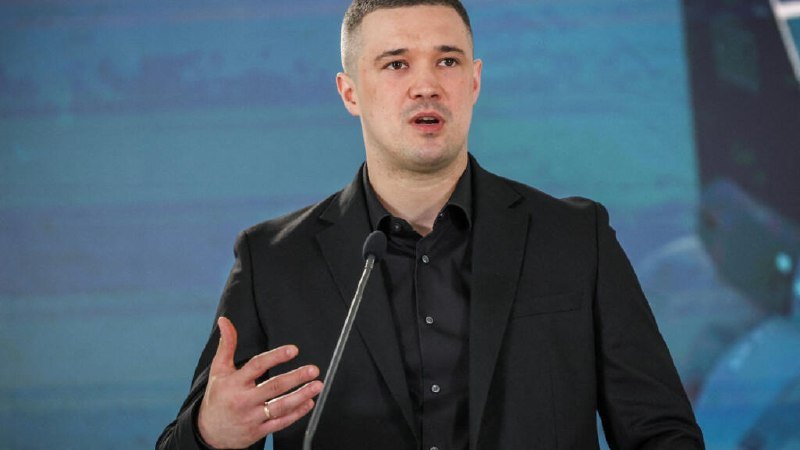
Volodymyr Zelensky used a 19 June press appearance in Kyiv to put a calendar on the war. Quoted by TSN-Ukraine the same day, the Ukrainian president argued that negotiations to end the fighting must conclude before the heating season begins, framing the coming winter as the operational deadline he wants Moscow and Kyiv's Western backers to work backwards from. The pitch is not a forecast of imminent talks. It is a diplomatic timetable, publicly announced, with a season attached.
What Zelensky is selling is a simple piece of political arithmetic. If a deal is going to be done, the work has to happen in summer. Energy infrastructure, refugee returns, electoral logistics, the rhythm of European aid budgets: all of it tightens once the temperature drops. The Ukrainian leader is betting that naming the deadline in plain language forces movement on partners who prefer to discuss the war in the abstract.
The Polish fracture
The timetable lands in a week Kyiv did not choose. On 21 June, Polish President Karol Nawrocki, whose election earlier this year ended eight years of Andrzej Duda's incumbency, was publicly needled by Zelensky in remarks circulated by DDGeopolitics and TSN. Zelensky opened with "Karol, that's his name, right?" before lecturing Poland that it "doesn't have a monarchy, it has a democracy," a line the same channel summarised as a swipe at Warsaw's recent gesture toward Kyiv.
The trigger sits beneath the snark. Warsaw moved a day earlier to strip Zelensky of the Order of the White Eagle, the Polish state decoration conferred on him in 2023, after a Ukrainian army unit was named for the UPA, the wartime nationalist formation whose wartime record in Volhynia remains a live wound in Polish memory. Zelensky announced he was returning the order regardless. The exchange, captured across DDGeopolitics, Two Majors and the boweschay account on X, has reduced bilateral relations to a parliamentary quarrel at exactly the moment Ukraine most needs a stable eastern EU flank.
That fracture matters to the winter deadline. Poland is the principal overland corridor for Western military logistics into Ukraine, a transit role that survived the 2023 grain dispute but that depends on political goodwill in Warsaw. If Zelensky's calendar is to mean anything, the corridor has to hold.
The Kerch signal
Off the diplomatic stage, the war's material tempo continued. OSINTdefender reported on 21 June that five of the seven oil tanks at the Russian-occupied terminal in Kerch, on the Crimean coast, were ablaze, with several vessels in the Kerch Strait also struck. Sergey Aksyonov, the Russian-installed head of occupied Crimea, announced a 9:00 a.m. suspension of civilian fuel sales across the peninsula, with exemptions for government and military use. Ukrainian military bloggers, including the OperativnoZSU channel, treated the strike as a deliberate degradation of the logistics corridor Russia uses to supply forces in southern Ukraine and, by extension, its Black Sea fleet.
Russia's Two Majors channel, read with explicit caveat as a Russian-aligned feed, framed the same week as proof of an "inferiority complex" in Ukrainian elites about Russia, recycling a 1997 Kuchma-era debate tape. The contrast is the point. Where Ukrainian channels emphasised a successful long-range strike and a diplomatic timeline, Russian channels emphasised grievance and inertia. Both readings are part of the record; neither is treated here as dispositive.
A president in a hurry
Zelensky's winter deadline is also a domestic play. Ukrainian patience with a war whose end is not in sight is a variable the president manages, and a defined calendar gives him something to point to when allied deliveries slow. The framing does two things at once. It tells European capitals that Kyiv will not accept an open-ended war of attrition, and it tells a Ukrainian public worn down by mobilisation and power cuts that the state is still running a clock.
The risk in that posture is the one Kyiv's partners have learned to read carefully. A publicly declared deadline is a lever only if it can be lifted. If the calendar slips into the cold months with no agreement, the political cost falls on the side that named the date. Russia, by contrast, is under no comparable pressure to reciprocate in public. Its negotiating style, visible across the Geneva-tracked Iran-US quadrilateral talks that resumed in the same window according to Tasnim, is to let deadlines arrive and pass.
What comes before winter
The next twelve weeks are now the operational horizon. Three dates to watch: the NATO summit cadence that typically falls in early summer and produces the kind of communiqués that move Ukrainian force posture; the European Council's mid-summer budget meeting, where the next tranche of Ukraine support is debated in the currency of Polish-German compromise; and the September UN General Assembly, where Zelensky has in previous years used the platform to reset a flagging news cycle.
None of those moments, on their own, ends a war. What they can do is keep a negotiating track alive long enough for the political cover to hold when the weather turns. Zelensky has staked the next Ukrainian winter on that cover being in place by the time the first sustained frost reaches Kyiv.
Sources
- TSN-Ukraine, via Telegram: https://t.me/tsn_ua/12249
- TSN-Ukraine, via Telegram: https://t.me/tsn_ua/12250
- OperativnoZSU, via Telegram: https://t.me/operativnoZSU/24517
- Andriy Tsaplienko, via Telegram: https://t.me/Tsaplienko/18503
- Wikipedia, "Volodymyr Zelensky": https://en.wikipedia.org/wiki/Volodymyr_Zelensky
- DDGeopolitics, via Telegram (Polish exchange, 21 Jun 2026)
- Two Majors, via Telegram (Russian-aligned reading, 21 Jun 2026)
- OSINTdefender, via Telegram (Kerch strike reporting, 21 Jun 2026)
- Aksyonov fuel-sale announcement, via OSINTdefender on Telegram (21 Jun 2026)
- Tasnim News, via Telegram (Geneva quadrilateral context, 21 Jun 2026)
Desk note: Monexus frames this as a Ukrainian-initiated diplomatic timetable, not as a forecast of imminent talks. Russian state-media accounts of the same day argue the opposite direction; both are reported, neither is treated as dispositive. The piece is built from the Telegram-cluster inputs above; broader wire corroboration will follow in tomorrow's edition.
Follow the event.
These dated source records provide context. They do not retrospectively verify this archive article.
A dated voting record is evidence of one decision. Use the original UN record before turning it into an alignment label.
Visual explainer · historical vote of 2022-03-02 →