BRICS security chiefs gather in New Delhi — and India is signalling something larger
India's national security adviser will chair a BRICS security meeting on 22 June. The chair, not the agenda, is the story.
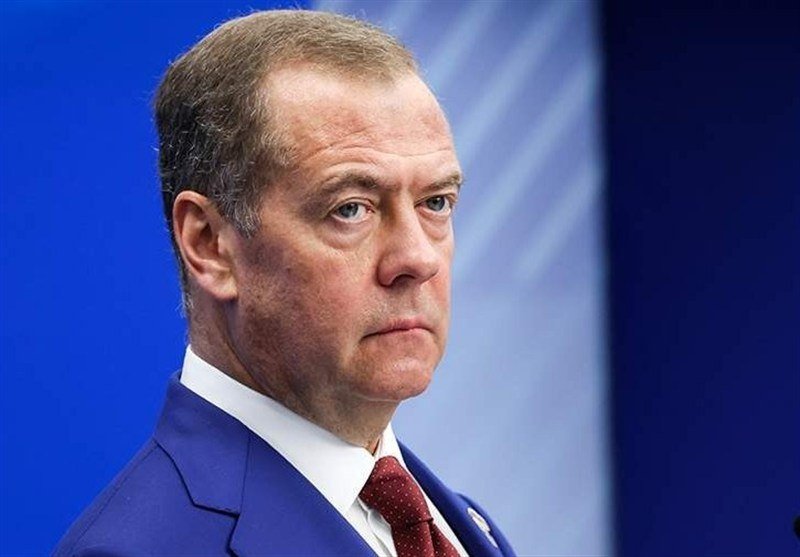
When Ajit Doval walks into the BRICS national security advisers' meeting in New Delhi on 22 June 2026, the choreography will look routine: senior officials from the expanded bloc, a closed-door agenda, a polite joint statement on counter-terrorism and maritime security. The substance underneath is anything but. India is chairing a security track it spent two decades treating as a talking shop, and doing so at a moment when the Western-led security order looks more strained than at any point since 1991.
The decision to host, and to put its most senior security official in the chair, is the clearest signal yet that New Delhi intends to position itself as the convener of a non-Western security conversation — not a junior participant in one assembled in Beijing, Moscow, or Brasília. That is the news buried inside a wire-service brief.
The chair matters more than the agenda
BRICS security-adviser meetings have been held before, but rarely with the host country's NSA visibly front-of-stage. India's choice to put Doval — a career intelligence official turned principal adviser to Prime Minister Narendra Modi — in the chair rather than a foreign-ministry bureaucrat is a signal about seriousness and about the kind of security architecture New Delhi wants to discuss. The Indian Express reported on 20 June 2026 that Doval will chair the meeting on 22 June, with counter-terrorism, regional stability, and reform of multilateral institutions on the agenda.
Read literally, that is a familiar list. Read in context — a year in which the dollar-payment architecture has been probed by sanctions, in which two active conflicts on the Eurasian landmass have exposed the limits of UN Security Council deadlock, in which Gulf and African capitals are quietly diversifying their security partnerships — the agenda is the least interesting part of the meeting. The chair is the story.
A counter-narrative the Western press has not fully absorbed
The default Western framing treats BRICS security meetings as theatre: a photo-op for a bloc that disagrees about almost everything, convened to take implicit aim at Washington. That framing is not wrong, but it is incomplete. Three of the five original BRICS members — Brazil, India, and South Africa — have refused to break with the Western financial architecture in the way the headlines sometimes imply. India's rupee trade settlement mechanism with the UAE and Malaysia, for instance, is a real experiment in non-dollar trade, but it sits alongside a deepening defence relationship with the United States, including the Logistics Exchange Memorandum of Agreement and the foundational interoperability agreements signed over the last decade.
The honest read is more interesting than the cartoon. India is building redundancy, not rupture. It wants payment rails, intelligence-sharing formats, and crisis-management contacts that do not run exclusively through Washington, Brussels, or Beijing. That is a rational posture for a country whose energy imports still transit sea lanes guarded by a US Navy it sometimes mistrusts, and whose land borders touch a China it has not de-escalated with since 2020.
The structural shift, in plain language
What the New Delhi meeting makes visible is the slow unbundling of security provision from currency and from alliance blocs. For three decades after the Cold War, these moved together: dollar primacy, US carrier presence, NATO standardisation, and a UN Security Council that ratified rather than contested the arrangement. The unbundling does not mean the old system is collapsing. It means a parallel architecture is being built next to it, used selectively, and expanded when it offers an advantage the incumbent cannot.
This is not anti-Western. It is post-monopoly. Countries that have no objection to dollar clearing, NATO training, or US carrier cover are nonetheless building the option not to depend on any of those exclusively. India, Brazil, South Africa, and the UAE — each for different reasons — are doing exactly that. The 22 June meeting is the procedural form of that posture.
What to watch between now and the end of 2026
Two indicators will tell readers whether the New Delhi meeting was a marker or a one-off. The first is the joint statement's language on payment-system resilience and on sanctions architecture. If the communique even obliquely references the weaponisation of dollar clearing, New Delhi will have signed up to a position that would have been politically impossible three years ago. The second is follow-through: whether the BRICS security track produces a working-group structure with scheduled meetings, a permanent secretariat function, or joint exercises. Talk is cheap; institutionalisation is the test.
A plausible counter-read is that the meeting produces a comfort-zone statement, and the security track goes back to dormancy until the next summit. That has been the BRICS pattern. But the chair — Doval, not a mid-career diplomat — and the timing, in the middle of a year in which the costs of security dependence on a single pole have rarely looked higher, give this iteration a better chance of sticking than most.
This publication framed the meeting as a signal about India's strategic posture rather than as a story about counter-terrorism cooperation, on the grounds that the chair and venue are the verifiable news and the agenda is the assumed context.
Wire provenance
This editorial synthesis draws on the following public wire/social posts:
- https://en.wikipedia.org/wiki/BRICS
- https://en.wikipedia.org/wiki/Ajit_Doval