Strikes on Henichesk Strait Bridge and Crimean Gas Targets Tighten Kyiv's Logistics War
Two overnight strikes on 20 June 2026 hit the Henichesk Strait crossing and gas infrastructure in occupied Crimea, signalling a deliberate tightening of pressure on Russian supply lines across the peninsula.
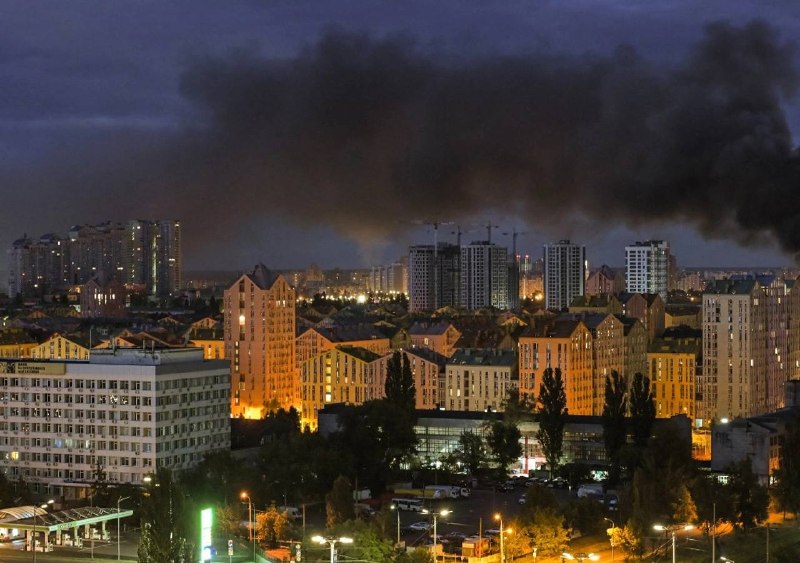
Two overnight strikes on 20 June 2026 hit the road bridge over the Henichesk Strait and gas infrastructure in occupied Crimea, according to Ukrainian-aligned operational channels, tightening a months-long campaign aimed at degrading the logistics that keep Russian forces supplied across the peninsula.
The operations were attributed by two independent Ukrainian-aligned channels to the country's Unmanned Systems Forces, the drone warfare branch that has become Kyiv's principal tool for striking deep behind Russian lines. TSN Ukraine reported the Armed Forces had moved to "block logistics from Crimea" through the Henichesk road bridge. WarTranslated, citing the same USF operators, said the overnight package struck gas infrastructure in occupied Crimea, the bridge over the Henichesk Strait, and "fuel and military logistics in occupied territories." The OsintLive feed carried an identical account within minutes.
Read together, the strikes signal a deliberate tightening of pressure on the road and pipeline arteries that connect occupied Crimea to the Russian mainland and to the southern front.
What was hit, and why Henichesk matters
The crossing at Henichesk, on the narrow strait that separates Crimea from the Kherson mainland, is one of two overland routes — alongside the Kerch Bridge — that link the peninsula to Russian-controlled territory. It carries civilian traffic, military convoys and the trucked fuel that supplements Crimea's own supply. A successful interdiction does not sever the peninsula, but it forces Russian commanders to ration capacity, lengthen detours and absorb the operational tempo cost of longer resupply runs.
The accompanying strike on gas infrastructure adds a second pressure point. Crimea has depended for years on piped supply from the mainland after the peninsula's own production fell short of demand. Disrupting that flow during the summer campaigning season — when fuel and power are both at premium — raises the cost of simply keeping vehicles, drones and air defences running.
The two-source attribution to the Unmanned Systems Forces also tells its own story. USF operators have increasingly been cast as the strike arm of choice for high-value, fixed targets at depth: fuel depots, air defence nodes and the choke points that traditional artillery cannot reach. The Henichesk package fits that pattern.
The counter-narrative from Russian-aligned channels
Russian state media and milblogger channels have not, as of the timestamps available, published a unified acknowledgment of damage at the Henichesk crossing or the named gas sites. The reporting pattern is consistent with previous episodes: Moscow's information space tends to suppress, deflect or downplay strikes on Crimean infrastructure, while Ukrainian-aligned channels carry claims first and Moscow responds hours or days later with partial confirmation or euphemism. Readers should expect that the full operational picture — what burned, what stopped flowing, how long the disruption lasts — will only firm up once satellite imagery or independent on-the-ground reporting corroborates the initial claims.
What the available reporting cannot settle is the question of permanence. Strikes on fixed infrastructure matter in inverse proportion to how easily they can be repaired. A road bridge can be patched with a Bailey span inside days; a damaged gas compression station or substation takes longer. The press items do not specify which side of that line last night's package landed on, and the framing in both Telegram channels leans toward symbolic effect — "logistics blocked" — rather than verified physical destruction.
A structural shift in how Ukraine is fighting
Four years into the full-scale invasion, the geography of attrition has tilted. Kyiv's deepest strikes no longer rely on a handful of long-range Western systems; they are increasingly the work of domestically produced attack drones operated by a dedicated branch. The Unmanned Systems Forces, formalised as a separate arm, has absorbed roles that the air force and artillery cannot fill cheaply or at scale. The overnight operation is less a one-off than a representative example of how the campaign is being run.
That shift has three structural consequences worth naming. First, the cost-per-strike has fallen, which means Kyiv can keep up pressure on a wider target set without burning through a finite inventory of expensive missiles. Second, the dispersion of strike authority across a specialist branch complicates Russian air-defence tasking: defenders have to track a denser, more varied threat picture rather than waiting for a handful of cruise missiles to materialise on radar. Third, the targeting logic has moved upstream — fuel, gas, bridges and depots rather than frontline trenches — which is consistent with a campaign posture that is grinding rather than breaking.
The strategic reading depends on whether one views these strikes as prelude to a broader counter-offensive on the southern axis or as a steady-state denial campaign. Both readings are defensible from the available reporting, and the press items do not adjudicate between them.
Stakes and what to watch next
The immediate stakes are operational. If the Henichesk crossing is functionally degraded for more than a few days, Russian logistics on the southern axis face a measurable tax; if the gas disruption is sustained, the political cost inside Crimea — already sensitive to power and fuel availability — rises. The longer stakes are doctrinal. The more often Kyiv can put fixed, high-value targets in occupied territory at risk, the more Russian commanders have to choose between defending rear infrastructure and reinforcing the line.
Three things will clarify the picture in the days ahead. First, independent confirmation of physical damage at the bridge and at the named gas sites, ideally through commercial satellite imagery. Second, any change in Russian traffic flow across the crossing and through the Crimean pipeline network, which would signal whether the strike has translated into a sustained logistical effect rather than a temporary interruption. Third, whether Moscow escalates its own strikes on Ukrainian energy infrastructure in retaliation — a pattern that has recurred through previous rounds of deep-strike exchanges.
For now, the overnight operation is best read as a representative event rather than a turning point: one more data point in a campaign in which the geography of attrition is being redrawn by drone operators working from inside Ukraine.
This article draws solely on Telegram-channel reporting from TSN Ukraine, OsintLive and WarTranslated, all carrying the same operational account attributed to Ukraine's Unmanned Systems Forces; the available sources do not include independent satellite imagery, official Ukrainian General Staff confirmation, or Russian-side acknowledgment, and the picture may firm up — or partially unravel — as further reporting emerges.
Wire provenance
This editorial synthesis draws on the following public wire/social posts:
- https://t.me/tsn_ua
- https://t.me/osintlive
- https://t.me/wartranslated
Follow the event.
These dated source records provide context. They do not retrospectively verify this archive article.
A dated voting record is evidence of one decision. Use the original UN record before turning it into an alignment label.
Visual explainer · historical vote of 2022-03-02 →