Ceasefire on Paper, Rockets in the Air: Lebanon Tests the Limits of a Fragile Arrangement
A statement of commitment to the ceasefire arrived in the same hour as Israeli strikes that local authorities say killed 16 — exposing how thin the line is between diplomacy and escalation on the Lebanon-Israel frontier.
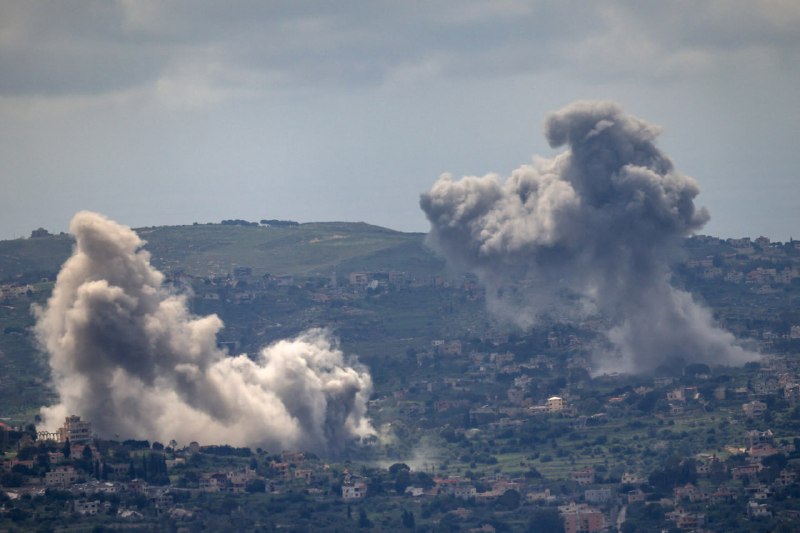
On 20 June 2026, at 11:27 UTC, the Israeli Defense Forces posted a tally to their official channel: more than fifty projectiles launched by Hezbollah across the previous night, framed as repeated violations of a ceasefire meant to be holding. Less than half an hour later, at 11:54 UTC, wire reporting described Israeli strikes on southern Lebanon that local authorities said killed at least sixteen people, with mediators in Switzerland cancelling a round of US–Iran peace talks. By midday, at 12:00 UTC, a Hezbollah-linked channel was carrying the movement's denial — that it had committed to the ceasefire, that Israel was the party expanding its "conquests," and that "our finger is on the trigger." In the space of a single morning, both sides had produced competing versions of the same night, both sides had cited the same agreement, and the diplomatic track meant to lock the arrangement in place had been pulled from the calendar.
The pattern is familiar. A ceasefire holds in the abstract — a document, a guarantor list, a public statement of commitment — and is tested by the first incident serious enough to demand a response. The question each time is not whether the parties want war, but whether they can afford the political cost of escalation when the cameras are on. On 20 June, that cost calculation produced a familiar result: rockets from the north, airstrikes from the south, communiqués in both directions, and a mediator-led process on hold.
What the night actually contained
The Israeli military's overnight statement, published on the IDF's official channel at 11:27 UTC, described "dozens of Hezbollah attacks and repeated ceasefire violations" through the night of 19–20 June, counting more than fifty projectiles launched toward Israeli territory. The statement framed these as escalatory and as breaches of a standing arrangement, a characterisation that immediately drew a counter-narrative from the other side.
Hezbollah's response, distributed through several affiliated channels by 12:00 UTC, called the Israeli framing false. The movement said it remained committed to the ceasefire but reserved the right to respond to what it described as Israeli expansion of "conquests" — language that, in the movement's rhetorical register, treats any continued Israeli presence or action on Lebanese territory as the operative provocation. The "finger on the trigger" formulation is the standard Hezbollah formula for conditional compliance: the deal holds as long as the other side does not, in Hezbollah's reading, push further.
Local Lebanese authorities, cited in wire reporting at 11:54 UTC, placed the morning's Israeli strikes at a casualty toll of at least sixteen killed in southern Lebanon. The figure carries the usual caveats: it comes from local emergency and health officials, it is an early count, and it will likely shift as bodies are recovered and as hospitals report. It is, however, a reminder that the rhetorical contest about who fired first is being waged on terrain where civilians absorb the initial kinetic impact regardless of which side claims the legal high ground.
The diplomatic track goes dark
The consequential external development on 20 June was not the rocket count or the strike count, but the cancellation of US–Iran peace talks in Switzerland. The talks were the most visible diplomatic deliverable of the broader ceasefire architecture: a forum in which the United States and Iran, with backing from regional intermediaries, were meant to manage the secondary disputes — Hezbollah's arsenal, Iranian resupply routes, the status of Lebanese airspace — that the main ceasefire did not resolve.
Their suspension, attributed in wire reporting to the outbreak of fighting, suggests that the mediators concluded the parties were not yet ready to talk under live fire. That is a procedural decision, not a substantive one, and it is reversible. But it tightens the timing constraint. The longer the kinetic track runs hot, the harder it becomes for any government — in Washington, in Tehran, in Beirut, or in Tel Aviv — to be photographed sitting across the table from counterparts their domestic audiences blame for the latest casualties. The diplomatic track is at its most useful in the first days after an incident, when outrage is loud but not yet structural. By the second week of exchanges, the optics change.
Why the ceasefire is holding in name only
The structural problem is not new. A ceasefire between a state army and a non-state armed movement is, by construction, an agreement between actors with different decision-making geometries. The state can issue orders down a chain of command and expect near-immediate compliance from frontline units; the movement's compliance depends on a political decision at the top and on the discipline of local cells whose incentive structure is shaped by what they have just seen happen to their villages. When the state strikes, the movement's restraint has to be renewed; when the movement fires, the state's response is shaped by domestic political pressure that does not wait for verification.
What 20 June illustrates is the speed at which that asymmetry produces a feedback loop. A night of rocket fire produces an Israeli public demand for response. The response produces Lebanese casualties. The casualties produce Hezbollah communiqués framing Israeli action as expansion. The communiqués produce Israeli political pressure for further response. The mediators, watching the loop close, pull the talks. Each move is rational at the level of the actor making it; the system as a whole trends toward escalation precisely because no single actor internalises the cost of the loop.
The conditional-compliance language on both sides — "committed to the ceasefire but…", "repeated violations…" — is the audible signature of this dynamic. Each side is reserving the right to be the first to break the arrangement if it judges the other side to have crossed a line first. The agreement survives only in the spaces where neither side has yet decided that the cost of restraint exceeds the cost of escalation.
What is genuinely uncertain
Three things remain genuinely contested in the reporting available on 20 June, and worth naming plainly.
First, the precise sequence. The IDF's overnight statement aggregates incidents across a night; Hezbollah's denial addresses the framing rather than the count. The wire reporting describes a recent outbreak of fighting without committing to a tick-by-tick reconstruction. A reader who needs to know which projectile was the first violation, and which airstrike was the first response, will not find a settled answer in the morning's reporting. The information environment is built for blame allocation, not for chronology.
Second, the scale of the Lebanese toll. Sixteen is the figure from local authorities cited at 11:54 UTC. It is a floor, not a final number, and the day is young. Comparable incidents in earlier phases of the conflict have produced revised counts after the first forty-eight hours. Any structural analysis of the day's events has to be written with that floor in mind.
Third, the trajectory of the diplomatic track. The cancellation of the Switzerland talks is reported, not analysed. Whether the suspension is a tactical pause — a few days, to let the temperature drop — or the first stage of a more durable freeze is not knowable from the morning's information. The structural argument is that the longer the kinetic track runs, the harder the diplomatic track becomes. But the time horizon over which that structural pressure operates is measured in weeks, not in hours, and the next forty-eight hours will be more informative than any forecast.
The stakes, plainly stated
If the pattern of 20 June holds — exchanges at night, communiqués in the morning, diplomatic pauses after each incident — the costs fall in predictable places. Southern Lebanese civilians absorb airstrikes. Northern Israeli communities absorb rocket fire and the disruption of repeated alerts. The Hezbollah leadership absorbs a slow erosion of its claim to have secured a durable arrangement. The Israeli government absorbs the political cost of strikes that produce Lebanese civilian casualties. The US and Iranian negotiating teams absorb the cost of a suspended process whose eventual resumption will require more face-saving, not less.
The wider regional stakes are larger. A ceasefire that visibly holds is the precondition for any of the secondary tracks — Iranian resupply, Hezbollah disarmament discussions, broader regional de-escalation — to function. A ceasefire that visibly does not hold produces a different equilibrium: each side treats the next incident as the one that will finally demonstrate that the other side cannot be trusted with the arrangement, and the mediators become arbiters of blame rather than authors of settlement.
On 20 June, the arrangement survived in its procedural form. The communiqués were issued. The talks were suspended, not terminated. The parties still describe themselves as committed. Whether that procedural survival is the first stage of a return to restraint, or the opening of a longer period of low-intensity exchange punctuated by escalations, is the question the next seventy-two hours will begin to answer.
How Monexus framed this: the wire led with the strike count and the cancelled talks; the analytical frame here treats the cancellation of the Switzerland track as the day's most consequential development, on the view that the diplomatic clock is the binding constraint on the kinetic one.
Wire provenance
This editorial synthesis draws on the following public wire/social posts:
- https://t.me/idfofficial
- https://t.me/englishabuali
- https://t.me/wfwitness
- https://t.me/abualiexpress
- https://t.me/wfwitness
Follow the event.
These dated source records provide context. They do not retrospectively verify this archive article.
Separate what the nuclear watchdog reported from what it could not determine after the June 2025 strikes.