Iran-aligned outlets frame Gaza as a slow-motion casualty ledger — and the wire has no clean counter
A pair of Tasnim wires on 19-20 June 2026 logged a woman and a child killed in a Gaza airstrike, then 13 Israeli soldiers wounded in clashes. Read together, they read like a running ledger. Western wires have not matched the cadence — and the gap is itself a story.
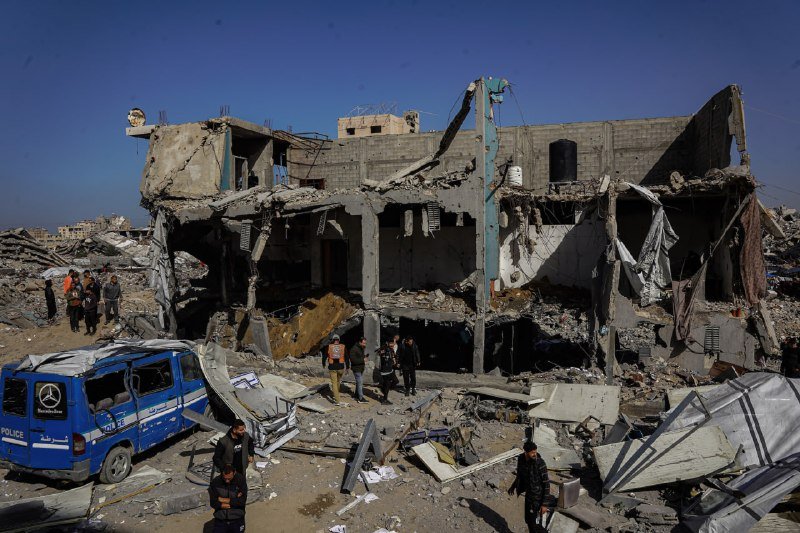
Between 23:24 UTC on 19 June 2026 and 03:38 UTC on 20 June, Iranian state-aligned outlet Tasnim filed four short bulletins into its English and Farsi Telegram channels. Taken individually, each is a minor wire item: a helicopter strike, a residential house hit, a casualty count, a wounded-soldier count. Taken together, they are a ledger — and the ledger is doing a kind of editorial work that mainstream Western coverage is not.
The thesis is uncomfortable and worth stating plainly: in the absence of a comparable cadence from Reuters, AP, the BBC or the IDF Spokesperson, the visible running-tally of the war is being written, hour by hour, by outlets whose structural loyalty sits with one side of the conflict. Tasnim is not a neutral wire service, and Monexus does not pretend otherwise. But a press that leaves the timing and granularity of war reporting to one state's English-language apparatus is a press that has, by default, outsourced the daily metric of the war.
What the four bulletins actually say
The sequence, stripped of language, is mechanical. At 23:24 UTC on 19 June, Tasnim's English channel logged a strike by Israeli helicopters on western Gaza City, sourced to "local Palestinian sources." At 23:47 UTC, the same channel reported that a woman and a child had been killed and four others wounded in an Israeli airstrike on a residential house in Gaza, again attributed to "Palestinian sources." Then, in the early hours of 20 June, two bulletins — 03:01 UTC and 03:38 UTC — carried a single item in slightly different phrasings: that Israel's Ministry of Health had put the count of newly injured soldiers at 13, in "the clashes." The word "clashes" does the heavy lifting; the surrounding context is left to the reader.
Read in sequence, the bulletins alternate civilian-casualty reporting (Palestinian sources) with military-casualty reporting (Israeli official sources). That alternation is itself a structural choice — one designed, whether by design or by reflex, to present the war as a symmetric ledger of harm. Whether that symmetry is empirically accurate is a separate question. The point is that the form of the reporting produces the symmetry, regardless of the underlying numbers.
Why the framing matters more than the numbers
Tasnim is a news agency attached to the Islamic Republic's ideological establishment. Its English channel is a translation layer for an audience outside Iran, and its choices of word and cadence are calibrated. "Martyrdom" rather than "death" for Palestinian casualties, "Zionist regime" rather than "Israel," "injured in the ranks" rather than the more clinical Western-wire formulation "wounded in combat" — none of this is accidental, and none of it is hidden from its intended reader.
The point for Monexus is not to relitigate the language of Tasnim's house style. It is to notice the structural effect: an English-language reader who consumes only the Tasnim wire gets a continuous, dated, granular sense of the war. A reader who consumes only the major Western wires during the same window — Reuters, AP, BBC, the IDF Spokesperson — often gets aggregate weekly figures, weekly MoH Gaza updates, and slower-moving operational summaries. The frequency mismatch is real. It is also not symmetrical: the Western wires carry a far larger volume of analytical, legal, and political reporting than Tasnim does, and they carry it with sourcing discipline that Tasnim does not match.
The counter-narrative the wires are running
The honest counter is that the major Western wires do not slow their reporting because they are suppressing it. They slow it because their verification pipeline — multiple named sources, on-the-ground stringers, cross-checking with IDF and Israeli government spokespeople, with Palestinian civil defence and hospitals — is structurally heavier. A bulletin's worth of facts from Tasnim can be re-published in minutes; the equivalent bulletin from a Reuters or BBC correspondent requires sourcing and confirmation that, on a contested battlefield, takes hours.
The verification premium is real, and it has costs. It means that when the daily arithmetic of the war is being tabulated, the tabulator is often a state-aligned English-language service whose editorial preferences are visible and unreciprocated on the other side. Western wires are paying, in narrative share, for their own sourcing discipline. That is a price worth paying — but it is a price, and it should be acknowledged as one rather than waved away.
Stakes, and what remains genuinely uncertain
The stakes here are not only about one Telegram channel. They are about who sets the visible tempo of an ongoing war. If the wire service that produces the most dated, hourly casualty ledger is structurally aligned with one state, then the feeling of the war — for an English-reading diaspora, for an analyst monitoring events in real time, for a researcher scraping public sources — is shaped by that alignment, even when the underlying casualty figures later turn out to be contested or revised.
What remains genuinely uncertain, and where the sources in hand cannot close the gap: the four bulletins do not name a specific location in Gaza City, do not specify the date or model of the helicopters, do not provide the unit affiliation of the wounded soldiers beyond "Israeli soldiers," and do not reconcile their casualty figures with the running totals published by Gaza's Ministry of Health or the IDF. A reader who wants to verify any of the four items against a primary source outside Tasnim's own channel will, at present, find no published corroboration in the Western wires this publication can point to. The framing is doing work the facts have not yet earned.
Monexus files this as a press-frame piece: the story is not the strikes themselves, but the cadence and language of how they are being recorded in English when one outlet is doing most of the recording.
Wire provenance
This editorial synthesis draws on the following public wire/social posts:
- https://t.me/tasnimnews_en/1
- https://t.me/JahanTasnim/1
- https://t.me/JahanTasnim/2
- https://t.me/JahanTasnim/3
Follow the event.
These dated source records provide context. They do not retrospectively verify this archive article.
Separate what the nuclear watchdog reported from what it could not determine after the June 2025 strikes.