Iran's Los Angeles complaint puts FIFA's tournament-as-politics problem back on the table
Iran says it will file a complaint with FIFA after US authorities denied the team an early entry to Los Angeles for Sunday's group-stage match against Belgium — a clash that turns a sporting fixture into a test of how far the host federation can stretch its gatekeeping powers.
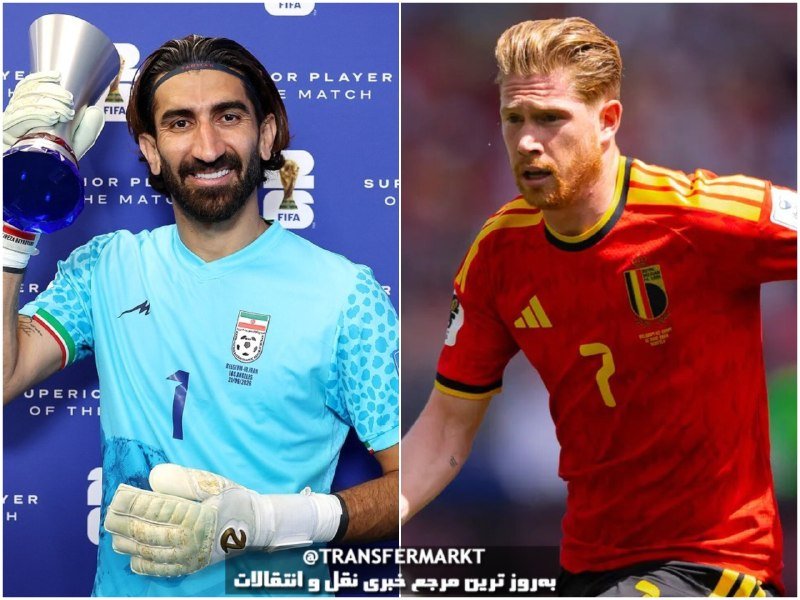
Iran's football federation said on 19 June 2026 that it will lodge a formal complaint with FIFA after United States authorities turned down its request to enter Los Angeles two days ahead of Sunday's Group-stage fixture against Belgium. The denial, reported by ESPN, places a routine piece of tournament logistics — a team's preferred travel window — at the centre of a wider argument about how much control a host federation is entitled to exercise over the teams it is supposed to be welcoming.
For Belgium, the match is the second of a campaign that began with an uninspiring draw against Egypt. For Iran, it is the next step in a tournament that has, before a ball has been kicked in Los Angeles, already required diplomacy. The complaint matters less for the immediate fixture than for the precedent it tries to set: if a host country can pick which delegation arrives when, what does "neutral venue" actually mean for a World Cup?
What the dispute is, and is not
The Iranian federation's grievance is narrow on its face. The team asked to fly into Los Angeles on Friday, two days before the 21 June 2026 group match, and was told no. The standard expectation for World Cup participants, as telegraphed by FIFA's own operational guidance to delegations, is that teams arrive in the host city in good time for acclimatisation, site-familiarity walks, and a scheduled pre-match press conference. A two-day buffer is unremarkable. That the request was refused — and that Iran has chosen to escalate to FIFA rather than absorb the inconvenience — is the part that matters.
It is worth being clear about what the sources do and do not establish. ESPN's 19 June 2026 report confirms the complaint and the denial, and that the federation intends to invoke FIFA's dispute-resolution channels. It does not specify the legal basis the Iranians will cite, the specific US authority that issued the refusal, or whether a visa, a venue-access permit, or a broader security protocol is the operative instrument. That gap matters, because the answer changes the political weight of the case. A paperwork delay is one thing; a deliberate political signal is another.
Why a sports federation becomes a venue for geopolitics
The United States is hosting the 2026 World Cup in a configuration without recent precedent: eleven host cities, three national federations co-ordinating the event, and a US administration that has, since 2025, leaned visibly into using entry and visa policy as a foreign-policy tool. Against that backdrop, the question of which team can enter a US city, and when, stops being a logistical footnote.
The structural point — and it is one that any honest reading of the case has to make — is that the world's largest single-sport event now depends on the cooperation of national border authorities whose priorities are not sporting. FIFA's statutes give the organisation broad authority to ensure that teams can compete, but enforcement against a sovereign host is a different category of problem. No global federation fines its way into a US border decision. Iran is, in effect, asking FIFA to do something it has rarely had to: tell a host country to open a door.
The counter-position is straightforward and defensible. The US, as host federation, retains sovereign discretion over entry. National-security vetting of travelling delegations, including athletes, is a routine state function and not, on its face, a violation of any FIFA obligation. If the denial was applied uniformly and not selectively against the Iranian team, the complaint is hard to sustain on principle, even if it remains irritating in practice.
What a complaint actually does
FIFA's disciplinary and governance machinery is slow by design. A formal complaint by a member association triggers a procedural track: a referral to the competent committee, a written exchange, an attempt at mediation, and — only if all of that fails — a hearing. None of that resolves before the Belgium-Iran match is played.
The tactical value of the complaint is therefore not the outcome. It is the record. Iran is putting on file, in writing, that the host federation's actions affected its preparation. Whether FIFA ever rules on the substance, the complaint creates a document that future federations in similar situations can cite. That is a meaningful thing to own.
For Belgium, the diplomatic file is someone else's. Their football problem, as CBS Sports framed it in the 20 June 2026 preview, is sharper and more domestic: finding form after a flat opener against Egypt, integrating Kevin De Bruyne into a tournament structure that does not forgive slow starts, and managing the squad across a compressed group schedule. The political weather around the match is noise the squad will try to tune out.
The larger pattern, and the open questions
This is not the first time a World Cup has run into the politics of its host. The 2022 tournament in Qatar was, from start to finish, a story about the host country's labour, civil-liberties, and diplomatic record. What is different in 2026 is the venue geometry. Eleven host cities across three countries means eleven different border regimes, eleven different security protocols, and a multiplied surface area for exactly the kind of friction Iran is now documenting. If one team can be turned away at one entry point, the question every other federation quietly asks is whether they can be next.
The open questions are not hard to enumerate. The sources do not specify the legal ground for the US denial, the criteria applied, or whether any other team has been similarly affected. They do not say whether FIFA has, privately, signalled a view. They do not say whether the Iranian federation has a fallback — a different entry city, a different arrival window, a diplomatic channel through the Iranian MFA. Those are the questions a serious complaint will eventually have to answer, and they are the questions that will determine whether this becomes a precedent or a footnote.
What is already on the record is the complaint itself, dated 19 June 2026, and the fixture it shadows: Belgium against Iran in Los Angeles, with kick-off to be confirmed. The match will be played. The file, presumably, will stay open for longer than that.
This publication framed the dispute as a governance test for FIFA rather than a bilateral US-Iran story, on the view that the precedent set inside the tournament matters more to the rest of the field than the merits of this single case.
Wire provenance
This editorial synthesis draws on the following public wire/social posts:
- https://t.me/Olympics
- https://t.me/FIFAcom
- https://t.me/TheAthletic