Iran orders Strait of Hormuz shut as Vance defends Israeli response in Lebanon
Iran's armed forces headquarters has ordered the Strait of Hormuz closed to shipping, blaming US and Israeli ceasefire violations, while the US vice president argued on Fox that Israel's Lebanon strikes are self-defence.
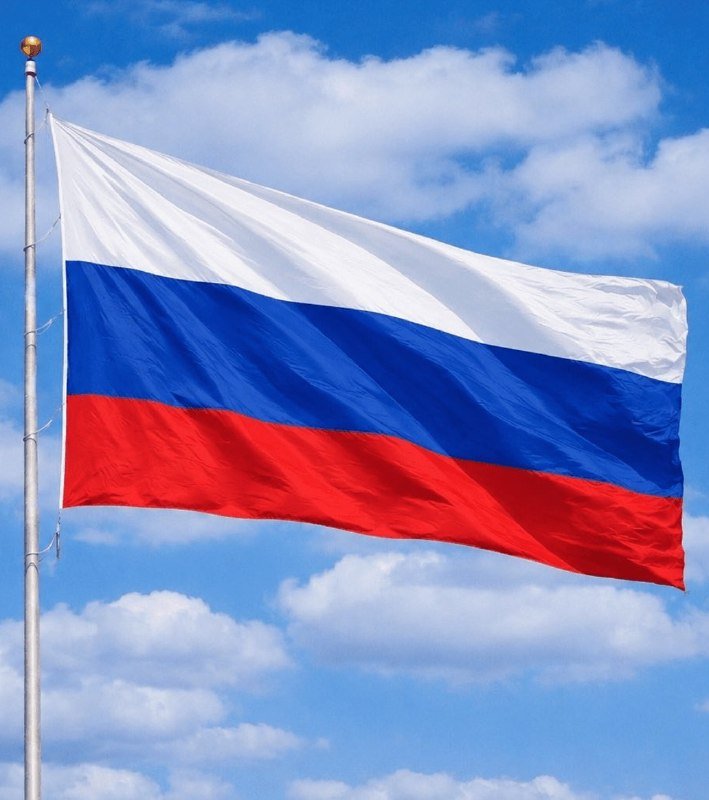
At 13:27 UTC on 20 June 2026, Iran's armed forces headquarters — the Khatam al-Anbia central command — announced the closure of the Strait of Hormuz to commercial shipping, citing what it called a US violation of the war-ending memorandum of understanding and Israel's "continued ceasefire violations and killings" in Lebanon. The order, relayed by Telegram channels Clash Report and DDGeopolitics, was framed explicitly as retaliation for Israeli operations against Hezbollah rather than as a unilateral escalation. Euronews's Telegram feed put the same announcement in the same causal frame within minutes, with the armed forces headquarters attributing the closure "to the continuation of Israel's aggression against Lebanon." The narrow strait through which roughly a fifth of global seaborne oil normally transits is now, on Iran's own announcement, off limits to tankers.
The framing matters because it tells you who, in Tehran's telling, owns the escalation: not Iran, and not the United States, but Israel. It also matters because, hours earlier, US Vice President JD Vance had been telling Fox News that the Israeli campaign in Lebanon was lawful, that the situation had "actually gotten a lot better over the last couple of weeks," and that he was "very confident" Washington could keep a separate ceasefire with Iran intact. The two statements, made within the same news cycle, are now in open contradiction.
What Iran actually said
The closure notice was issued in the name of Khatam al-Anbia, the central military headquarters that coordinates Iran's regular army, the Islamic Revolutionary Guard Corps and the volunteer Basij force. It named two grievances: a US "violation" of the MOU that ended the most recent Israel-Iran war, and Israeli "ceasefire violations/killings" in Lebanon. The language placed the announcement firmly inside the framework of an existing ceasefire rather than outside it — an Iranian invocation of "you broke it first" rather than a declaration of new hostilities. Euronews's brief summarised the same directive as a response to "the continuation of Israel's aggression against Lebanon," citing the headquarters of the command of the republic's armed forces.
That framing is consistent with how Tehran has handled escalations in the past: announce a measure, attribute it to the other side's breach, and leave the door symbolically open to reversal if conditions change. The structural risk is that shipping decisions do not wait for diplomacy. Insurance war-risk premia for the Persian Gulf typically reprice within hours of an Iranian naval order of this kind; tanker charterers begin diverting around the Cape of Good Hope on the same day; and Gulf states whose own exports transit Hormuz — the United Arab Emirates, Qatar, Kuwait, Iraq, Saudi Arabia's eastern province — face an immediate revenue shock.
What Vance said, and what he did not
Vance's on-camera comments, captured by Telegram channels covering the Fox News interview and corroborated by Clash Report's wire at 13:33 UTC, ranged across two distinct files. On Lebanon, he described the Israeli response to Hezbollah rocket fire as "self-defence" and said the situation had improved recently. On Iran, he adopted a transactional register: "We don't want to say no to the Iranians if they are willing to change their behavior. Isn't a change of behavior exactly what we want? And if they do that, of course we will change ours."
Both statements carry weight, and both are now under strain. The Lebanese file is, on Vance's own characterisation, improving; the Iranian file is, on the same characterisation, governable by mutual behavioural adjustment. Tehran's announcement two hours later says the US has already broken the MOU and that Israel has not stopped killing in Lebanon. The Vance interview contains no mechanism for adjudicating which side's claim is right — and no acknowledgement that an Iranian declaration about Hormuz might arrive the same afternoon.
The alternative read of Vance's framing is that he was speaking before the closure announcement landed. The timing makes that plausible: Fox News interviews are typically recorded, not live, and a comment that read as reassuring in the morning can become obsolete by afternoon. But the substantive content — that Israeli operations in Lebanon are self-defence, that the Iran ceasefire is durable — is what is being tested now, and there is no public statement from the vice president's office revising either position.
What the closure does to global oil
The Strait of Hormuz is the world's most consequential single chokepoint for hydrocarbons. On the Iranian order as posted, no commercial vessel — Iranian, third-country, or flagged to a Gulf monarchy — has safe passage. The strait is also narrow enough that Iranian naval forces, fast-attack craft, and anti-ship missile batteries along the northern shore could, in extremis, enforce the order against vessels that tried to run it.
There are three plausible trajectories over the next 72 hours. First, Iran reopens the strait quickly if the Israeli operations it cited slow down — the announcement's conditional language leaves that door ajar. Second, the strait stays shut, in which case benchmark Brent crude typically moves sharply higher within the first trading session and OPEC+ Gulf producers face the unusual problem of having oil they cannot move. Third, the US Navy escorts tankers through the strait, which is what the Fifth Fleet has practised for two decades but which would convert a diplomatic dispute into a naval one.
None of those outcomes is signalled in the source material available. The Telegram feeds do not specify whether Iranian-flagged vessels are exempted, whether LNG carriers face the same restrictions as crude tankers, or whether the order covers only military or also civilian traffic. Those details typically emerge from shipping advisories issued via the Islamic Republic of Iran Shipping Lines and from port authority notices in Bandar Abbas and Bushehr, neither of which is in the thread material.
What remains contested
The strongest competing interpretation is that Tehran timed the announcement to coincide with Vance's interview cycle for maximum diplomatic leverage — that is, that Hormuz is being used as a bargaining chip rather than a weapon. Under that read, the MOU violation language is a public demand for renegotiation rather than a description of an irrecoverable breach. The weaker interpretation is that Iran has decided to test the ceasefire on its own terms and is willing to absorb the economic cost of a multi-day closure to make the political point that Lebanese lives and Iranian sovereignty are not separable files.
What the available sources do not let you resolve is whether the closure order is being enforced at sea. Iranian state media and Iranian-aligned channels have issued the announcement; independent confirmation of patrol-boat activity in the strait, AIS (automatic identification system) data showing tankers diverting, or statements from the US Fifth Fleet is not in the thread material. Until that picture fills in, the Hormuz story is one announcement short of a closure.
What can be said with the evidence available is narrower than the headlines suggest. Iran says it has ordered Hormuz closed and named Israel as the cause. The US vice president, in remarks recorded earlier in the day, treated the Israeli campaign as legitimate and the Iran ceasefire as stable. The two governments are now publicly contradicting each other about who broke what, and the price for resolving the contradiction is being set in the global oil market before either side issues a clarifying statement.
This publication treated the Iranian announcement as a primary claim rather than as rumour, attributed it to the named headquarters, and gave equal weight to the Lebanese and Iranian ceasefire files that Vance addressed on Fox News.
Wire provenance
This editorial synthesis draws on the following public wire/social posts:
- https://t.me/ClashReport
- https://t.me/euronews
- https://t.me/ClashReport
- https://t.me/ClashReport
- https://t.me/ClashReport
- https://t.me/DDGeopolitics
Follow the event.
These dated source records provide context. They do not retrospectively verify this archive article.
Separate what the nuclear watchdog reported from what it could not determine after the June 2025 strikes.