A ceasefire in name only: how Israel-Hezbollah fighting in June 2026 became the next battlefield for the Iran-US deal
Within hours of a reported Israel-Hezbollah ceasefire, strikes continued in southern Lebanon. The gap between announcement and reality is now the operative fact in a Middle East negotiating a wider deal with Tehran.
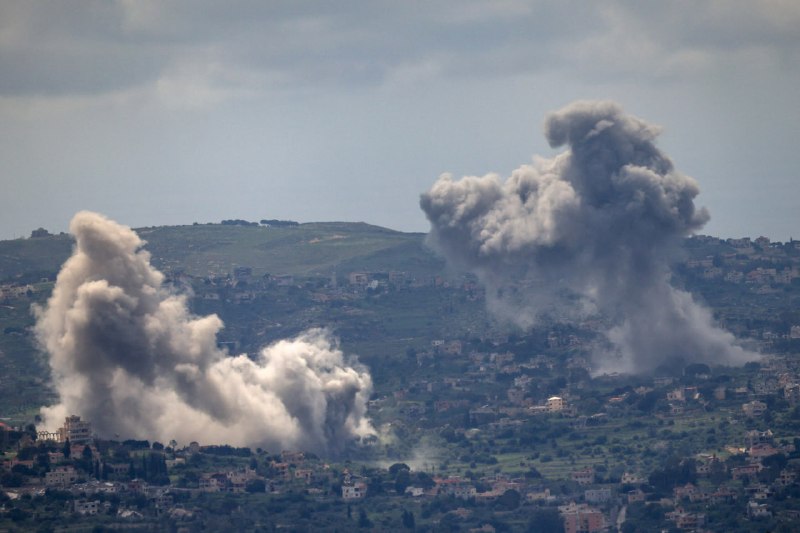
At 00:40 UTC on 20 June 2026, Reuters reported from the wire that Israel and Hezbollah had agreed to a ceasefire in Lebanon, brokered under pressure from a parallel track of US-Iran talks in which an interim agreement was being negotiated. By 01:29 UTC, PressTV, an Iranian state outlet, was carrying a sharply different version: Israel, it said, was continuing airstrikes and shelling in Lebanon despite the supposed truce. A prediction market had already priced in the announcement before either account settled. The gap between the document and the battlefield — less than an hour, in plain view — is the operative fact of this moment in the Middle East.
A ceasefire, in other words, has been declared and disowned within the same news cycle. That is the story. What follows is an attempt to read it as it actually is: not a single event with two interpretations, but a layered sequence in which the announcement, the on-ground reality, the wider US-Iran negotiation, and the political incentives of every party involved are all moving on different clocks.
The announcement, and what it actually said
Reuters' 00:40 UTC item is sparse — that is the nature of wire copy. The substance it carries is that the two parties agreed to a ceasefire in Lebanon, and that the timing was conditioned on a wider, more consequential file: the war in Iran, in which a US-Iran interim arrangement was being negotiated. The framing is that Lebanon's stability has become the price of admission for an Iran deal that holds.
Polymarket, the prediction platform, moved on the same beat from the other direction. Its 18:04 UTC item on 19 June framed the Israel-Hezbollah understanding as a derivative of the US-Iran track — a ceasefire whose principal function was to keep the Iran talks from collapsing under the weight of a second front opening in the north. Read the two together and the picture clarifies: this was less an Israeli-Lebanese settlement than a de-escalation currency, deployed so that negotiators in the Iran file could keep working.
That structural reading does not make the ceasefire unreal. It makes it instrumental. A de-confliction measure can hold precisely because the parties that need it to hold have other reasons for it to hold — but the same logic explains why it can break the moment those other pressures shift.
The ground, in the same news cycle
PressTV's 01:29 UTC item cannot be dismissed on grounds of origin alone. Iranian state media has a documented record of selective framing on Hezbollah and Lebanon; it is also a primary source for Iranian government positioning, and in this case the underlying claim — that Israeli fire continued into southern Lebanon after the announcement — is the kind of operational fact that Israeli, Lebanese, and UN sources typically confirm or rebut within hours. Reuters' wire copy, sparse as it is, does not by itself establish that firing stopped.
The honest position is that the sources publicly available in the 24 hours surrounding the announcement do not resolve the question cleanly. They establish two things: that an agreement of some kind was reported, and that within an hour of the report, Iranian state media was asserting that kinetic activity was continuing. What they do not establish — yet — is the precise content of the ceasefire terms, the parties that signed, the verification architecture, or the casualty and strike tally on either side since the announcement. Those are the operational details that determine whether this is a real de-escalation or a piece of diplomatic choreography whose expiry date is measured in days.
Why the timing is the story
It is worth being plain about the structural frame. The Middle East in mid-2026 is being negotiated as a single system. The Israel-Iran file, the Hezbollah file, the Houthi file, and the Syrian and Iraqi theatres have been re-fused into one negotiating table by the US, with Israeli, Iranian, Saudi, Turkish, and Egyptian capitals holding seats. The interesting question is no longer whether the wars are connected — the wire reporting and the prediction-market moves make clear that operators across the region have long priced them as a single risk. The question is who pays the cost of keeping the table stable.
In this particular cycle, Lebanon is paying it. The pattern is familiar from earlier Middle Eastern negotiating rounds: the theatre that can be paused most cheaply is paused, the theatre that is hardest to pause is conceded ground on, and the principal agreement rides on the assumption that the secondary front can be held quiet long enough for the primary deal to close. A Hezbollah ceasefire that frees up Israeli political and military bandwidth to absorb the terms of a US-Iran interim is, in that reading, exactly the right shape of compromise for everyone at the table except the civilians in southern Lebanon and the Galilee — and they are not, in the operating logic of the negotiation, the principals.
This is the structural fact underneath the headlines. It is not a moral claim about the participants. It is a description of the way these negotiations are usually priced.
The counter-reads, and why they matter
Three plausible readings of the news cycle are worth naming, because the sources publicly available do not yet let a careful reader choose between them.
The first is the official read: a real, enforceable ceasefire has been agreed, the early reports of continued Israeli fire are either rear-guard operational activity winding down, the tail of pre-ceasefire strikes, or a localised violation that the parties will handle through backchannels. The Reuters wire framing supports this read; so does the prediction-market move, which priced the announcement as informative.
The second is the Iranian-state read, as carried by PressTV: there is no real ceasefire, the announcement is a piece of public-relations cover for a US-Iran deal whose terms Israel does not in fact accept, and the kinetic activity in southern Lebanon is the true signal. This read is more credible in its operational claim than in its framing, and the distinction matters — Iranian state media is not a reliable narrator of Israeli intent, but its reporting of a strike count inside a given window is something Israeli and Western wires tend to confirm within hours if it can be confirmed at all.
The third is the structural read sketched above: a ceasefire whose principal purpose is to keep the Iran file alive, and whose durability is conditional on whether the Iran file moves. If the Iran talks produce an interim agreement in the days ahead, the Lebanon ceasefire acquires internal logic and a constituency in every capital that needs it to hold. If the Iran talks break down, the Lebanon ceasefire becomes one of the first items of cost-cutting available to a Netanyahu government that wants to widen its military latitude, or a Hezbollah command that wants to demonstrate leverage in the next round. The structural read does not predict which way the Iran file will go. It predicts only that the Lebanon ceasefire's life is bound to it.
A serious reading does not pick one of the three. It says: the announcement is real, the on-ground picture is contested, and the structural pressures that produced the ceasefire in the first place will determine its life.
The stakes, going into the next seventy-two hours
The next three days will, in practical terms, decide which read is correct. If Israeli and Hezbollah spokespeople can both point to a credible pause in strike activity — verified by Lebanese civil-defence reporting, by UNIFIL statements, and by independent wire correspondents on the ground in Tyre, Sidon, and the southern villages — the ceasefire graduates from announcement to fact. If, instead, the strike count continues at the pace PressTV described within an hour of the announcement, the ceasefire is revealed as a holding action, and the Iran file becomes the only thing keeping it on the page.
For civilians in southern Lebanon and northern Israel, the stakes are concrete and not abstract. A real pause means schools reopen, displacement flows reverse, and a humanitarian crisis that has been treated as background to the wider war becomes legible as a discrete cost of the war. A piece of choreography, by contrast, means more of the same in slow motion, with the diplomatic value of the announcement captured by the principals while the costs continue to be paid locally.
For Washington, the operational question is whether the Israel-Hezbollah file can be held quiet long enough to convert an interim Iran deal into a lasting one. Reuters' framing is explicit on this point: the Lebanon ceasefire was necessary to keep the Iran file alive. If the Lebanon file breaks, the Iran file becomes harder to close — not because the US lacks leverage, but because the political logic that allowed Israel to accept the interim package is partly the absence of a second front. A breakdown in Lebanon reopens the question of what Israel is being asked to give up, and to what end.
For Tehran, the calculation is symmetrical. The Iran file is, in this cycle, the central prize. A Hezbollah ceasefire that absorbs Israeli bandwidth and reduces the political cost of accepting an interim arrangement is, from the Iranian side, a useful expenditure of Hezbollah's military latitude — provided the Iran file delivers. If the Iran file stalls, Hezbollah's incentive to keep the ceasefire is reduced, and the value of resumed pressure on the northern front as a forcing function on the negotiation goes back up.
For the prediction markets, Polymarket's early move is itself a fact. Markets do not settle questions of fact, but they do price the consensus of well-informed participants. The fact that the ceasefire announcement was priced before it was officially confirmed tells the careful reader something about the audience that received it: the people who put real money on the line already treated the deal as more likely than not before either wire confirmed it.
What remains unresolved
The sources publicly available in the immediate aftermath of the announcement do not resolve the central operational question — whether strikes in southern Lebanon continued through the night of 19–20 June, at what tempo, and against what targets. Reuters confirms the political fact of an agreement. PressTV asserts the operational fact of continued fire. The gap is not a hedge; it is the entire story of the next forty-eight hours.
Two further points bear noting for any reader trying to read the cycle carefully. The first is that ceasefire announcements in this war, on both the Gaza and Lebanon tracks, have a track record of being honoured at the level of official spokespeople before they are honoured on the ground. The second is that the verification architecture for this particular ceasefire has not, in the publicly available reporting, been described in detail — and a ceasefire without a specified verification mechanism is, structurally, a request for restraint, not a command.
Monexus will be reading the next forty-eight hours of Lebanese civil-defence reporting, UNIFIL statements, Israeli and Hezbollah operational communiqués, and US and Iranian diplomatic readouts to test the three readings set out above. For now, the most honest summary is the one the cycle itself offered: an announcement was made, the ground has not yet caught up, and the wider Iran file is the operative variable that will determine which announcement turns out to have been the real one.
Desk note: Monexus framed this as a layered sequence — announcement, on-ground reality, structural drivers, and a forward view — rather than as a binary 'ceasefire broken or held' story, which is the framing the wire copy lends itself to. The reason is that the sources publicly available twenty-four hours after the announcement do not yet resolve the operational question, and a publication that asserts a winner on that basis is overreaching. The Iran-US track is treated as the structural variable it has become; the Hezbollah file is treated as a derivative. The editorial compass treats Israeli security concerns as first-order facts and reports Iranian-state claims with the same weight given to any state outlet, neither amplified nor dismissed.
Wire provenance
This editorial synthesis draws on the following public wire/social posts:
- https://t.me/presstv/
- https://t.me/presstv/
- https://t.me/presstv/
Follow the event.
These dated source records provide context. They do not retrospectively verify this archive article.
Separate what the nuclear watchdog reported from what it could not determine after the June 2025 strikes.