Israel's south Lebanon offensive hits a casualty milestone as ceasefire architecture frays
A single day of strikes on south Lebanon and the Bekaa Valley killed 83 people and injured 141, according to Beirut — pushing the broader campaign's toll past 4,000 and exposing the limits of the existing ceasefire framework.
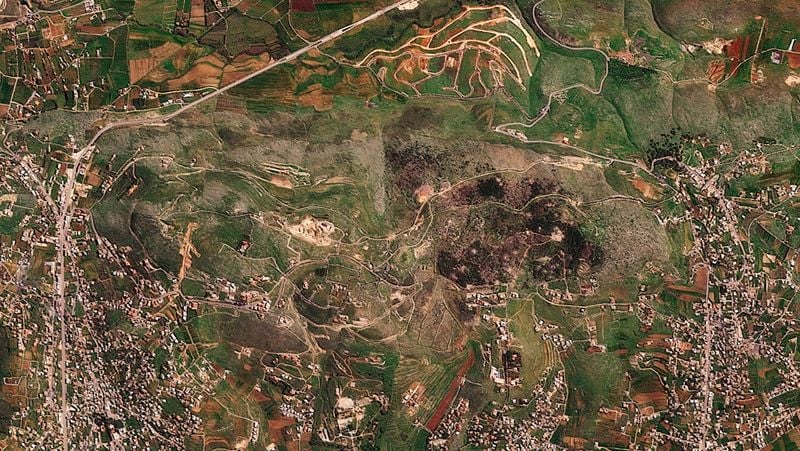
On 19 June 2026, Israeli airstrikes hit south Lebanon and the Bekaa Valley hard enough that the Lebanese Ministry of Health, by the following morning, was reporting a single-day toll of 83 people killed and 141 injured. The figure, circulated by Beirut on 20 June and relayed through regional outlets including The Cradle and Al Alam, does not stand alone. It sits on top of a cumulative count that the same ministry now puts at 4,057 dead and 12,121 injured since 2 March — the date a renewed phase of the Israel-Hezbollah conflict opened after the November 2024 ceasefire's slow-motion collapse. The numbers, while consistent across Lebanese, Iranian and pan-Arab wire accounts, remain exclusively on the Lebanese side of the ledger; Israel has not, in the reporting available to Monexus, published a parallel tally of strikes conducted or Hezbollah assets destroyed, and the discrepancies that always attend wartime tallies have not been adjudicated by an independent monitor.
What the figures describe, however, is a pattern rather than an episode. The escalation has moved from calibrated exchanges in March through grinding air operations in April and May into something closer to open siege in mid-June. South Lebanon and the Beqaa Valley — the two theatres where Hezbollah retains its deepest civil footprint — are now absorbing strikes described as "severe and continuous" by Lebanese sources relayed through Fars News, including a single incident in the town of Kanarit that local accounts put at seven killed in one round of bombardment. The compound effect is that a campaign originally framed by its proponents as precision counter-strikes is now producing daily fatality counts in the dozens, not the low single digits, and the political architecture built to stop that trajectory is visibly buckling.
The day the framework cracked
The framework in question is the ceasefire arrangement concluded in late November 2024 under US and French sponsorship, which suspended active hostilities between Israel and Hezbollah in exchange for a phased Israeli withdrawal from southern Lebanese territory and a disarmament commitment from the Shia militia. For roughly fourteen months the arrangement held in form if not in spirit: Israel retained a presence inside Lebanese territory in disputed buffer zones, periodic strikes continued at low tempo, and Hezbollah's reconstitution in the Beqaa and the south proceeded under partial surveillance. The events of 2 March 2026 — the date from which the Lebanese ministry now indexes its cumulative casualty count — were the moment the ceasefire stopped being operative on the ground even if neither side had formally renounced it.
By June, the gap between legal status and operational reality had widened further. The 19 June strikes, concentrated in the south and the eastern Beqaa, mark the fourth consecutive week in which single-day casualty counts have exceeded fifty, according to the daily ministry tallies aggregated by Iranian outlets Fars News and Tasnim. The cumulative figure of 4,057 dead crossed a threshold that, in earlier phases of the conflict, prompted international emergency sessions. The Lebanese government's requests for an immediate cessation, voiced in Beirut and through UN channels, have not produced a public Israeli response in the wire traffic Monexus has reviewed. US comments have been confined to general calls for de-escalation; the Trump administration's Middle East envoy has not, in the material available, announced a new mediation track.
The Beqaa Valley dimension is consequential and under-reported in Western wire coverage. Much of the international attention on the Israel-Hezbollah front remains fixed on the southern border strip — the Litani corridor and the towns immediately north of it — because that is where the geography of the original ceasefire was drawn. The Beqaa, further north and east, has historically been the militia's logistical and command hinterland, and strikes there have always carried a different signalling weight. The current campaign's willingness to operate at scale in the Beqaa suggests that the operational ceiling Israel set for itself under the November 2024 framework is no longer operative.
Counter-narrative and the limits of the Lebanese tally
The casualty numbers come from the Lebanese Ministry of Health. They are reported with consistency across Lebanese state-aligned outlets, pan-Arab media including Al Alam, and Iranian state and state-adjacent wires including Fars News and Tasnim. The convergence of those sources is not, in itself, a guarantee of accuracy; all three ecosystems share an interest in documenting civilian harm at the highest defensible figure, and wartime health-ministry tallies across the region have historically struggled to distinguish combatants from non-combatants, to avoid double-counting in mass-casualty events, and to incorporate corrections issued after initial reporting. The figures should be read as the best available official count, not as a verified audit.
Israel's counter-narrative — that the strikes target Hezbollah military infrastructure and that civilian harm is a function of the militia's embedding in populated areas — has not, in the thread material available to Monexus, been quantified by the IDF Spokesperson in the specific form of a daily disclosure. The Israeli framing is implicit in the conduct of operations rather than explicit in a parallel data series. For a reader trying to weigh the competing accounts, the honest answer is that the Lebanese cumulative count is the only daily-disclosed number in circulation, and that no independently audited alternative has been published in the material reviewed.
A second counter-frame, less often articulated in English-language reporting, holds that the renewed escalation is itself a response to a Hezbollah reconstitution that had reached a point where Israel concluded the November 2024 framework was not delivering its promised disarmament outcome. This reading does not minimise the civilian toll; it relocates causation. The evidence for it is the operational tempo, the targeting of sites plausibly linked to the militia's command structure rather than its civilian-front institutions, and the absence of any visible Israeli political appetite for a return to the November 2024 status quo. The reading remains a structural inference rather than a documented Israeli policy statement.
What the pattern suggests
Step back from the daily count and a larger pattern emerges. The Israel-Hezbollah front in mid-2026 has the structural features of a war that has outgrown its original political settlement but has not yet acquired a new one. The November 2024 ceasefire was designed to freeze a specific military balance and to defer the deeper questions — Hezbollah's arsenal, its presence north of the Litani, Iran's logistical corridor through Syria and the Beqaa — to a later diplomatic process. That later process never arrived. The result is a ceasefire that exists in name and an active conflict that exists in fact, with the civilian population of south Lebanon and the Beqaa absorbing the difference.
The structural pressure runs in both directions. From the Israeli side, the operational logic of degrading Hezbollah's capacity to threaten northern Israeli communities pulls toward continued high-tempo strikes; the political logic of avoiding another ground occupation and of not triggering a wider regional war pulls toward restraint. From the Lebanese and Hezbollah side, the political logic of signalling survivability and the diplomatic logic of extracting a renewed framework pull in opposing directions, and the day-to-day conduct of operations reflects the balance struck within the militia's own decision-making rather than a coherent Lebanese state position. The absence of a US-led mediation track — visible in the silence of the State Department and the regional envoy's office in the wire traffic reviewed — means the equilibrium between these competing logics is being set on the ground by targeting cells and aircrew, not by negotiators.
What is being built, in the absence of a diplomatic architecture, is a new operational normal. Single-day tolls in the dozens, strikes extending into the Beqaa, Israeli operations inside Lebanese territory that the November 2024 framework was meant to render unnecessary — these are no longer escalations against a baseline of calm. They are the baseline. The escalation, if it comes, will be measured from a much higher floor than it would have been six months ago.
The Bekaa and the question of depth
The decision to operate at scale in the Beqaa Valley carries strategic signalling that the southern border strikes do not. South Lebanon is the theatre Israel publicly committed to keep clear of as a condition of the 2024 ceasefire; strikes there, however devastating, can be framed as enforcement of an existing red line. The Beqaa is the militia's deeper territory — its training areas, its command nodes, the terrain through which Iranian logistical support historically transited before the Assad regime's fall reduced that corridor to a shadow of its former capacity. Strikes there imply that the operation is no longer about enforcing a border but about degrading a military organisation.
The implication matters for the trajectory of the conflict. If the operational objective is border enforcement, a return to the November 2024 framework remains conceptually available: redeploy, withdraw to the recognised line, restart the monitoring mechanism. If the objective is organisational degradation, no such framework exists, and none is in negotiation. The Beqaa strikes suggest the Israeli operation has moved from the first register into the second. That move is consequential for Iranian decision-making in Tehran, where the question of how much of Hezbollah's capacity Israel is permitted to dismantle before an Iranian response becomes politically unavoidable is being asked in real time. It is consequential for the Lebanese state, which is being bypassed as a negotiating interlocutor in favour of direct Israeli-Hezbollah-and-Iran signalling. And it is consequential for the regional balance that the Gulf states and Egypt have a stake in preserving, and that no regional capital has so far chosen to defend actively in the public reporting reviewed.
Stakes and what the next weeks look like
The stakes resolve along three axes. First, the humanitarian axis: at the current daily tempo, the cumulative toll will pass 5,000 dead before the end of the northern summer unless one of three things happens — a negotiated halt, a unilateral Israeli decision to de-escalate, or a wider regional intervention that diverts Israeli air capacity elsewhere. None of the three is visible in the wire traffic. Second, the political axis: the Lebanese government, whose authority north of the Litani is already contested, is being further hollowed by an air campaign it cannot answer militarily and cannot halt diplomatically. The longer the campaign continues at this tempo, the more the centre of gravity inside Lebanon shifts toward actors willing to negotiate directly with Israel outside the state framework, and toward actors willing to escalate on the militia's behalf without state permission. Third, the regional axis: an Israeli operation that visibly degrades Hezbollah's capacity will be read in Tehran as a test of whether Iran's deterrent architecture has any remaining operational content, and in Riyadh and Abu Dhabi as a precedent for how a US-aligned regional order handles armed non-state actors embedded in failing states.
The next weeks, on the trajectory visible in the reporting, will be defined less by any single dramatic event than by the cumulative weight of daily operations conducted inside an undeclared war. The 19 June strikes that produced the 83-dead single-day toll are not the climax of a campaign; they are a data point in a campaign whose endpoint has not been articulated by any of the principals. Until one of those principals — Israel, the United States, Lebanon, Iran, or Hezbollah itself — chooses to articulate an endpoint and the political architecture to reach it, the operation will continue to set its own tempo, and the population of south Lebanon and the Beqaa will continue to absorb it.
What remains uncertain is whether the diplomatic silence visible in June is preparatory or permanent. The absence of a public US mediation track, of a UN Security Council product, and of a regional statement beyond general calls for de-escalation could mean a new track is being assembled behind closed doors; it could equally mean that none of the principals with the standing to convene one believes the time is right. The thread material does not resolve the question. For now, the ceasefire exists as a name, the war exists as a fact, and the gap between them is being filled with the people of south Lebanon and the Beqaa.
Desk note: Monexus frames this piece from the Lebanese, pan-Arab and Iranian wire reports that constitute the day's available sourcing, while noting that the casualty figures originate with a single national authority and have not been independently audited. Israeli framing is acknowledged structurally but is not quantified in the thread material available at the time of writing.
Wire provenance
This editorial synthesis draws on the following public wire/social posts:
- https://t.me/TheCradleMedia
- https://t.me/alalamarabic
- https://t.me/FarsNewsInt
- https://t.me/FarsNewsInt
- https://t.me/JahanTasnim
- https://t.me/thecradlemedia
- https://t.me/FarsNewsInt
- https://t.me/JahanTasnim