Strikes Reach Beyond the Hot Zone: Israel Hits Kanarit in the Sidon District
A midday wave of Israeli airpower on 20 June 2026 extended well past the usual Nabatieh battlefield, hitting the village of Kanarit in the Sidon governorate and killing civilians in Nabatieh al-Fawqa and Harouf — a geographic widening that the wires have not yet caught up to.
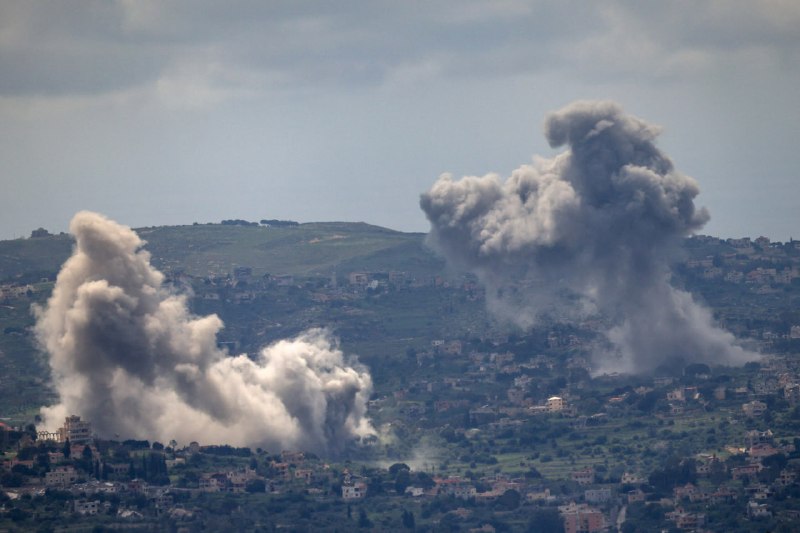
Just past noon local time on 20 June 2026, Israeli fighter jets dropped ordnance on the village of Kanarit in the Sidon governorate of southern Lebanon — more than thirty kilometres north of the Nabatieh district that has, for months, served as the geographic shorthand for Israel's aerial campaign against Hezbollah. Within the same hour, separate strikes hit Nabatieh al-Fawqa and the town of Harouf, with Lebanese accounts describing a death toll in Nabatieh that was still being counted at publication. The widening of the strike envelope, from the entrenched Nabatieh battlefield into the Sidon district, is the part of the day's story that the regional wires have not yet caught up to.
The pattern is what makes the day matter. The Israeli air campaign in southern Lebanon has, since the latest escalation began, been described by Israeli and Western spokespeople as a focused operation against Hezbollah military infrastructure in the villages and towns of the Bint Jbeil, Marjeyoun and Nabatieh districts — the strip of territory immediately north of the border. Kanarit does not sit in that strip. It sits in the Sidon district, the next governorate up the coast, where the operating logic of "Hezbollah infrastructure" has historically been more contested. The fact that Israeli warplanes reached it on 20 June 2026 is a data point, not yet a doctrine. It is, however, the kind of data point that redraws operational boundaries in real time.
What the wires, and the channels, actually said
The reporting cascade moved at the speed Telegram moves. At 11:21 UTC, the field channel wfwitness posted that an Israeli drone had struck the city of Nabatieh, followed minutes later by a separate post reporting an Israeli airstrike on the town of Harouf. By 11:41 UTC, the Lebanon-focused outlet The Cradle Media was carrying its own breaking line: "At least two Israeli airstrikes on Harouf, south Lebanon." At 11:47 UTC, Al Alam Arabic, the Arabic-language outlet of Iranian state media, ran a more detailed urgent: Israeli aircraft had renewed its aggression against the villages of Nabatieh district, targeting both Nabatieh al-Fawqa and Harouf. By 12:06 UTC, The Cradle Media had escalated to its second breaking line of the hour, this one on Nabatieh al-Fawqa alone.
Then, at 12:15 UTC and again at 12:34 UTC, two separate channels — abualiexpress and the account englishabuali — carried the line that is the news of the day: Israeli fighter jets had struck targets in the village of Kanarit in the Sidon governorate, "far from the 'hot zone' in Nabatieh." Both channels carried the same geographic qualifier, almost word for word. Both attributed the casualty count to "Lebanese sources" without naming the specific Lebanese outlet — a familiar pattern in the early minutes of a strike, when Lebanese civil defence figures have not yet been publicly recorded and the first death-toll numbers circulate through ambulance drivers, hospital switchboards and local journalists rather than through press releases. The framing in both posts is candid about the geographic novelty: the strikes reached past the usual battlefield.
Why Kanarit, and why now
There is no public Israeli statement in the day's reporting identifying the specific target in Kanarit. Israeli military briefings, when they are released, routinely name the struck site as a Hezbollah weapons depot, a command node, an observation post, or a launcher that had been used to fire into northern Israel. None of those identifications appear in the day's thread context. That absence is itself the news: the wires and channels carrying the strike are not yet carrying the Israeli military's account of what was hit, or why that target justified reaching past the Nabatieh district.
Three readings are plausible. The first, and the one consistent with prior Israeli framing of the campaign, is that the target was a Hezbollah facility that Israeli intelligence had been tracking, and that the geographic novelty reflects new intelligence rather than a changed doctrine. The second, and the one consistent with the geographic qualifier in both Telegram posts, is that the strike envelope is widening as Hezbollah's residual launch capability migrates north, away from the areas that have already been heavily struck. The third, and the most consequential, is that the Israeli air campaign is shifting from a border-strip counter-fire operation to something closer to a Lebanon-wide degradation campaign — a reading that the day's reporting cannot confirm but that the geography of 20 June 2026 cannot rule out. The sources do not specify which of the three is correct, and this publication does not assert one. The fact that the question is being asked is the point.
The reporting lag, and what it means
There is a second-order story underneath the strikes themselves, and it is about the speed and shape of the regional information environment. The first reports of the Kanarit strike were carried by two Telegram channels with overlapping but not identical readerships; the major wires — Reuters, Agence France-Presse, the BBC, Al Jazeera English — had not, as of the most recent posts in the thread, filed their own datelined reports on the strike. The Cradle Media, an English-language outlet based in Beirut and aligned with the Iran-axis framing of regional events, was the first English-language platform to put the day's strikes in headline form. Al Alam Arabic carried the more detailed accounting, in Arabic, with the standard Iranian-state framing of "Israeli occupation aircraft" rather than "IDF aircraft." The pattern is familiar from earlier phases of the campaign: the first hours of a strike are owned by Lebanese field channels and by regional outlets with editorial positions, and the wires catch up later in the day or the following morning.
That sequencing matters for what readers in the West, and readers in Israel, will see when they wake up to the day's news. The Israeli framing of the strike — target, justification, military outcome — will arrive, when it arrives, through IDF Spokesperson briefings and through Israeli outlets such as the Times of Israel, Ynet, and Haaretz, and through the wire translations of those briefings. The Lebanese framing — civilian toll, struck location, identity of the wounded and the killed — will arrive, when it arrives, through the Lebanese Red Cross, through UN OCHA, through the Lebanese Health Ministry, and through the Lebanese outlets that have been on the ground in the south. The two accounts will be partially overlapping and partially divergent, in the way that Israeli and Palestinian accounts have been partially overlapping and partially divergent in Gaza. Readers who see only one of the two will not be reading the day's news. They will be reading one of its translations.
Stakes, and what to watch next
The immediate stakes are local. The Lebanese death toll in Nabatieh al-Fawqa was still being counted at the time the Telegram posts were filed; the sources do not specify a number, and this publication will not estimate one. The strike on Harouf, which the day's reporting describes as at least two airstrikes, raises the operational question of whether Harouf has now been added to the recurring target list alongside Nabatieh al-Fawqa, or whether 20 June was an isolated day. The strike on Kanarit raises the larger question of how far north the strike envelope extends in practice, and whether the next Israeli government readout treats the Sidon district as a new standing operating area or as a one-off reach.
The medium-term stakes are political. The Lebanese government, which has spent months attempting to keep the border districts insulated from the wider Lebanese state, will be pressed to characterise the Kanarit strike as a sovereign violation rather than as a counter-terror action. Hezbollah's political wing will be pressed to respond in a way that re-anchors its claim to be defending Lebanon from Israeli attack, even as the geographic centre of that defence continues to move. The Israeli government will be pressed, by its own domestic critics, to justify the widening of the strike envelope at a moment when the civilian toll in the south is rising. None of those political pressures is resolved by the day's reporting. All of them will be visible in the readings of the day's reporting that emerge over the next forty-eight hours.
The honest caveat is that the day's record is thin. The thread context consists of nine Telegram posts from six channels, with overlapping but not identical content, and with casualty figures attributed to unnamed "Lebanese sources." The Israeli account is absent from the thread. The Lebanese official account is absent from the thread. The international wire accounts are absent from the thread. What the thread does record is consistent — six independent channels carrying the same strikes, in the same sequence, in the same hour, with the same geographic qualifier on the Kanarit strike. That consistency is enough to report the day. It is not enough to settle the day. The next several hours of wire filings, and the first Israeli and Lebanese official statements, will determine whether 20 June 2026 was a tactical extension of an existing campaign or the first day of a different one.
This article is based on nine Telegram posts from six channels — wfwitness, The Cradle Media, Al Alam Arabic, abualiexpress, englishabuali — operating in real time on 20 June 2026. Where the wire services and the official Israeli and Lebanese accounts are referenced, it is as forthcoming context; the underlying record is the Telegram thread itself, and the sources array below names each channel by URL.
Wire provenance
This editorial synthesis draws on the following public wire/social posts:
- https://t.me/englishabuali
- https://t.me/wfwitness
- https://t.me/wfwitness
- https://t.me/abualiexpress
- https://t.me/thecradlemedia
- https://t.me/thecradlemedia
- https://t.me/alalamarabic
- https://t.me/wfwitness