Lapid's diagnosis: Israel won the war but lost the argument
Israel's opposition leader is making a domestic political case the wires have largely missed: the war with Iran may have been winnable but was conducted as a vassal's errand, not a sovereign's.
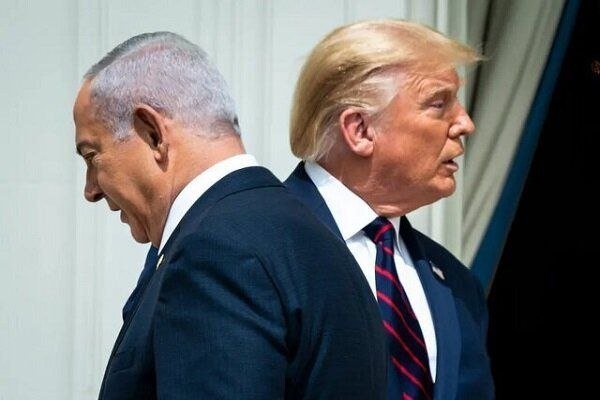
On 20 June 2026, Israeli opposition leader Yair Lapid used a televised statement to detonate the consensus that has governed Israeli war coverage since the strikes on Iran began. The country had a just war, he said. The execution was the problem. In framing the Israeli-American relationship of the past weeks as a hierarchy of commander and sergeant rather than a partnership of sovereigns, Lapid did more than attack Benjamin Netanyahu. He reframed how Israelis should understand the war they have just watched: as a campaign fought for the right reasons by a government that did not know how to ask its superpower ally to finish the job.
The argument deserves more weight than the wires have given it. Lapid is not a marginal figure. He leads the largest party in the opposition, he has held the prime ministership, and his security-establishment bona fides are not in question. When he says Netanyahu "sold the Americans a scenario in which the regime would fall" without presenting "the impact on energy markets" or "the consequences of a prolonged conflict," he is articulating a critique that has circulated in Israeli defence commentary for weeks but had not yet been voiced by a politician of his standing. He is also, deliberately, speaking to a domestic Israeli audience whose trust in the war's prosecution has eroded as oil markets have absorbed the news from the Persian Gulf.
What Lapid is actually claiming
Strip the rhetoric and three distinct claims remain. First, that the operational design of the war — particularly the decision not to target Iran's oil and energy facilities, and specifically Kharg Island, the terminal that handles the overwhelming majority of the Islamic Republic's crude exports — was a strategic concession imposed by Washington and accepted by Jerusalem. Second, that this self-restraint was purchased at the cost of the war's principal political objective: regime pressure severe enough to produce internal collapse. Third, that the Israel-America relationship during the war was not the alliance of equals Israeli officials described in English-language press conferences but a subordination in which the Israeli prime minister functioned as a field commander awaiting the steward's instructions.
The Kharg point is the most consequential. Iran's export infrastructure is the regime's economic lung; strikes there would have inflicted immediate, visible, and politically intolerable damage. The decision to leave it intact was, in Lapid's telling, Netanyahu's failure to persuade the Trump administration that the cost of escalation was worth paying. He failed, Lapid suggests, because he never put the case in terms the White House would accept.
The counter-narrative
Netanyahu's defenders — and the dominant framing in much of the Anglophone press — read the same events as vindication. The strikes destroyed nuclear and missile sites that had been described, for two decades, as existential threats. The regime did not close the Strait of Hormuz. Oil prices spiked but did not crash the global economy. Regional escalation with Hezbollah was contained. By any conventional standard of military efficacy, the campaign worked. The critique that it could have worked harder is the kind of complaint only a country that has already won gets to make.
There is force in that read. Wars are prosecuted against constraints the public does not see, and the American political ceiling on Israeli escalation has been a known quantity since at least the George W. Bush administration. A prime minister who failed to sell his own coalition on the operation would not have been the right person to sell Washington on striking Kharg. Lapid's implicit counter — that a different Israeli leader would have done better — is unfalsifiable.
The structural problem underneath
But Lapid is pointing at something the success narrative leaves untouched: the dependency. When the Israeli prime minister cannot persuade the American president to authorise strikes that Israeli doctrine considers necessary, the gap is not a tactical failure. It is a structural feature of an alliance in which the smaller partner holds the regional assets and the larger partner holds the political authorisation. Trump's public statement about the bombing of Dahieh — the southern Beirut suburb that Israel struck as part of the broader campaign — read, Lapid said, not as a note between governments but as a commanding officer reprimanding a platoon sergeant. The remark matters less as commentary than as evidence: the American president felt free to issue it, and the Israeli prime minister accepted it.
This is the part the wire coverage has tended to skip past. Alliances of this depth are not free. They trade sovereignty for capability, and the price is paid in the operations a government does not run and the targets it does not hit. An Israeli political class that wants the protection of the American nuclear umbrella, the diplomatic cover at the UN, and the resupply pipeline for air-defence interceptors cannot simultaneously expect Washington to defer on questions of escalation. Lapid is saying, in effect, that the country should at least be honest about what it has purchased.
The stakes for the next phase
If Lapid's reading holds, the post-war settlement is built on sand. The Iranian nuclear programme is damaged, not destroyed. The missile array is degraded, not eliminated. The regime is wounded, not falling. And the Israeli government has demonstrated, to friend and adversary alike, that its operational ceiling in any future confrontation is set in Washington. That is not a balance Tehran will forget, and it is not a balance that makes a second round less likely.
What remains genuinely uncertain is whether Lapid's framing will land with an Israeli public that, by most polls, continues to trust the security cabinet on questions of war and distrusts it on almost everything else. The sources on which this publication relies do not yet include Israeli public-opinion data from the immediate post-strike window. The critique stands or falls on a verdict that has not yet been delivered.
This publication reads Lapid's intervention as the first serious domestic attempt to convert a military outcome into a political indictment — and as a warning that a successful war, badly explained, can still lose the country that fought it.
Wire provenance
This editorial synthesis draws on the following public wire/social posts:
- https://t.me/ClashReport
- https://t.me/ClashReport
- https://t.me/ClashReport
- https://t.me/ClashReport
Follow the event.
These dated source records provide context. They do not retrospectively verify this archive article.
Separate what the nuclear watchdog reported from what it could not determine after the June 2025 strikes.