Beirut's long shadow: how Israel's attempt to peel Lebanon away from Tehran is being read inside the region
An Israeli Channel 15 report admits Tel Aviv's bid to decouple Lebanon from Tehran has failed — a candid assessment that itself is doing diplomatic work, and one the Iranian-language press is amplifying fast.
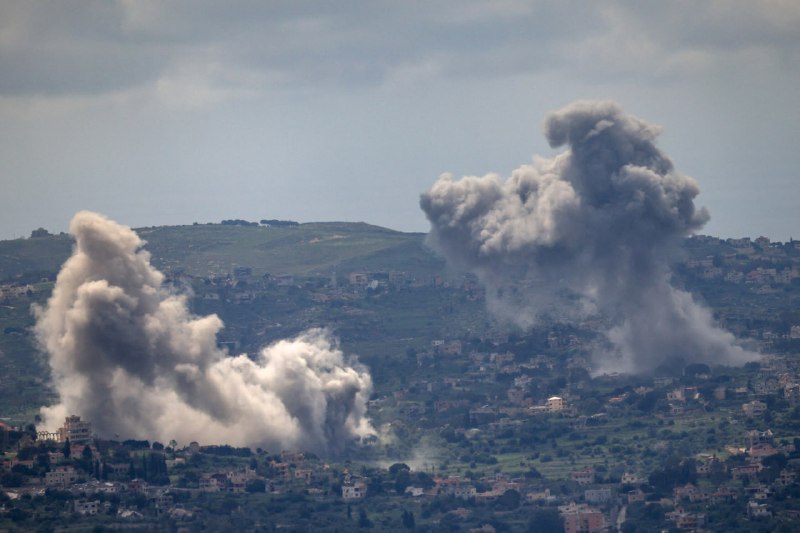
On the evening of 20 June 2026, an unusual piece of Israeli television analysis was being translated, clipped and recirculated across the Iranian-language press faster than the original broadcast had finished airing. Israeli Channel 15 — a commercial outlet owned by Yedioth Ahronoth's parent group and one of the country's more openly hawkish prime-time voices — had concluded, in a report aired in Hebrew, that Tel Aviv's year-long effort to separate the trajectory of Lebanon from that of Iran had failed. Within hours the framing had been pulled into Arabic by al-Alam, into Farsi by Tasnim and Mehr, and rebroadcast by channels operated by the Iranian state. The story is small in footage and large in implication: it is a senior Israeli outlet publicly conceding a strategic objective on a regional axis, and the speed with which that concession travelled tells its own story about who in the region is read as authoritative and who is read as a counter-weight.
The substantive claim is narrow. Channel 15's report, as paraphrased across four Iranian-language wire services, holds that Israel tried — and failed — to decouple the political, security and economic course of Lebanon from Iran's. The framing is being deployed, in those outlets, as evidence of strategic setback. Read literally, the report is an admission of limits. Read instrumentally, it is also a domestic Israeli argument: a television station naming a failure in order to argue for a different allocation of resources or a different escalation ladder. That second reading matters, because the same sentence carries very different freight when it is broadcast into a region where every Israeli statement is parsed for what it reveals about intentions.
What Channel 15 actually said — and what got translated
The Channel 15 report, as relayed by the four Iranian and Iran-aligned outlets, focused on Lebanon's post-ceasefire political arithmetic. The core complaint was that Tel Aviv had wagered on a constellation of Lebanese factions — the post-2024 political class, parts of the Lebanese Armed Forces command, Sunni parliamentary blocs, the Druze leadership of Walid Jumblatt's line and its successors — pulling Beirut out of the Iranian security orbit in exchange for reconstruction funding, IMF-mediated liquidity, Israeli disengagement from airspace and a more permissive southern border. None of those expectations, the report argued, had been met. Hezbollah, the argument runs, remains the central pole in Lebanese political gravity. Its parliamentary weight, its social-service network, and its military reconstitution in the south have continued to position Iran as the senior partner in the relationship rather than the junior.
The translation work done by al-Alam, Tasnim, Mehr and the Jahan Tasnim channel is worth pausing on. None of the four added novel factual material; each presented Channel 15 as a recognisably Israeli voice, a "Zionist media" outlet of the establishment, in order to invest the concession with authority. The framing phrases differ slightly — al-Alam leans on the word "failed"; Tasnim's English wire and the Jahan channel use "strategic failures" — but the through-line is identical. This is the kind of quote-laundering that regional media does well: take an Israeli argument Israeli hawks would recognise as their own, strip the nuance, and re-offer it as a verdict on Israeli policy.
The counter-narrative: a strategic failure or a deliberate disclosure?
The Iranian-language read is not the only one. Inside Israel, Channel 15's segment has been read by some commentators not as a strategic admission but as a deliberate framing intervention — a station, closely associated with the security commentariat, building a public case for a more aggressive posture. If separation cannot be achieved at low cost through Lebanese intermediaries, the argument goes, the next option on the menu is the kind of direct, sustained operations that no Israeli cabinet has yet been willing to authorise. Read that way, Channel 15 is not confessing failure; it is preparing the rhetorical ground for escalation by declaring that the soft track has run out of road. The outlets running the line in the other direction — al-Alam, Tasnim — are aware of this read. They are publishing it anyway, because the headline, not the meta-text, is the asset.
A third read is procedural. Lebanon's post-2024 stabilisation track is, in any honest accounting, only partly an Israeli project. It is also an American one — the ceasefire monitors, the IMF programme conditionality, the Saudi-Qatari-Emirati reconstruction diplomacy, the French push for a presidential election. The Channel 15 framing attributes the outcome to a Tel Aviv–Beirut bilateral in which neither capital is the dominant mover. If the strategy has failed, it has failed across a coalition of sponsors, and any honest reading of the regional press will name Washington, Riyadh and Paris alongside Jerusalem.
What larger pattern this sits inside
The incident is a small window onto a much larger shift in how the Middle East is read by its own media ecosystems. For the better part of two decades, the default position of the regional press — both the Arabic and the Farsi wire services — has been to treat Israeli strategic communications as a closed system, of interest mainly to the Israeli public and to the small Anglophone press that translates it. That has visibly changed. Israeli analysts are now read as primary sources of evidence about Israeli weakness, not just Israeli intention, and the speed of translation suggests a regional audience for that kind of self-incriminating material. The shift is not symmetrical: Israeli outlets do not, on the whole, treat Iranian state media the same way. But the asymmetry is itself a piece of evidence. The system is no longer talking past itself; it is starting to read each other, and the things being read are the parts of the conversation each side would prefer to keep private.
The pattern also has an industrial-policy edge. Lebanon's reconstruction, Iran's sanctions exposure, the routing of Gulf reconstruction funds, the post-ceasefire security architecture in the south — all of these are running through the same small set of mediators, most of whom are operating out of Beirut, Doha, Riyadh, Tehran and (now, with a smaller footprint than a year ago) Tel Aviv. Channel 15's read of that map is, at one level, a request that Israeli policy catch up with a regional reality in which Iran's leverage in Lebanon has not weakened as much as the Israeli planning cycle assumed. The fact that the request is being published rather than whispered is itself part of the story.
Stakes, on every side
For Tehran, the win is narrative as much as material. An Israeli commercial station conceding strategic failure on a regional axis is, for the Iranian press, the kind of validation that the IRGC's own briefings cannot manufacture. The effect on Lebanese Shia public opinion is harder to measure; the effect on the Arab diplomatic class, which has spent eighteen months betting on a quieter Hezbollah, is more visible. The same headline that vindicates the Iranian read also complicates the Gulf position, because it puts a date stamp on the moment when the Hezbollah file stopped looking like a problem the Saudis and Emiratis could manage at arm's length.
For Israel, the stakes are sharper. A failed Lebanon-track means one of two things in the policy debate already running inside the cabinet: either a significant reallocation of resources to a northern front that the public has been told is on a glide path to quiet, or a politically costly admission that the public was, again, oversold. The Channel 15 segment, by naming the failure in prime time, is leaning on the second door. The more interesting question is whether the security cabinet will read it that way, or will treat the broadcast itself as part of the problem.
For Lebanon, the picture is more constrained. The country remains inside an economic stabilisation programme negotiated with the IMF, a ceasefire arrangement negotiated through Washington, and a political class still struggling to elect a president. Whether the Channel 15 framing accelerates or slows any of those tracks depends on the reaction in Washington and Riyadh over the next several weeks. The Lebanese press, for its part, is treating the Israeli read as confirmation of what Lebanese Shia, Christian and Druze commentators have been saying for months: that the foreign-policy tether to Tehran was never going to loosen quickly, and that the southern front would set the pace.
What the sources do not yet say
Two things remain genuinely uncertain. The first is the precise text of the Channel 15 broadcast: the four Iranian-language wires report it in summary, not in transcript, and the original Hebrew segment is not yet in the public record at the time of writing. The second is the reaction from within the Israeli security cabinet. The Israeli press is, characteristically, reading its own channel's framing as a provocation to government rather than a verdict on it; the Iranian press is reading the same framing as a verdict on Israeli strategy as a whole. Both reads are defensible. The evidence available at the moment of writing does not let a careful reader pick between them.
What is harder to dispute is that an Israeli commercial station, in prime time, used the word "failed" about a regional strategy — and that the regional press, in four languages and within hours, treated that word as a usable fact. The next move belongs to the people in Beirut, Tehran, Riyadh, Doha and Jerusalem who decide what to do with it. Given the speed with which the line travelled on 20 June 2026, none of them has long.
Desk note: Monexus ran this on the four Iranian-language wires rather than on the Israeli source directly because the original Hebrew segment was not yet retrievable; the framing on the Iranian side is therefore treated as reporting on Israeli intent, not as primary Israeli commentary, and the alternative reads — strategic failure versus deliberate disclosure — are given equal weight.
Wire provenance
This editorial synthesis draws on the following public wire/social posts:
- https://t.me/alalamfa/xxxxx
- https://t.me/mehrnews/xxxxx
- https://t.me/tasnimnews_en/xxxxx
- https://t.me/JahanTasnim/xxxxx
Follow the event.
These dated source records provide context. They do not retrospectively verify this archive article.
Separate what the nuclear watchdog reported from what it could not determine after the June 2025 strikes.