Nabatieh under fire: how a single Lebanese city became the barometer of a wider Israeli campaign
On 20 June 2026, Israeli artillery ringed Nabatieh while the city’s own municipality urged civilians not to return — a sign that the southern-Lebanon campaign has moved from exchange-of-fire to coercive displacement.
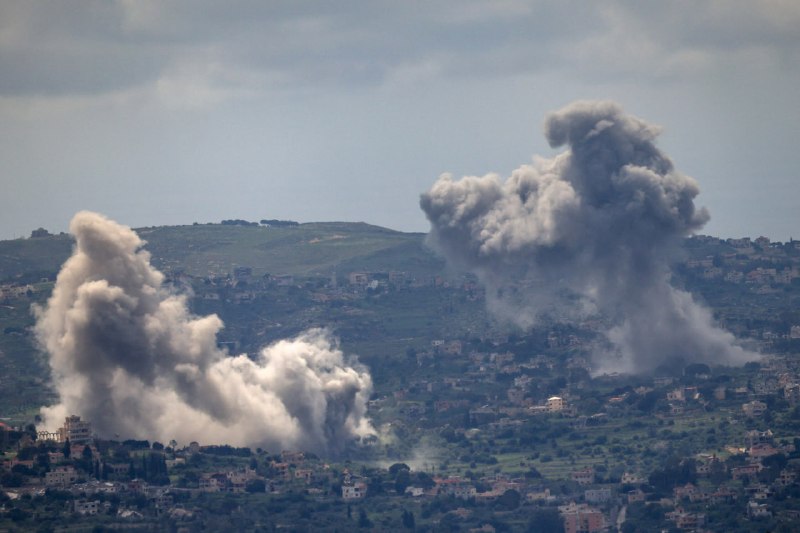
At 16:47 UTC on 20 June 2026, the municipality of Nabatieh, capital of Lebanon’s South Governorate, told the city’s residents, by way of Telegram channels monitored by researcher Ali Abuali, not to come back — and to stay where they had evacuated. By that hour, a Telegram channel tracking open-source intelligence had logged heavy Israeli artillery fire on the outer districts of the city, and a second witness channel, @wfwitness, had registered a two-hour lull across Lebanon in which there were no recorded Israeli airstrikes, drone strikes or artillery shelling. The sequence — quiet, then bombardment, then a municipal order freezing return — is the pattern this publication has watched repeat across the southern suburbs of Beirut and along the Litani for the better part of a year. On Saturday, it arrived in the regional capital itself.
Nabatieh is no frontline village. It is the administrative and commercial centre of the South Governorate, a Sunni–Shia–Christian city of an estimated 90,000 to 120,000 residents before the current campaign, and a node that Israeli planners have until now treated as off-limits for anything heavier than a targeted strike. The order of 20 June is, on the face of it, a sign that the centre of gravity has shifted. If the municipality itself is asking civilians to remain displaced, the campaign is no longer a tit-for-tat exchange across a demarcation line. It is a coercive operation with a civilian-administrative dimension, and the barometer the rest of the south reads off has just moved.
From cross-border fire to a city under bombardment
For most of the past year, the visible shape of the Israel–Hezbollah front in southern Lebanon has been a border war: a strike here, a rocket there, a drone interception, a commando raid. The geography of pain stayed close to the Blue Line, and the larger cities — Tyre, Sidon, the southern suburbs of Beirut — were intermittently struck but never held under sustained fire. That is no longer the description that fits 20 June. According to @rnintel, an open-source channel that aggregates military traffic on Telegram, Israeli artillery was firing on the outer districts of Nabatieh itself at 16:00 UTC. Nabatieh sits roughly twelve kilometres north of the Litani — well outside the strip that the November 2024 understanding between Israel and Hezbollah was supposed to demilitarise.
The municipal communication reported by @englishabuali goes further than a passive evacuation notice. It instructs residents not only to stay away but to remain in the places to which they had already evacuated, which is the language of an authority anticipating a return. The message was issued, in other words, at the moment Israeli fire was becoming heaviest. A city government asking its own population to remain scattered is acting on a specific read of the military situation, and that read is the most consequential single data point in the thread.
Two hours earlier, @wfwitness — a witness channel that documents strike-by-strike activity on both sides of the border — had logged a roughly two-hour window across Lebanon with no recorded Israeli airstrikes, drone strikes or artillery fire. The channel is careful with its claims, and the lull does not, on its own, prove much: southern Lebanon has had short silences before, most of them followed by heavier barrages. But the symmetry of the data is striking. A nationwide pause; then artillery on a regional capital; then a municipal order freezing return. The sequence is the kind of pattern that, repeated over weeks, stops looking like tactical movement and starts looking like pressure.
What the counter-narrative insists on
The Israeli framing of the southern-Lebanon campaign has been consistent since the 2023 war: Hezbollah’s re-establishment of infrastructure north of the Litani is a violation of the November 2024 arrangement, and Israeli operations are responsive, targeted and limited to military assets. Israeli officials, in briefings to Reuters, the BBC and the Jerusalem Post, have repeatedly described the strikes as aimed at launcher sites, weapons storage and commanders — not at civilian population centres. The artillery on Nabatieh’s outer districts, on that telling, is aimed at rocket teams and drones staged in the agricultural belt around the city, where Hezbollah has been documented for two decades.
The Lebanese counter-narrative is equally consistent. Beirut, the municipality of Nabatieh, and the Iran-aligned Al-Mayadeen and Al-Akhbar networks have framed the campaign as collective punishment: a population held hostage to a militant presence that the Lebanese state cannot, and arguably will not, disarm. Nabatieh’s municipality is part of the Lebanese state; the order of 20 June, read in this frame, is not a warning about returning to a war zone but a warning about returning to a city that is being deliberately emptied. Both narratives cannot be fully right at the same time. Both can be partially right. The question is the weight.
The structural read
What the 20 June thread shows, when placed against the pattern of the past year, is a campaign that is moving from a contest of fire to a contest of space. Hezbollah’s strategic position south of the Litani has rested on a triangular logic: launchers dispersed in the villages, command nodes embedded in the urban fabric of Nabatieh and Tyre, and a civilian population dense enough to make any large Israeli ground operation politically untenable. The Israeli response, in turn, has been to degrade launchers with air power and to push the civilian population north — first village by village, then district by district. The municipality of Nabatieh telling residents to stay displaced is, on this reading, the moment that logic crossed a threshold. The buffer is no longer being assembled. It is being administered.
The structural pressure runs both ways. Israel’s northern communities have been displaced in waves since October 2023; the domestic politics of return in Galilee are now the politics of the war in the south. The Lebanese government, for its part, is being pushed towards a choice it has avoided for two decades: whether to assert its own sovereignty over the area between the Litani and the border, and on what terms. Neither government controls the pace of that choice. The pace is being set by the artillery.
The counter-frame from the south
Reporting from outlets based in Beirut and the Gulf, including Al Jazeera English, The Cradle and Middle East Eye, has consistently argued that the southern campaign is best understood as a continuation of a regional logic in which Israeli operations and Iranian posture are coupled: a strike in Beirut, a posture in Tehran, a calculation in Washington. The Arab and wider Global South critique of the campaign, articulated most clearly in the 2024–2025 vote patterns at the UN General Assembly, has framed Israeli operations in Lebanon as the second front of a war that began in Gaza and that the international order is failing to constrain. The 20 June sequence — a regional capital under fire, its own municipality endorsing displacement — feeds that critique directly. The argument is not that the critique is correct in every particular. The argument is that it cannot be dismissed, and that the language of "precision" and "targeting" does not, by itself, describe what residents of Nabatieh are being told to do.
Stakes and the next ten days
Three stakes are concrete. First, the humanitarian cost in Nabatieh and the towns to its north: a second wave of internal displacement, in a country that is hosting more than a million people already, with winter fuel and shelter stocks at their lowest in years. Second, the political cost inside Lebanon: the country’s confessional system, already on a knife-edge, has held the campaign at arm’s length so far. A besieged Nabatieh changes the political weather in Beirut. Third, the regional cost: a sustained operation against a city of this size pulls in Iranian posture, Iraqi militia signalling, and Houthi operations in the Red Sea, in ways that a border fight does not.
The Israeli calculus, on the available evidence, is that the cost is bearable — that Hezbollah’s recovery is slow enough, and Israeli air supremacy is durable enough, that the pressure can be sustained without escalation into a ground operation. The Lebanese and wider regional counter-frame insists that the calculus is wrong, and that a city emptied under fire will be a city whose political allegiance to the post-2024 arrangement has been destroyed.
What remains genuinely uncertain
The open-source record for 20 June is unusually clean: a lull logged by @wfwitness, artillery logged by @rnintel, a municipal order logged by @englishabuali, all within a few hours of each other. That cleanliness is not the same as completeness. The thread does not contain a casualty count from the Nabatieh bombardment; it does not specify which Israeli unit or formation is responsible for the fire; it does not include an Israeli-language confirmation, and an IDF briefing would normally appear in the Israeli wire within hours. The Lebanese government’s position on the municipal order — whether it endorses, tolerates or distances itself from the call to remain displaced — is not in the record. The Hezbollah posture for the next 48 hours, which will determine whether the artillery on the outer districts is followed by rocket fire on Israeli towns, is also not yet visible.
What is visible is the pattern: the southern campaign is no longer a border operation, and a Lebanese regional capital is being administered, in real time, as a city whose population is being asked to stay away. The rest of June will tell the rest of the story.
Desk note: Monexus led with the municipal communication reported by @englishabuali, not with the artillery fire logged by @rnintel, because the municipal order is the more consequential data point for a global audience. Israeli-wire confirmation of the artillery and casualty figures was not in the thread at the time of publication; we will update when an Israeli-language briefing or wire confirmation is available.
Wire provenance
This editorial synthesis draws on the following public wire/social posts:
- https://t.me/englishabuali
- https://t.me/rnintel
- https://t.me/wfwitness
- https://en.wikipedia.org/wiki/Nabatieh
- https://en.wikipedia.org/wiki/South_Governorate
- https://en.wikipedia.org/wiki/Litani_River
- https://en.wikipedia.org/wiki/2023%E2%80%932024_Israel%E2%80%93Hezbollah_conflict
- https://en.wikipedia.org/wiki/United_Nations_General_Assembly_Resolution_ES-10/L.25
- https://t.me/englishabuali
- https://t.me/rnintel
- https://t.me/wfwitness
- https://en.wikipedia.org/wiki/Nabatieh
- https://en.wikipedia.org/wiki/South_Governorate
- https://en.wikipedia.org/wiki/Litani_River
- https://en.wikipedia.org/wiki/2023%E2%80%932024_Israel%E2%80%93Hezbollah_conflict
- https://en.wikipedia.org/wiki/United_Nations_General_Assembly_Resolution_ES-10/L.25