Nawrocki's Withdrawal of the White Eagle and the Cost of Symbols
Stripping Zelensky of Poland's highest honour is, on the surface, a row over history. Underneath, it is a stress test of the relationship Kyiv cannot afford to lose.
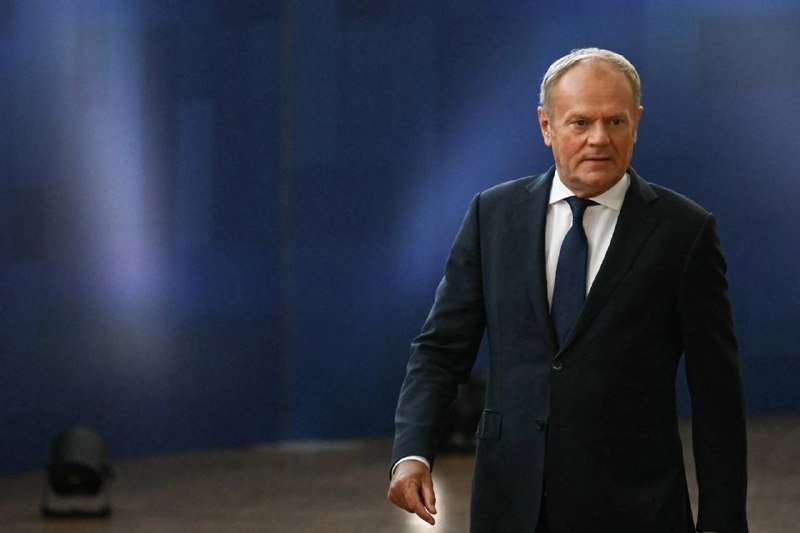
Polish President Karol Nawrocki used the podium of a Silesian Uprisings commemoration on 20 June 2026 to explain why he had stripped his Ukrainian counterpart, Volodymyr Zelensky, of the Order of the White Eagle, the country's highest decoration. The venue mattered: the 1919-1921 uprisings are a foundational myth of Polish anti-imperial resistance, and a Polish president who chooses that stage to deliver a message is signalling, deliberately, that the dispute is about historical memory, not protocol.
The reasoning Nawrocki offered, as relayed through Telegram-distributed reporting from Euronews, turned on Zelensky's apparent decision to re-display an award he had already been asked to surrender, and on what the Polish right reads as the Ukrainian leader's continuing tolerance of public reverence for nationalist figures of the mid-twentieth century. Chay Bowes's widely circulated X post, picked up by pro-Kyiv accounts, framed the revocation as a final insult. Read in the other direction, Nawrocki was telling an audience already primed to listen that some lines, drawn in Polish blood, do not move.
What Nawrocki actually said
According to the Euronews account distributed via Telegram, the Polish president justified the revocation by invoking the memory of "those massacred by his 'Heroes.'" The phrasing is doing work. It places the dispute inside a historical register, in which Volhynia and the broader pacifications of 1943-1944 are not a footnote to the bilateral relationship but its moral substrate. Nawrocki did not announce new sanctions, did not expel diplomats, did not block a single crossing. He used a decoration.
That choice is itself the story. A president who wanted to downgrade the relationship quietly could have left the award in place and let it fade. A president who wanted to upgrade the dispute into a crisis could have recalled the ambassador. Nawrocki did neither. He picked a gesture that registers in Warsaw's domestic politics — the right's most reliable applause line — while leaving every practical instrument of statecraft untouched.
The Ukrainian counter-current
Kyiv's response, where it has been visible, has been more interesting than the headlines suggest. Viktor Yushchenko, Ukraine's third president and the figure most associated with the post-2004 project of national reconciliation, renounced his own Order of the White Eagle in solidarity with Zelensky, as reported by Kyiv Post's official Telegram channel. That is not a trivial move. Yushchenko has spent two decades defending a particular reading of the Organisation of Ukrainian Nationalists and the Ukrainian Insurgent Army, a reading that insists on distinguishing their anti-Soviet struggle from their anti-Polish violence. For him to publicly align with a sitting president in a Polish honour dispute is a domestic act of risk as well as a diplomatic one.
What has been quieter, and is probably more consequential, is what has not happened. The Zelensky office has not, on the available record, demanded Polish military aid be cut, has not recalled its ambassador from Warsaw, and has not escalated the row into the European Union. The instinct has been to absorb the blow, not return it. That is the instinct of a government that knows exactly which of its partners is exposed on the Suwalki corridor, and that calculates the cost of dignity at the altar of a Patriot battery.
What the framing misses
Western commentary, where it has appeared, has tended to treat the revocation as a stray irritant — a Polish election-cycle gesture that will dissipate. That reading is too kind to the structure of the dispute. Polish historical memory of the 1940s is not a fringe position; it is the consensus of the centre-right and a durable plank of the centre-left as well. A Polish president who frames a Ukrainian head of state as honouring the killers of Polish women and children is drawing on a reservoir that is not about to run dry.
Conversely, the Ukrainian reading — that the UPA was, in the main, an anti-Soviet resistance whose memory cannot be surrendered to Moscow's pressure — is also not a fringe view. It is the position of the Ukrainian state, of the Ukrainian Institute of National Memory, and of a solid majority of the Ukrainian public. Both national memories are intact, both are internally coherent, and both are politically non-negotiable inside their own electorates. The dispute, in other words, is not a misunderstanding. It is a recognition.
Stakes
The practical cost, for now, is symbolic. The Order of the White Eagle carries no budget line, no treaty clause, no veto. The risk is what the symbolism metabolises over the next eighteen months. A Polish presidential election cycle is not distant; a German federal election in the same window is already pencilled in; the question of Western military aid to Kyiv is back on every finance ministry's table. In that environment, a Polish head of state who has publicly humiliated a Ukrainian counterpart cannot easily be the face of a renewed aid push, even if the institutional Poland — the Sejm, the foreign ministry, the military — remains Kyiv's most reliable eastern-flanking partner.
The deeper stake is whether the bilateral relationship, the only European one that has held up under the full weight of the invasion, can be carried by institutions alone once the symbolic register has been broken. Polish soldiers are still training Ukrainians in Bydgoszcz. Polish border guards are still operating the EU's longest external frontier. None of that is on the table. But symbolism is the substance on which coalitions rest, and Nawrocki has just spent some of it.
What remains genuinely uncertain is whether this is a one-off gesture calibrated for a domestic audience, or the opening move of a longer Polish effort to extract price — political, historical, or material — from a partner that cannot afford to walk away. The available reporting does not let a careful reader decide. The Silesian stage, the language of massacre, the choice of an award rather than a meeting: these read, for now, as a warning shot. What they precede is the question that will define the relationship into 2027.
This publication frames the dispute as a stress test of the Ukraine-Poland bilateral under a new Polish presidency, not as a rupture. The institutional relationship — military, border, EU — remains intact; the symbolic register has been deliberately punctured, and how Kyiv absorbs the puncture will determine how much it costs the coalition that has, until now, held.
Wire provenance
This editorial synthesis draws on the following public wire/social posts:
- https://t.me/euronews/
- https://t.me/Kyivpost_official/
Follow the event.
These dated source records provide context. They do not retrospectively verify this archive article.
A dated voting record is evidence of one decision. Use the original UN record before turning it into an alignment label.
Visual explainer · historical vote of 2022-03-02 →