Netanyahu, the US intelligence warning, and the test of a Trump-era Iran deal
US agencies have reportedly warned the Trump administration that the Israeli premier is likely to move against a nascent US-Iran memorandum. Tehran says its army is on a hair-trigger. The diplomatic track now runs through the gap between those two signals.
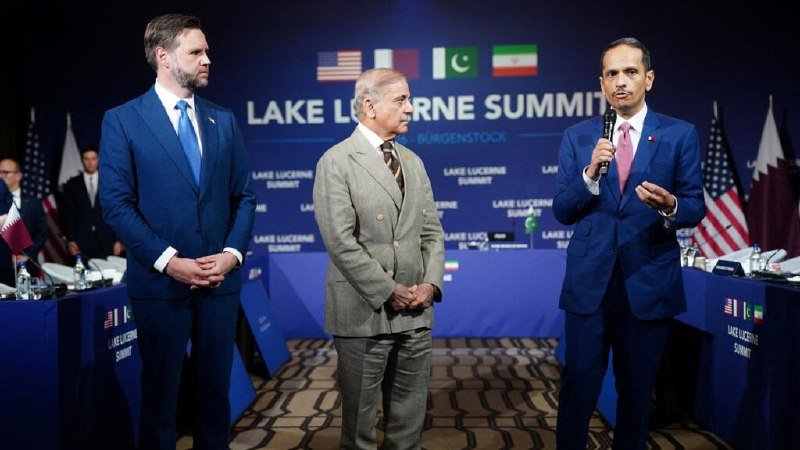
Reports surfaced in the small hours of 20 June 2026 that US intelligence agencies have cautioned the Trump administration that Israeli prime minister Benjamin Netanyahu is likely to take steps that will undermine President Trump's effort to reach a memorandum of understanding with Iran. Iranian state-aligned Press TV framed it bluntly at 02:49 UTC: the premier "may desperately sabotage" the MoU "to prolong aggression." Within twenty minutes, the same channel carried the Iranian Army's counter-message — a public reaffirmation of "complete readiness to protect the country's security, sovereignty, and national interests," delivered with its finger, as the broadcaster put it, "on the trigger." The first American read of the day, posted by the markets account @unusual_whales at 17:35 UTC on 19 June, had already framed the intelligence finding as a US-side warning about a friendly-government spoiler inside the White House's own negotiating lane.
Strip the framing away and the underlying story is narrow: a diplomatic track that the Trump administration has been trying to lock down is being judged, by its own intelligence community, as vulnerable to deliberate interference from a US ally. That is not a normal stage of any negotiation. It is a confession, on the record, that the main risk to a deal is not the adversary at the table.
What the warning is, and what it is not
The intelligence finding, as carried by Press TV and echoed by @unusual_whales, does not assert that Netanyahu has ordered a strike, frozen a negotiating channel, or publicly broken with the White House. It warns that he is likely to take steps that will undermine the MoU. The grammar matters. US agencies are not reporting an event; they are reporting a probability assigned to a category of behaviour by a named head of government. The category — active steps to spoil a US-led diplomatic track with a regional adversary — has a recent track record that does not require speculation: the JCPOA era is the obvious reference point, and Washington remembers it.
Press TV, an Iranian state broadcaster, is reporting a US intelligence conclusion that embarrasses the Israeli prime minister and validates the Iranian negotiating posture. Read with that lens, the framing is predictable. But the underlying US finding is not Press TV's invention; @unusual_whales, a US-market account with no Iranian alignment, carried the same headline at 17:35 UTC the prior day, attributing it to "US intelligence agencies." Two outlets with no shared editorial interest agree on the substance. That is a higher corroboration floor than the framing alone.
Tehran's posture: deterrent theatre, with a real audience
The Iranian Army's readiness statement at 02:07 UTC on 20 June is the second piece of the picture. Its function is not principally information — Iran's deterrence posture is not news to anyone tracking the file. Its function is signalling: to the Israeli defence establishment, to the Gulf capitals watching from the margin, and to the Trump team itself. The language is calibrated for an audience in Washington that is, at this moment, choosing between an MoU and a spoiler. Tehran is making the cost of the spoiler legible.
This is the kind of signalling that, on the Western wire, gets filed under "tensions." That filing is correct as far as it goes, but it understates the structural point. Iran is not signalling to escalate; it is signalling to not have to. The whole point of a public readiness statement during a negotiation is to widen the perceived cost of the alternative.
Where the diplomatic track actually sits
What neither the Press TV reporting nor the @unusual_whales post establishes is whether the MoU itself has been signed, initialled, or merely discussed. The thread context describes Trump's "effort to reach" an MoU — verb tense, not past tense. The intelligence warning is therefore not about an existing document that needs defending; it is about a document that the US side believes is achievable and the Israeli side is assessed as wanting to prevent. That distinction decides a lot about how this story will age.
Two readings are live, and a serious account has to hold both. The first is that the warning is protective: by surfacing the spoiler risk to the president in writing, US agencies are giving Trump the political cover to ignore, override, or publicly dissociate from any Netanyahu move that lands while the MoU is being negotiated. The second is darker: the warning is already too late. Spoiler moves, when they work, work because they happen between intelligence findings and political response, and the political response is exactly what gets shaped in the gap. Without knowing whether any specific step has been taken in the last 72 hours, neither reading can be ruled out. The sources do not specify.
Stakes
If the MoU is reached and holds, the obvious losers are the constituency inside the Israeli system that treats a US-Iran accommodation as a strategic loss — the position that an Iran with sanctions relief is, in net terms, a more dangerous Iran. If the MoU is sabotaged, the losers are the Iranian negotiating team that has spent political capital on a track that ended in theatre, and the Trump administration's claim to a transactional foreign-policy doctrine that can produce a win on a hard file. A failed track also narrows the Overton window in Washington for any future accommodation with Tehran, which is precisely the outcome that an actor assessed as likely to sabotage it would be pursuing.
What remains genuinely uncertain — and what the available reporting does not resolve — is the operational question: has any move actually been made yet, or is the intelligence community warning pre-emptively, in advance of one? On that, the sources are silent. A reader who treats today's reporting as the beginning of a story rather than the middle will be closer to right.
Monexus framed this as a test of the diplomatic track itself, not as a bilateral Israel-Iran story. The wire lead on the Press TV material emphasises the sabotage allegation; the @unusual_whales post surfaces the US-side intelligence origin. Monexus treats both, and reads the Iranian Army statement as deterrent signalling aimed at Washington rather than at Tel Aviv.
Wire provenance
This editorial synthesis draws on the following public wire/social posts:
- https://t.me/presstv/
- https://t.me/presstv/
Follow the event.
These dated source records provide context. They do not retrospectively verify this archive article.
Separate what the nuclear watchdog reported from what it could not determine after the June 2025 strikes.