Neymar's World Cup final promise lands before a tournament he has yet to qualify for
A viral pre-tournament pledge from Brazil's most-watched forward raises a sharper question: can a player who has not yet booked his seat in 2026 dictate the terms of the final?
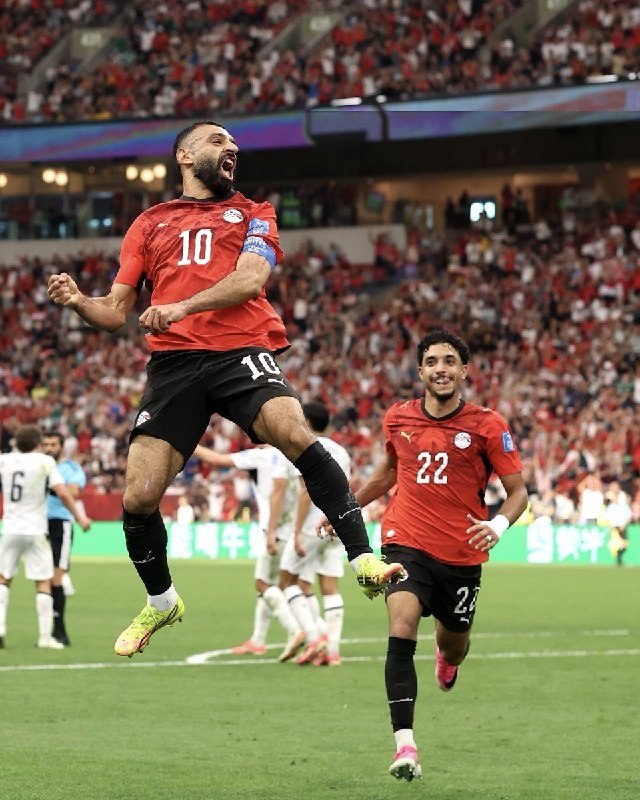
At 17:43 UTC on 20 June 2026, FIFA's verified Telegram channel reposted a one-line declaration from Neymar Jr. that travelled further than the average tournament teaser: "I will score in the World Cup Final." Within the same hour The Athletic's newsroom account carried an identical caption, framing the quote as a piece of public psychology from a forward who, on the date of his own promise, had not yet been confirmed in Brazil's squad for the 2026 edition co-hosted by the United States, Mexico and Canada. The promise is therefore doing two jobs at once — selling the player, and selling the tournament.
Brazil's talisman has made the bold claim before a ball has been kicked in anger. Read literally, the line is a forecast about a match that does not yet exist, on a stage he has yet to reach. Read as messaging, it is a calibrated reminder of his market weight: the most-followed Brazilian footballer of his generation staking a public claim on the tournament's headline fixture six months before the draw that will shape the bracket. The wire notes that circulated on 20 June do not name a fixture, a date, or an opponent. They name an aspiration, and they do so in a venue — FIFA's own channel — that flatters the player as much as the player flatters the federation.
A promise before a place is confirmed
The basic fact of Neymar's international status is unsettled. He was recalled by Brazil head coach Dorival Júnior in 2025 after a stretch of injuries, but the wire posts that surfaced on 20 June do not carry a squad list, a roster update, or a fitness bulletin. The quoted promise therefore sits in a curious space: a guarantee of production from a player whose path to the team sheet has not been documented in the items Monexus reviewed. The absence of a named opponent, stadium, or date is not an oversight. It is the form. The pledge works precisely because it is unconditional. The day the conditions appear — a confirmed squad, a confirmed semi-final, a confirmed final — the line becomes a hostage to fortune rather than a piece of brand theatre.
The Athletic's circulation of the same line, posted within the same minute, gives the promise a second life. It is no longer a federation-friendly teaser. It is a story that an English-language sports desk has decided to amplify to a global newsroom audience, complete with a nudge to "remember this tweet." That nudge is itself a small media-economy fact. Quotable predictions, even implausible ones, monetise well. The promise becomes a graph to revisit, a frame to revisit, a beat to revisit. If Neymar scores in the final, the original line is vindicated. If he does not, the original line is proof of hubris. Either way, the line keeps working.
The brand logic of pre-tournament promises
The football economy of 2026 is structurally a content economy. The expanded 48-team tournament is a longer, denser, more searchable event, and the period before the opening fixture is a market in which player brands compete for share of voice. A naked goal-scoring prediction from a Brazil No. 10 is, in that sense, a product launch. It does not require corroboration from the federation, the coach, or the squad doctor. It requires only the player's verified account, an amplifier, and an algorithm. FIFA's official channel and The Athletic's newsroom account both supplied the first and the second within the same minute on 20 June. The third is structural to the platform.
This is not the first time a star forward has used the months before a World Cup to write the script in advance. It is, however, the first time in this cycle that FIFA and a tier-one English-language sports outlet have circulated an identical forward statement in lockstep, with the same caption, on the same day. The synchronisation suggests a piece of content that was pre-loaded, approved, and dropped — a small but legible instance of how player brands, federations, and news desks are now co-producing the run-up to a major tournament rather than reporting on it.
What the sources do not say
The wire items Monexus reviewed on 20 June 2026 do not specify Neymar's current club, his injury status, his minutes played in 2025-26, or his standing in Dorival Júnior's tactical plan. They do not name the stadium, the city, or the opponent that the promised World Cup final would be played in. They do not carry a quote from the coach, the federation, or a teammate. The promise is, on the available record, a single-sentence declaration and its two-channel redistribution. The line's power rests on the gap between what it asserts and what has been verified. That gap is the article. The fact that the most-followed Brazilian footballer of his generation can move a piece of text from his account to two major sports desks in under an hour, on the strength of a twelve-word sentence, is itself the news.
The honest reading is that the pledge is more interesting as a media fact than as a sporting one. It tells the reader something about how the pre-tournament news cycle is being constructed in 2026, and something about the gravitational pull a single player still exerts over FIFA's own distribution. The football will be settled on the pitch, in the knockout rounds, between teams that have not yet been drawn. The promise has already been settled, in the channels, between accounts that have already acted.
This piece treats the 20 June pledge as a media event rather than a sporting one; the sporting record will be written by qualifiers, squads, and the matches themselves.
Wire provenance
This editorial synthesis draws on the following public wire/social posts:
- https://t.me/FIFAcom
- https://t.me/TheAthletic