Brazil's World Cup plans face early test as Raphinha races a hamstring clock
Brazil's World Cup campaign begins later this week, and Barcelona forward Raphinha is undergoing treatment on a hamstring injury in a bid to be fit.
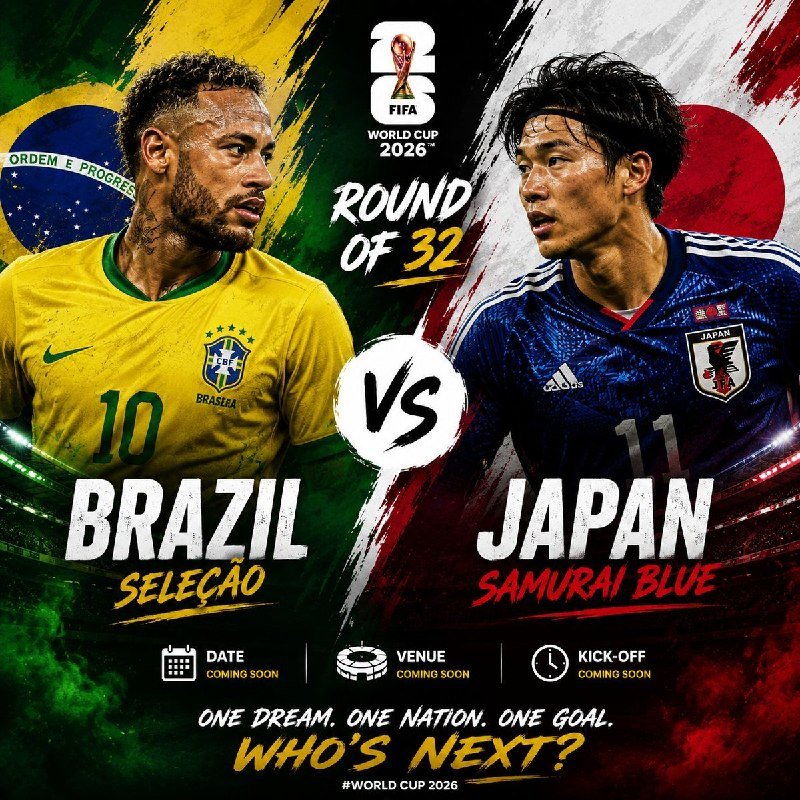
Brazil's World Cup preparations absorbed a sharp jolt on 20 June 2026, when news surfaced that forward Raphinha will undergo treatment on a hamstring injury with the hope of returning to the tournament, according to an ESPN report filed at 23:10 UTC. The Barcelona attacker, one of the established first names on the Seleção's team sheet, faces a race against a soft-tissue clock that tends to punish forwards who return too quickly. Brazil's opener is days away, and the squad's depth is being tested before a ball is kicked in anger.
The wider question is not whether one player will feature in match one. It is whether Brazil, a country that treats the World Cup as a national stress test, can absorb a key absence without surrendering the attacking shape that took them to Qatar in 2022 and through a competitive qualifying campaign since.
The injury and the timeline
A hamstring complaint in a wide forward is not a binary problem. The muscle group tolerates some training load and punishes sudden acceleration, the very action Raphinha is paid to produce. ESPN's update frames the situation as treatment plus monitoring, with the explicit hope of a tournament return; the report does not specify a return-to-play date, the grade of the strain, or whether Brazil's medical staff have signed off on any stage of on-field work. That gap matters, because the difference between a Grade 1 strain and a Grade 2 strain is measured in weeks rather than days, and Brazil's group-stage window does not offer weeks.
The standard medical consensus on soft-tissue injuries of this kind is that re-injury risk rises sharply when a player returns before full functional recovery, particularly in positions that demand repeated high-speed running. The available reporting does not let us place Raphinha on that risk curve with precision. It does let us say that Brazil's medical team will be making a calculated call rather than reading off a clean diagnostic.
What Brazil lose without him
Raphinha's value to the Seleção is not reducible to goals. He stretches backlines with diagonal runs from the left, rotates with the right-sided winger to create half-space overloads, and links midfield to attack with line-breaking passes that Brazil's system has come to depend on. Replacing that profile is not a like-for-like substitution; it is a tactical adjustment that asks another player to perform a job they have not been rehearsing all year.
The likely replacements are familiar to anyone who has watched the qualifying cycle. There is depth on the wings, but depth of profile rather than depth of fit. Brazil have options who can run at defenders, options who can play narrower, and options who can press from the front. What they do not have, in the same quantity, is a player who combines all three at the level Raphinha did in qualifying. The tactical rebalance, if it is needed, will fall on the head coach and will be visible in Brazil's defensive shape as much as their attacking one.
The counter-frame: depth as a feature, not a failure
The pessimistic reading treats any first-choice absence as a crisis. The more honest reading is that tournament football is, by definition, a depth event. Brazil's squad was not built to ride on a single forward; it was built on a rotation that survived a long domestic season across Europe's top leagues, with most first-choice attackers logging heavy minutes for club and country. The qualifying campaign was navigated without one player carrying the entire attacking load for every fixture, and the bench options are not placeholders.
That said, depth and fit are not synonyms. A squad can be deep and still be poorly shaped for the specific absence it is asked to absorb. The question is whether Brazil's reserve options can replicate Raphinha's connective function, not whether they can score goals. On the available reporting, that question is open.
Stakes and what to watch
The narrow stake is medical: whether Raphinha's hamstring responds to treatment in time for at least the latter group-stage fixtures. The broader stake is structural. Brazil enter every World Cup carrying the weight of five titles and a domestic expectation that anything less than the latter stages is failure. A tournament shaped by absences to key players tends to expose the difference between a squad and a team. The first indicator will be how the attacking line is constructed in the opener; the second will be how that construction holds up under the kind of pressing intensity that knockout football demands.
What remains genuinely uncertain is the diagnosis itself. The reporting identifies a hamstring injury and a treatment programme, but does not specify severity, imaging results, or a phased return plan. Until those details surface, every projection about availability is, at best, a probability statement dressed as a fact. The honest summary is that Brazil are managing a soft-tissue problem in a key attacker, with the calendar working against them and the squad's depth working, cautiously, in their favour.
Desk note: Wire coverage on the day focused on the player; this piece widens the lens to the tactical fit and the squad-depth question that the injury exposes.
Wire provenance
This editorial synthesis draws on the following public wire/social posts:
- https://en.wikipedia.org/wiki/Raphinha
- https://en.wikipedia.org/wiki/Brazil_at_the_2026_FIFA_World_Cup
- https://en.wikipedia.org/wiki/Hamstring