Sevastopol at midnight: what a single night of drone panic reveals about the war's next chapter
A pre-dawn drone strike on occupied Sevastopol briefly shattered the quiet of the summer solstice. Read alongside a second Ukrainian briefing on a 'corridor of change' opening at the solstice, the incident reads less as a one-off and more as a marker of tempo.
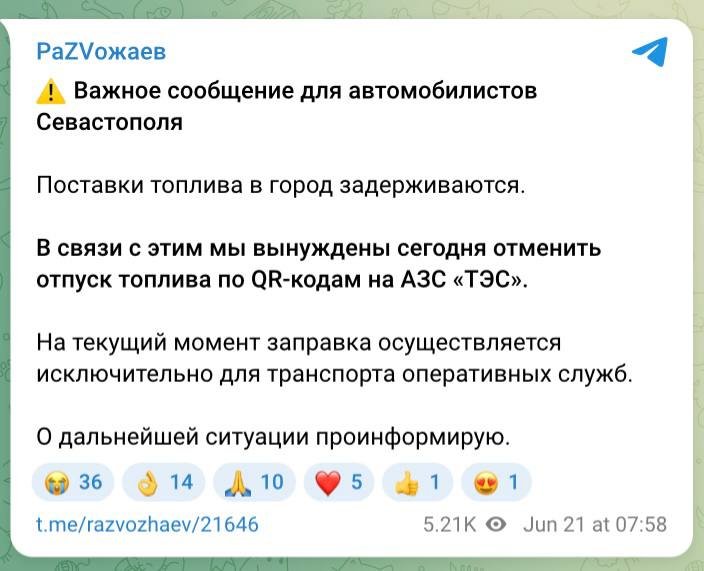
In the small hours of 20 June 2026, residents of occupied Sevastopol were jolted awake by what TSN's Ukrainian desk described, in a bulletin issued at 00:14 UTC, as a "real panic" triggered by a drone attack on the city. The strike landed on the same night as the northern hemisphere's summer solstice, and within hours TSN was carrying a second piece of guidance for readers on the symbolic date: that the solstice opens a "corridor of change," a window in which unresolved problems should be closed out before they harden into the rest of the year.
Read together, the two bulletins sketch a tempo. The first is a kinetic event — a Ukrainian strike on the headquarters city of Russia's Black Sea Fleet, the kind of operation that would, two years ago, have been treated as extraordinary and is now treated as routine. The second is editorial framing — a reminder, to a Ukrainian audience, that the season is turning and that decisions left on the table in June tend to compound. Neither item, on its own, deserves a column. Together, they describe a war in which the operational calendar and the political calendar are being deliberately aligned by Kyiv.
What the Sevastopol strike actually tells us
The TSN bulletin is short on technical detail and long on atmosphere. It reports panic among civilians in the early hours, framing the event as a disruption to the daily life of an occupied city rather than a specific military outcome. That is, in itself, a piece of reporting. Sevastopol is the most heavily militarised urban space Ukraine has struck on a recurring basis, and the fact that a single night's action can still produce civilian panic suggests that Russian air defence is not yet treating these strikes as a normal weather pattern. The city's role as a naval and administrative hub for the occupied peninsula means any sustained tempo of strikes puts pressure on three things at once: force disposition, force protection logistics, and the credibility of the occupation administration to the people who live under it. The first two are problems for Moscow; the third is a political problem for the occupation regime that the source material does not detail but that any honest analyst should flag.
A plausible alternative reading is that the panic is over-reported — that social media amplifies the experience of a relatively small number of residents and that Russian authorities will, in due course, normalise the response the way Israel normalised the rocket-alert routine. That reading is real, and any responsible piece should hold it. But the fact that Kyiv's own domestic channel chose to lead on the panic, rather than on damage assessment, is itself an editorial choice: it is selling the impression of a war reaching deeper into Russian-occupied urban space, not selling a particular weapon system.
The "corridor of change" framing
The second TSN item, also timestamped 00:14 UTC, is unrelated in subject matter but not in spirit. The summer solstice, in the framing the channel is using, opens a window — roughly the last ten days of June — in which decisions, personal and political, are best taken before the year's gravitational centre shifts. The piece reads as horoscope-adjacent life advice, but it lands in a media environment in which Ukrainian audiences are being asked, repeatedly, to internalise the idea that the war has seasons and that summer 2026 is a season in which something has to give. Ukrainian military and political communications have been inching toward exactly this register for months: the suggestion that a phase is ending, that a window is open, and that the price of missing the window is the rest of the year.
Whether the solstice is a meaningful threshold or a piece of calendar theatre is less important than the function it performs. It tells a war-weary audience, in domestic-language terms, that the present stretch of time is consequential. It also tells outside observers something subtler: that Kyiv is managing expectations toward a discrete set of dates rather than toward an open-ended horizon.
The structural pattern, in plain terms
What is unfolding is a familiar pattern in long wars: the operational tempo accelerates, the political language tightens, and the gap between what can be said publicly and what can be delivered materially narrows. A war in its fourth year does not run on a single clock. There is the clock of the front line, the clock of Western aid tranches, the clock of domestic mobilisation politics, and the clock of occupation administration. When all four clocks start to point in the same direction, the period around the alignment is the period in which things break. Ukrainian messaging around the solstice is, fairly transparently, an attempt to put the public inside that alignment — to make the audience feel the same urgency the planners feel.
The structural fact underneath the messaging is that occupied Crimea is now treated, in Ukrainian reporting, as a frontline. The 20 June strike is the most recent data point, not an outlier. If the pattern holds, the volume of strikes will rise, the variety of targets will widen, and the political language from Kyiv will keep leaning on windows and corridors rather than on the open-ended patience that marked 2023.
Stakes, and what remains genuinely uncertain
If the tempo continues, the immediate losers are the residents of occupied Sevastopol and the Russian command responsible for defending the city. The immediate winners are the Ukrainian deep-strike complex — the units, the producers, the planners — whose credibility is built one successful night at a time. The longer-horizon stakes are larger: a war in which Crimea is treated as a contested battlespace, rather than a frozen rear area, changes the bargaining range of any future negotiation, whether that negotiation happens in three months or three years.
What the open-source record does not yet settle is the actual damage profile of the 20 June strike, the specific system used, and whether the panic was caused by kinetic effect, air-defence activity, or both. TSN's bulletin is an early wire; the next 48 hours will likely produce more granular accounts from the Telegram milblogger ecosystem and, eventually, confirmation or denial from the Russian side. The interesting question is not whether those details will arrive — they will — but whether the structural tempo the strike sits inside is now durable enough that a single night's outcome no longer changes the trajectory.
On the evidence available at 00:14 UTC on 20 June 2026, the trajectory is what the second TSN item implies: a corridor, briefly open, in which the cost of inaction compounds faster than the cost of action. That is a sentence the operators have been waiting to write in public for a long time.
Desk note: wire coverage of the Sevastopol strike is, as of publication, dominated by Ukrainian and Telegram-based sources. Monexus is treating the kinetic report as confirmed and the panic framing as the channel's own editorial choice; Russian-side confirmation has not yet appeared in the sources consulted.
Wire provenance
This editorial synthesis draws on the following public wire/social posts:
- https://t.me/TSN_ua
- https://t.me/TSN_ua
- https://t.me/TSN_ua
Follow the event.
These dated source records provide context. They do not retrospectively verify this archive article.
A dated voting record is evidence of one decision. Use the original UN record before turning it into an alignment label.
Visual explainer · historical vote of 2022-03-02 →