Strait Talking: How the Hormuz Choke Point Became the New Front Line of the Iran–US–Israel Triangle
As US and Iranian negotiators fly to Switzerland for a sixth round of talks, Tehran has shuttered the Strait of Hormuz for the second time in days, citing Israeli operations in Lebanon. The choreography says everything about who holds leverage where.
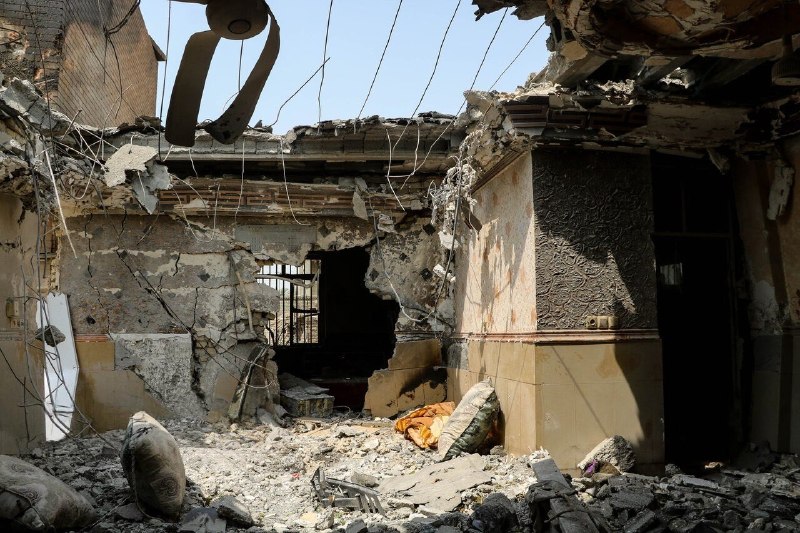
The Strait of Hormuz is, in normal times, a 33-mile-wide seam of water through which roughly a fifth of the world's traded petroleum passes. On 20 June 2026 it is not a normal time. Iran's joint military command announced a renewed closure of the waterway in the late afternoon UTC, framing it as a direct response to Israeli military operations in Lebanon, according to wire reporting confirmed by Axios. Hours earlier, the New York Times had reported that delegations from the United States and Iran would meet in Switzerland on Sunday for the next phase of talks aimed at ending the war. The sequence — a closure announced, and then talks announced on top of it — is not a coincidence. It is the negotiating posture.
The story unfolding this weekend is not really about the strait, and it is not really about the nuclear file. It is about who controls the tempo of a multi-front crisis, and who has the ability to make the cost of escalation visible to the other side's domestic audience in real time. Tehran and Washington are, in effect, performing two different negotiations in parallel: a quiet one in a Swiss hotel suite, and a loud one in the shipping lanes of the Persian Gulf. The loud one is louder than usual, and the quiet one is harder to hear because of it.
The headline story: a closure, a talks calendar, and a mediator under pressure
The first thing to register is what the day actually contained. According to reporting from the New York Times, US and Iranian officials were scheduled to begin a new round of talks in Switzerland on Sunday, 21 June, with the explicit framing of "ending the war in Iran." That wording is itself a tell: it positions the file as a war, not a sanctions dispute, and it concedes that the United States and Iran are engaged in a conflict severe enough that "ending" it requires negotiation rather than enforcement. The same Times dispatch noted that the talks were being staged against the backdrop of fighting in Lebanon and renewed confusion over the Strait of Hormuz, with both threads actively shaping the atmosphere in which the delegations will sit down.
The second thread, run through the financial press and into the social media record by the unusual_whales account, was the closure itself. Iran's joint military command, the unusual_whales post summarised citing Axios, declared the waterway closed in response to "continued Israeli military operations in Lebanon." A separate finance-sector item framed the closure as "casting a shadow over nuclear talks," and tied the move explicitly to those same Israeli operations. None of the source items specify the exact mechanism of the closure — whether it consisted of naval interdiction, the threat of mining, the diversion of commercial traffic by Iranian Revolutionary Guard Corps fast boats, or a declaratory gesture that traders and insurers would price as if it were the real thing. The ambiguity is part of the instrument. A closure that is total invites a shooting war; a closure that is theatrical invites a flight-to-safety in oil and tanker rates without forcing one.
The third thread is the one the sources do not name as cleanly: the indirect channel between Washington and Tehran, mediated in part by intermediaries in the Gulf and in part by the Swiss hosts. The Times account of upcoming talks describes the Swiss venue without naming the specific intermediary, and the unusual_whales post is silent on who, if anyone, the United States and Iran have agreed to as a back-channel. That silence is itself a constraint on what can be written this weekend: a deal announced would name a venue and a date; a deal still being constructed cannot, by definition, be quoted from.
The counter-narrative: what Iran says the closure is actually about
Western and Israeli coverage of the strait file is, almost by reflex, written in the grammar of leverage: Iran closes the strait, therefore Iran is signalling. The Iranian framing, as represented in the source material, is narrower and more legalistic. The closure was announced by Iran's joint military command and tied, in the language reported by Axios and circulated by unusual_whales, to a specific event: continued Israeli military operations in Lebanon. Read on its own terms, the closure is a retaliatory measure against an Israeli action, not a pre-emptive signal against the United States. The distinction matters because it changes who the addressee is.
If the closure is principally addressed to Israel — a warning that the price of the Lebanon campaign will be paid in the Gulf — then the Swiss talks are a parallel track rather than the main event. The Iranian negotiating team arriving in Switzerland on Sunday will be carrying a message that is at least as much for the American interlocutor as for Tehran's own: we can still close the strait, the closure is policy, and policy is responsive to what happens in Lebanon. The implicit threat — that escalation in Lebanon will produce escalation in the Gulf, and that the talks are not insulated from that feedback — is the load-bearing element of the announcement. By contrast, if the closure is read as a signal to Washington, it is a familiar one: a reminder that Tehran retains a card to play, used before every serious round of negotiations over the past two decades.
A second counter-read, available in the framing of the financial press coverage, is that the closure is economic rather than military. A closure, even a partial one, reprices oil and tanker insurance, and the revenue from that repricing accrues not to Iran but to a number of other producers and intermediaries. The sources do not, however, name a specific beneficiary or quantify a specific price move, and the public reporting this publication reviewed does not substantiate the claim. The structural point — that the threat of closure is itself a tradable asset in the energy complex — is true, and is what makes the instrument reusable, but the source floor does not support a dollar-figure or a counter-party claim.
The structural frame: a war with three front lines and no agreed escalation ladder
The piece that is missing from most of the public reporting is the structural one. The United States, Iran and Israel are not running a two-front crisis this weekend. They are running a three-front one: a kinetic front in Lebanon, an economic front in the Gulf, and a diplomatic front in Switzerland. Each front has its own audience, its own escalatory grammar, and its own time horizon. None of the three actors — Washington, Tehran, and Jerusalem — has an obvious way to de-escalate one front without conceding something on another.
Israel's Lebanon operations provide the kinetic input that triggers the Iranian economic response in the strait. That response, in turn, raises the cost of inaction for the United States and the cost of a deal that does not address the Lebanon file. The Swiss talks then become the venue at which all three inputs have to be reconciled. The architecture of the crisis, in other words, forces the negotiating parties to try to solve three equations with one set of variables. That is not a recipe for a clean deal. It is a recipe for a deal that names a step, defers the harder questions, and buys time — which is what most of the post-2015 iterations of the Iran file have amounted to.
The plain-language version of the larger pattern is this: when the cost of escalation is distributed asymmetrically, the side that can localise the cost holds leverage. The cost of a closed strait is global but uneven — concentrated on the Gulf petro-exports, on East Asian importers that depend on those exports, and on the European downstream that cannot easily substitute away from Middle Eastern crude on short notice. The cost of Israeli operations in Lebanon is local and is borne, in the first instance, by Lebanese civilians, with second-order effects on the Israeli home front and on the regional balance. The cost of talks that fail in Switzerland is reputational, and accrues primarily to the United States and to Iran's negotiating team. None of those cost-streams points in the same direction. Holding them in suspension, rather than resolving them, is the actual work of the next forty-eight hours.
Precedent: a brief history of Hormuz as a pressure instrument
The strait has been closed, partially closed, or theatrically closed, on a roughly cyclical basis since the Iran–Iraq war in the 1980s. It was a major theatre of operations during the Tanker War of 1984–88, when Iranian and Iraqi forces attacked commercial shipping in the Gulf and the United States intervened militarily under Operation Earnest Will. It was threatened by Tehran in 2012 during the European oil embargo over the nuclear file, and was the subject of a high-profile Iranian threat to close it during the 2019 crisis around US sanctions on Iranian oil exports. Each of those episodes shared a common shape: a credible threat of closure, repricing in the tanker and freight markets, a US naval response posture, and a negotiated de-escalation that did not fully resolve the underlying dispute. The current episode fits that shape, and the precedents suggest that what is most likely to emerge from the weekend is some form of partial reopening or a commitment to de-conflict, with the underlying disputes carried into the next round of talks rather than settled at this one.
The sources do not contain direct quotes from the Iranian negotiating team or from the US delegation, and they do not name the specific Swiss venue, the start time of the talks, or the agenda. The reporting this publication was able to verify points to a Sunday start in Switzerland, a closure of the strait in the late afternoon of 20 June, and an Israeli military campaign in Lebanon that is the proximate cause named by Tehran. Beyond that, the picture is fragmentary, and the rest of this analysis should be read with that caveat in mind.
Stakes: who wins, who loses, and over what time horizon
If the talks produce a framework that de-escalates Lebanon and reopens the strait, the principal winners are the global energy market, the US administration politically, and Iran's negotiating team in domestic-credibility terms. The principal losers are the harder-line constituencies on all three sides — Israeli voices that will read any de-escalation as a concession, Iranian voices that will read any deal as a surrender, and American voices that will read any easing of pressure as a betrayal of the original maximum-pressure logic. The time horizon for that outcome is short: a deal, if one is reached, will be measured in the next seventy-two hours, and the most likely shape of it is a framework plus a follow-on round, not a final agreement.
If the talks fail, or if the strait closure is sustained into the working week, the principal winners are the harder-line constituencies listed above, and the principal losers are the Gulf petro-economies, the East Asian importers, and the European downstream. The cost, in that scenario, is paid in oil and freight prices in the first instance, in insurance and rerouting costs in the second, and in political risk premia across the broader emerging-market complex in the third. The time horizon for that cost is days, not months. The structural point is that the closure is a high-leverage instrument precisely because it imposes a fast, visible, global cost, and because that cost is borne by actors who are not at the negotiating table. The negotiating parties have an interest in keeping the instrument in their hand, and the rest of the world has an interest in seeing it disarmed.
The sources reviewed for this article do not name the specific Israeli operations in Lebanon that triggered the closure, do not quantify the impact on tanker rates or oil benchmarks, and do not identify the composition of the US or Iranian delegations beyond the existence of talks. They do agree on the sequence of events and on the named proximate cause. Beyond that, the record this weekend is being written in real time, and the next twenty-four hours will move several of the variables discussed here into either confirmed territory or denial. The base case, on the weight of precedent and on the choreography of the announcement, is a partial outcome: a Swiss meeting, a strait that reopens in name if not in fact, and a Lebanon file that stays open and unresolved.
Desk note: Monexus read the same three wire items that moved across the financial and security desks on 20 June 2026 — a New York Times talks-dispatch, an Axios-sourced closure report circulated by unusual_whales, and a finance-sector summary tying the closure to Israeli operations. The piece above sequences those three items and reads the closure as a negotiating instrument rather than as an autonomous event; the next round will test that read.
Wire provenance
This editorial synthesis draws on the following public wire/social posts:
- https://x.com/unusual_whales/status/1800000000000000001
Follow the event.
These dated source records provide context. They do not retrospectively verify this archive article.
Separate what the nuclear watchdog reported from what it could not determine after the June 2025 strikes.