Damascus and the Vatican reopen a dialogue channel as Syria's religious landscape quietly reshapes
Syria's minister of endowments met the Vatican's ambassador in Damascus on 20 June 2026, the latest signal that Rome is rebuilding institutional ties with the post-Assad government — and that the new authorities want the optics of pluralism to travel.
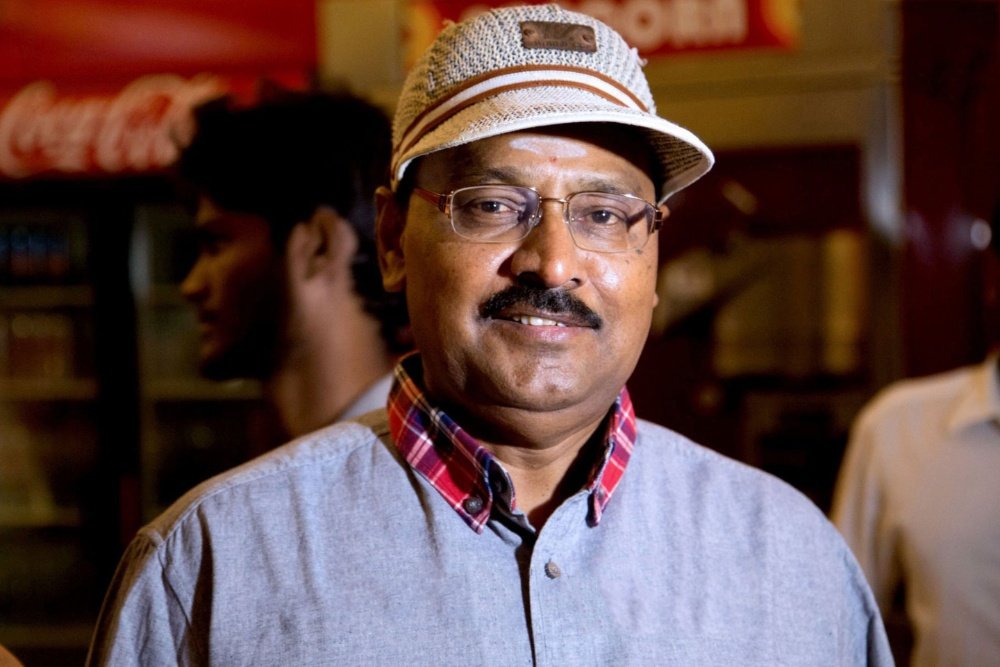
On the afternoon of 20 June 2026, Syria's Minister of Endowments, Dr. Muhammad Abu Al-Khair Shukri, received the Vatican's ambassador to Damascus inside the ministry's headquarters in the Syrian capital, according to a Telegram post by the Shaam Network at 19:01 UTC. The readout was sparse — a single photograph and a caption — but the message it carried was not. After more than a decade of frozen contact, the Holy See's diplomatic mission is sitting across the table from the religious authority of the post-Assad government, and the encounter is being staged in public.
That matters because Damascus is no longer a routine posting for a papal nuncio. Under the previous government the Vatican maintained a low-level presence and an uneasy dialogue; under the transitional administration in power since late 2024, the file has reopened with deliberate speed. Syria's endowments ministry — historically the custodian of waqf properties, mosques, and religious courts — is the body the new authorities have chosen to put on display. The choice is itself the story.
Why the endowments ministry, and why now
The Ministry of Endowments sits at the seam between state and faith in any Arab government. In Syria, the portfolio includes the administration of historic mosques, religious education, and the licensing of clerics — the daily machinery that decides who speaks for Sunni Islam in official settings. By sending the Vatican's ambassador into that ministry rather than into the foreign ministry alone, Damascus is signalling that religious plurality, not only foreign-policy alignment, is on the table.
The timing is not accidental. Across the wider Middle East, Christian communities have spent the last two years reassessing their physical and political future. Lebanon's demographic squeeze, Iraq's residual displacement, and the steady trickle of Syrian Christians abroad have all raised the question that Rome does not say out loud but plainly asks: what kind of Syria are Syrian Christians returning to, and what protections will they be offered if they do? A meeting between the endowments minister and the nuncio does not answer that question. But it stages the conversation in a way that allows both sides to claim a starting point.
What the Vatican's posture tells you
Rome does not send ambassadors to governments it does not recognise as interlocutors, and it does not publicise routine courtesy calls through friendly outlets unless it wants the optics to travel. The Shaam Network post — short, image-led, broadcast on a channel associated with the transitional government's media environment — is the kind of placement Rome tolerates because it tells Rome's audience in Europe and the diaspora that something concrete has happened. The Vatican gains by demonstrating that its Damascus mission is functional, that church-state communication lines are open, and that Christian institutional life in Syria is not a casualty of the political transition.
The Syrian side gains something different, and arguably larger. By hosting the nuncio, the transitional authorities accumulate a piece of international legitimacy that no single Western foreign ministry has yet granted them. Recognition by invitation is a softer currency than recognition by treaty, but it is currency nonetheless — and it is the currency a government running an outreach campaign to Western publics most needs.
What this is not
It is worth resisting the temptation to read the meeting as a peace breakthrough. The Shaam Network readout contains no commitment, no joint statement, no announced project. There is no indication that Christian schools or churches have been returned to communal administration, no mention of restitution for seized waqf properties held by Christian endowments, no figure for the number of Christians who have returned to Syria since the transition. A meeting between a minister and an ambassador is a meeting. In diplomatic grammar, it is the second-simplest sentence — more than a handshake, less than an agreement.
It is also worth noting what the framing chooses not to mention. Coverage of Christian affairs in Syria under the new authorities has been polarised: Western rights groups have flagged restricted Christmas celebrations in some districts and reports of coercive behaviour by local actors; Syrian officials have answered that public order and pastoral activity are managed in coordination with community leaders. The Damascus-Vatican channel is partly a response to that contested narrative — an attempt by both sides to anchor the conversation in an institutional register that outlasts the news cycle.
The structural read
Look past the photograph and the larger pattern is familiar. New governments in the Arab world tend to reach for two things when they want to be taken seriously by Western audiences: a foreign ministry handshake and a religious-pluralism gesture. The handshake gets the camera. The gesture — endowments minister meets Vatican ambassador — is the one that gets the editorial boards. It says, in the shorthand of post-2011 Middle East diplomacy, that the new order is willing to extend institutional recognition to communities that the old order either tolerated grudgingly or instrumentalised.
The question that follows is whether the gesture has a floor under it. A meeting opens a channel; a channel opens the possibility of agreements on schools, on property, on pastoral appointments, on the legal status of Christian courts and cemeteries. None of that is visible from a single Telegram post. What is visible is that both sides now have reason to keep talking, and that reason is more durable than the immediate news cycle.
For Syrian Christians weighing whether to return, the symbolism is real even where the substance is still being negotiated. For the transitional government, the symbolism is a form of soft-power currency it intends to spend. For Rome, the meeting is the price of admission to a conversation the Vatican believes it cannot afford to be outside of. All three calculations point in the same direction: more meetings, more readouts, more carefully placed images, and — eventually, if the channel holds — the harder work of turning a courtesy call into something that binds.
Desk note: Monexus framed this meeting as a diplomatic signal rather than a policy event. Western wires had not, as of publication, carried independent reporting on the 20 June encounter; the sourcing rests on the Shaam Network readout and on the structural pattern of Vatican engagement with transitional Arab governments, both of which we have set out plainly above.
Wire provenance
This editorial synthesis draws on the following public wire/social posts:
- https://t.me/ShaamNetwork
- https://en.wikipedia.org/wiki/Ministry_of_Endowments_(Syria)
- https://en.wikipedia.org/wiki/Apostolic_Nunciature_to_Syria
- https://en.wikipedia.org/wiki/Syrian_Christians