Tehran's Tehran-Lebanon Volunteer Drive Exposes the Fragility of the Iran–Hezbollah Ceasefire
Street advertisements in Tehran recruiting volunteers to serve with Hezbollah in Lebanon for $1,000 a month land on the same day Israeli strikes kill at least 16 in the south, and Hezbollah publicly rejects Israeli ceasefire-violation claims. The overlap tells you where the war actually stands.
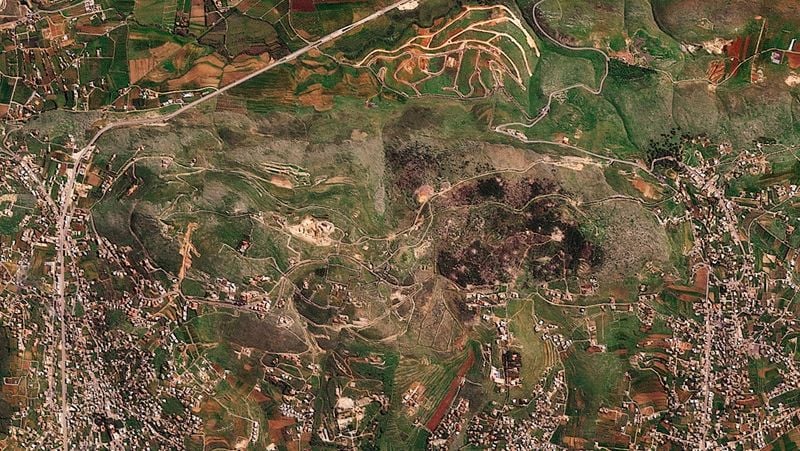
On 20 June 2026, a single day laid bare the gulf between the language of ceasefire and the practice of war on the Israel–Lebanon frontier. By mid-morning, footage circulating from the Iranian capital showed street advertisements in Tehran explicitly recruiting volunteers to serve with Hezbollah in Lebanon, with the postings naming a monthly salary of $1,000 [telegram:BellumActaNews, 2026-06-20T12:38]. Within hours, an English-language wire headline reported that Israeli strikes on southern Lebanon had killed at least 16 people despite renewed ceasefire reports [WORLD NEWS, 2026-06-20T11:54]. By midday, Hezbollah had released its own statement disputing Israeli claims that the group had violated the ceasefire and addressing overnight clashes near the border [telegram:wfwitness, 2026-06-20T12:00]. Three data points, one day, and a war that refuses to end on the diplomatic timetable.
What this publication is tracking is not the noise of a single flare-up but the structural gap between two parallel tracks. On one track, mediators are still flying to Switzerland to keep a US–Iran nuclear conversation alive. On the other, the operational ground in southern Lebanon keeps producing the kind of incidents that make the political track hostage to the military one. The Tehran recruitment drive, the southern strikes, and Hezbollah's official rebuttal are not three separate stories. They are the same story told from three vantage points.
The advertisements no one wants to talk about
The recruitment campaign in Tehran is the most uncomfortable datum of the day, because it forces a question Western briefings prefer to leave vague: how does Hezbollah replenish itself? After a year of attritional war with Israel, in which the group's senior cadre was decapitated and its conventional infrastructure in southern Lebanon was heavily damaged, the answer on the ground appears to be a partially Iran-funded open recruitment drive inside Iran itself.
According to footage circulated by BellumActaNews on 20 June 2026, the advertisements — filmed in Tehran — explicitly recruit volunteers to join Hezbollah in Lebanon, with a stated monthly salary of $1,000 [telegram:BellumActaNews, 2026-06-20T12:38]. For an Iranian audience in a currency-stressed economy, that figure is not symbolic; it is a competitive monthly wage. The campaign sits awkwardly next to a year of Iranian official messaging that describes Hezbollah as a self-sufficient Lebanese resistance rooted in its own society. The visual evidence of a Tehran billboard recruiting Iranians — or at least Tehran-resident volunteers — for duty in Lebanon undermines that framing in real time.
The honest reading is that Iran still treats Hezbollah as an instrument of regional policy worth subsidising in cash as well as in missiles and drones. The less honest reading, which the Iranian foreign ministry will prefer, is that the advertisements are routine humanitarian-relief postings unrelated to combat. The structural read is closer to the honest one: when a patron-state runs visible recruitment in its own capital for a non-state ally, the relationship is fiscal as well as ideological.
The strikes, and the counter-claim
The military facts on the border are equally hard to flatten into one narrative. On 20 June 2026, world-news wire reporting cited local Lebanese authorities indicating that Israeli strikes on southern Lebanon had killed at least 16 people, even as ceasefire reports were circulating [WORLD NEWS, 2026-06-20T11:54]. The same wire noted that the outbreak of fighting had forced mediators to cancel US–Iran peace talks scheduled in Switzerland, an unusually candid admission that diplomacy and combat on this front are still mechanically coupled rather than sequenced.
Hezbollah, for its part, issued a statement the same day refuting Israeli claims that it had violated the ceasefire, and addressing the clashes of the night before [telegram:wfwitness, 2026-06-20T12:00]. The framing of the statement, as relayed by the channel that carried it, leans on two pillars: first, denial that Hezbollah initiated the overnight violence; second, an implicit demand that the Israeli side acknowledge its own actions. It is the standard counter-claim register of a non-state armed actor whose legitimacy at the negotiating table depends on its claim not to be the aggressor.
The competing claims are not symmetrical. Israeli strike footage and Lebanese casualty counts are independently verifiable through local health authorities and on-the-ground press; Hezbollah's denial of initiation is a single-source claim that travels mostly through the group's own media ecosystem and friendly outlets. The structural point is that a ceasefire that produces sixteen dead in a single morning on one side and a denial statement on the other is not functioning as a ceasefire. It is functioning as a pause that both sides keep testing.
The diplomatic track and what cancels it
The cancellation of US–Iran talks in Switzerland is, in some ways, the day's most consequential line, because it reveals how little weight the diplomatic calendar can carry when the southern Lebanese front is live. Mediators had positioned the Switzerland meeting as the next step in a slow-burn attempt to wind down a year of escalation that began with the Gaza war and widened into an open Israel–Hezbollah front. The cancellation tells you that the working assumption of those mediators — that a cease-fire in name produces a cease-fire in fact — has been falsified again.
This is the part of the story where the structural argument has to be made in plain editorial prose. There is a pattern in US–Middle East diplomacy, visible across multiple administrations, in which negotiation proceeds on the assumption that the parties on the ground will restrain themselves for the duration of the talks. The ground parties, in turn, calculate that a small kinetic event is locally cheap even if it is regionally expensive — it reminds the other side that the cost of walking away is real. Israel and Hezbollah have both played this game repeatedly. The Switzerland cancellation is not a surprise; it is the predictable output of a system in which restraint is treated as a negotiating courtesy rather than a strategic commitment.
The counter-narrative, worth airing on its merits, is that the cancellation is itself a tactical move. From one vantage point, the US is signalling that it will not negotiate while its partner is being struck. From the Iranian vantage point, the cancellation demonstrates that the Iranian-backed axis retains the capacity to impose costs on diplomacy — a structural bargaining chip. Neither vantage point is wrong, and neither requires a structural-theory name-drop to be intelligible to a reader who has watched any of the last several Israel–Hezbollah rounds.
The propaganda layer, and what gets left out
A war fought across Telegram channels, English-language wire briefs, and Farsi-language Tehran street advertisements produces a propaganda layer that this publication tries to mark up rather than reproduce. The Tehran recruitment footage, whatever its provenance on social media, is the kind of imagery that gets recycled in Western coverage as proof of Iran's regional footprint. The Hezbollah denial statement travels through sympathetic channels that have a stake in denying Israeli framing. The English-language wire headline sits somewhere between the two — it cites local Lebanese authorities on casualty counts, which is the right epistemic move, but it frames the cancellation of the Switzerland talks as a consequence of the strikes, which embeds the Israeli framing of cause and effect.
A fair read acknowledges that each of the three layers is doing political work. The footage asserts that Iran is still recruiting, not retreating. The denial statement asserts that Hezbollah is still a disciplined political actor, not a militia acting unilaterally. The wire headline asserts that the strikes were significant enough to derail diplomacy — which is a claim about agency. None of these three framings is wrong; each is partial. The reporting job is to put them next to each other and let the pattern speak for itself.
A small but important caveat: the sources available to this article do not specify the precise districts of southern Lebanon struck on the morning of 20 June, the identity of the 16 reported dead, or the specific Israeli operational orders that authorised the strikes. The headline-level fact is solid. The granular detail remains to be filled in by correspondents on the ground and by the wire agencies whose embedded reporting this article cannot substitute for. Readers should treat the 16-casualty figure as a credible floor rather than a definitive count.
What the day actually tells you
The honest structural read is that the Israel–Hezbollah front in June 2026 is not in a post-war phase, not in a real ceasefire phase, and not in a pre-war phase. It is in a phase of managed re-escalation, in which each side uses small kinetic events to test the other side's appetite, while mediators fly between capitals and ask everyone to be quiet for the cameras.
The Tehran recruitment campaign tells you that Iran is still investing in Hezbollah as a regional instrument at a moment when Iranian state finances are under sustained pressure. The southern Lebanese strikes tell you that Israel retains the willingness and the operational latitude to apply force at scale. The Hezbollah denial tells you that the group retains enough organisational discipline to produce a coordinated statement and enough rhetorical capital to contest the Israeli framing. The cancelled Switzerland talks tell you that the diplomatic superstructure has lost the leverage to insulate itself from any of the above.
If the trajectory holds, the next several months will look less like a peace process than like a slow-motion contest in which each party calculates that the cost of one more strike, one more denial, one more cancelled meeting, is locally bearable. The structural risk — the one the Switzerland cancellation was supposed to head off — is that at some point the cumulative local-bearable costs become regionally unbearable, and a controlled ceasefire becomes indistinguishable from an uncontrolled one. The day's three data points, read together, are a snapshot of a system in which that distinction is doing real work and the actors on the ground know it.
This article sits inside Monexus's long-reads desk. We led with the Tehran recruitment footage and the southern Lebanese casualty wire in parallel because the day's structural argument only emerges when both are placed next to each other; we gave the Hezbollah denial its own H2 section to avoid the lazy move of treating a non-state actor's statement as a stand-alone factual basis, and we noted what the available sources do not specify so readers can see where the evidence thins.
Wire provenance
This editorial synthesis draws on the following public wire/social posts:
- https://t.me/BellumActaNews
- https://t.me/wfwitness
Follow the event.
These dated source records provide context. They do not retrospectively verify this archive article.
Separate what the nuclear watchdog reported from what it could not determine after the June 2025 strikes.