Trump says Iran deal is signed; Tehran insists it stopped a march on US primacy
The president says a memorandum lets Tehran sell oil 'immediately.' Tehran says the same week showed the limits of US power.
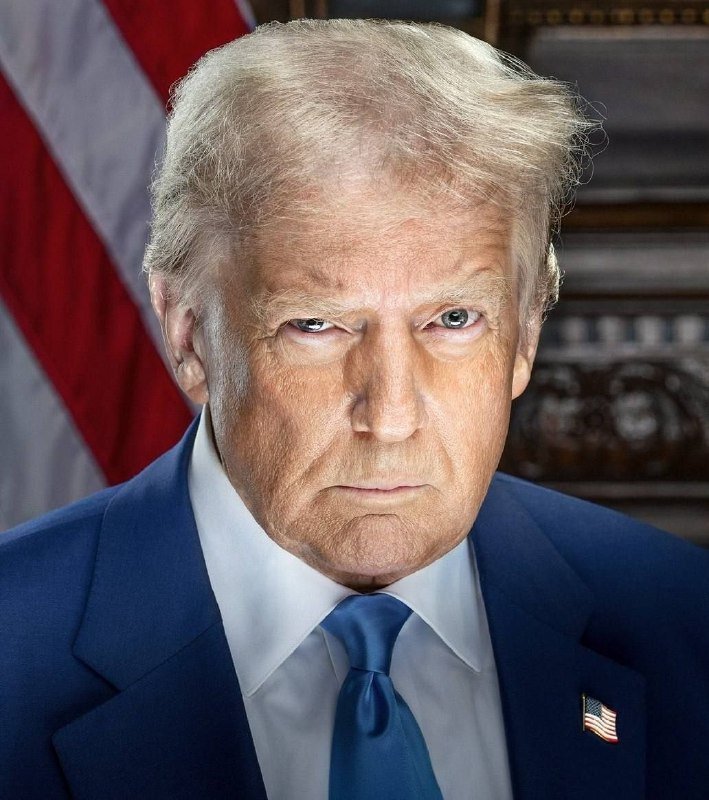
On 17 June 2026, US President Donald Trump said he had signed an agreement with Iran. Reporting carried the same day by Unusual Whales summarised the announcement as a deal under which Tehran would sell oil "immediately." The claim was extraordinary in its simplicity and unusually thin in the detail that usually accompanies an executive-level communiqué. No text was published, no Iranian counterpart was named on the record, and no schedule for shipments or sanctions relief was given.
What is actually on the table is a deal that two governments describe in two languages. Washington frames it as a US-engineered opening of Iranian crude exports, with the political and economic credit accruing to the White House. Tehran frames the same week as proof that the United States could not dictate terms to the Islamic Republic. The gap between those two narratives is the story. It is also where the next quarter's oil flows, sanctions enforcement and Gulf security posture will be settled.
What Trump claimed, and where the receipts stop
The announcement reached Western audiences via social posts first, then through interviews. On 18 June 2026, in an Axios interview cited by Middle East Eye, the president went further than the deal itself, telling the outlet that the Iran episode had taught him there are "no limits to his power" and tying that reading to the unsigned memorandum of understanding.
That sentence did more political work than the deal text. It converted a transactional arrangement — if it is one — into a maximalist claim about executive reach. It also pre-empted a quieter question: what exactly did the US side commit to, and what did Iran trade for it? Reporting circulated in the 24 hours after the announcement did not produce a published text, a Treasury general license authorising fresh Iranian exports, or an Iranian Oil Ministry confirmation. The White House statement, as relayed in the Unusual Whales summary, pointed to "immediate" Iranian sales; the mechanism that would let those sales clear US secondary sanctions was not described.
The structural reading is that the US side wants the optics of an oil-market intervention heading into a domestic cycle where gasoline prices have political weight. The substance — licences, OFAC carve-outs, the question of which Chinese and Indian refiners can lift and settle — is being sequenced to follow rather than precede the headline.
Tehran's counter-frame
Iranian state media carried the same events in an inverted register. Press TV's English-language feed, publishing on 19 June 2026, ran commentary framing Iran as having stopped Trump's "march to reassert US global dominance." The framing was not offered as a deal readout at all. It was a power audit — the conclusion being that Washington's attempt to dictate terms had been checked, and that whatever document was signed was a recognition of that limit rather than a surrender.
That framing is not unique to Iranian messaging organs. It is consistent with how Iranian officials have read the year leading up to the agreement: a posture of controlled escalation, calibrated retaliation and quiet diplomatic opening through Omani and Chinese back-channels. From Tehran's vantage point, an MoU that allows Iranian crude to reach market is the regime's basic ask and not a concession.
A plausible alternative reading is that both sides are right within their own narrative lanes, and that the MoU is thin precisely because neither side wanted to be seen losing. The US gains a price-management talking point and a headline; Iran gains a sanctions aperture and a posture of dignified negotiation; neither gains a durable architecture. That kind of deal is also the kind that fails first under stress.
The oil channel and the secondary-sanctions knot
The phrase "sell oil immediately" is the load-bearing one. Iranian crude sits inside an extensive secondary-sanctions regime, layered with enforcement against Chinese teapot refineries, independent Chinese operators and the small set of shippers willing to handle shadow liftings. Without movement on the US Treasury side — a general license, a wind-down of enforcement against specific refiners, or a quiet no-questions posture at US banks processing dollar settlements — "immediately" is rhetorical.
The dollar plumbing is the gating factor. Iranian oil sold into Asian markets settles, in practice, at the margin in renminbi and dirham. A US posture that wishes to increase Iranian flows without granting relief on dollar clearing will produce a brief inventory adjustment followed by a return to the status quo. A US posture that does grant relief opens a domestic political fight over how visibly the administration is willing to ease enforcement against a government it has spent the year confronting.
That is why the published text matters more than the announcement. Until the text is on the page, buyers, sellers, shippers, insurers and banks will price the deal as headline risk rather than as operational fact. Brent and Dubai spreads will reflect that ambiguity in the hours after any move, and Iranian crude differentials will widen or tighten depending on which side of the licence question the market reads the White House to be on.
Stakes, and what still has to be verified
The winners, if the deal holds in any operational form, are the Iranian state budget — which gains a revenue line it has been running down — and the Asian teapot and independent refining complex, which gains cheap, sanctioned feedstock. The losers are the Israeli and Gulf interlocutors who have spent eighteen months arguing for a higher-pressure posture, and the US Treasury officials who will be tasked with writing the licences without writing themselves out of the existing enforcement architecture.
What remains genuinely uncertain is the text. The Axios interview offers the president's interpretation of his own power after the fact; the Unusual Whales post documents the announcement; the Iranian commentary offers the regime's interpretation of its own leverage. None of those is the deal itself. Until a published document, an OFAC action or an Iranian Oil Ministry statement appears, the agreement sits at the level of contested narrative. The contested narrative is, for now, the story.
This article framed the agreement through both the White House announcement and the Iranian read of the same week, treating state-to-state diplomacy as a contest of framings rather than a single text — the angle the wire coverage is still working out.
Wire provenance
This editorial synthesis draws on the following public wire/social posts:
- https://x.com/middleeasteye/status/1800000000000000002
- https://t.me/presstv/2068098842290003968
- https://t.me/presstv