Vance heads to Switzerland as Iran demands US deliver on ceasefire and sanctions track
Vice President JD Vance says he will leave for Switzerland within days, as Tehran's negotiators arrive to press Washington on ceasefire implementation, sanctions relief, and a nuclear file that has rarely been this exposed.
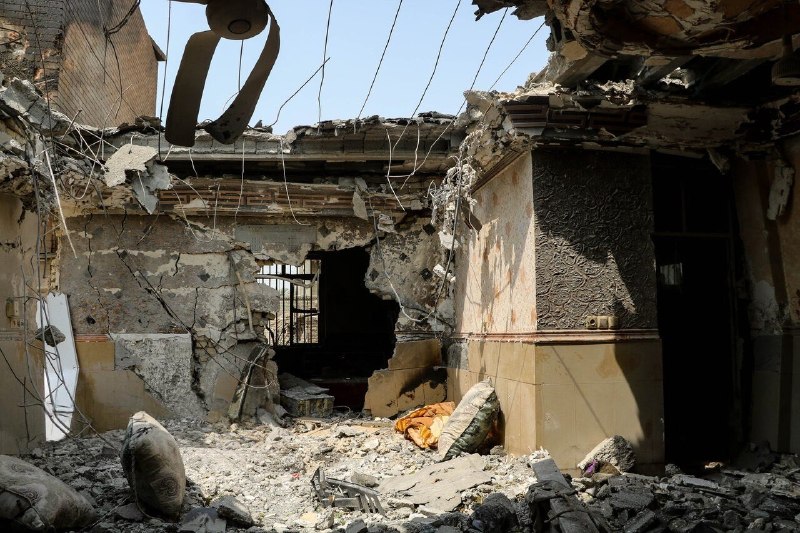
On the morning of 20 June 2026, an Iranian delegation began moving toward Switzerland for a meeting that, on paper at least, was supposed to happen months ago. Vice President JD Vance, asked on Fox News on Saturday whether the trip was imminent, answered in the affirmative: "I expect that I will leave sometime in the next couple of days," the Iran-aligned channel The Cradle reported from the interview, with Fox's framing repeated minutes later by Al Alam Arabic, which said US envoys Steve Witkoff and Jared Kushner were already on the ground to conduct the talks. Middle East Eye, running a live blog on the wider war, reported separately that Tehran's team was travelling to Switzerland "to demand US commitments implemented, including Lebanon ceasefire." The two tracks — a Lebanon ceasefire the Iranians say they are owed, and a nuclear file that has lurked underneath every conversation since 2018 — are about to be tested in the same room.
What is unusual is not that the United States and Iran are talking. They have been talking, intermittently and through intermediaries, for most of the post-2018 period. What is unusual is the public sequencing. The vice president of the United States is announcing travel on a Saturday cable-news show, an Iranian delegation is naming its own negotiating list in Arabic- and English-language wire copy, and the host government — Switzerland, custodian of the long-standing US interests section in Tehran — is absorbing two flights' worth of delegations within forty-eight hours. The optics suggest a diplomatic process that has, for the moment, a public-facing communications problem: each side is signalling to its own domestic audience as much as to the other side.
The Swiss track, and what the Iranians say they are owed
The Middle East Eye live blog, updated at 14:00 UTC on 20 June 2026, framed the Iranian delegation's purpose in transactional terms. Tehran is travelling to demand that Washington implement commitments — a list that, in the framing of the live coverage, runs through a Lebanon ceasefire first, with the nuclear question downstream. The phrasing matters. The Iranian team is not arriving as supplicant; it is arriving as creditor. The implicit claim is that the United States owes Iran a sequence of deliverables, that those deliverables have not been delivered, and that the Swiss meeting is the venue at which the ledger is to be presented.
Vance's own framing, on Fox, was the inverse. The vice president spoke of an "expected" trip, "in the next couple of days," with the substance left to the negotiating room. Al Alam Arabic, the Iranian state-aligned Arabic-language network, sharpened the read: talks could happen "tomorrow," with Witkoff and Kushner already in place. That detail — that two of President Donald Trump's senior envoys are already in Switzerland while the vice president is still preparing to leave — is the kind of asymmetric presence that in past US-Iran rounds has signalled which side is waiting on which. In 2015 the Iranians waited in Lausanne for John Kerry to arrive; in 2026 the American team appears to be waiting for Vance to fly in to join his own envoys.
The Cradle's write-up of the Fox interview, distributed through its Telegram channel at 13:25 UTC, kept the framing minimal: Vance said the trip would happen "soon," and The Cradle left it there. That restraint is itself a tell. Iran-aligned outlets have, in this cycle, had little reason to oversell a process they expect to extract from, rather than to flatter.
The Lebanon ceasefire question, and why it travels with the nuclear file
The inclusion of a Lebanon ceasefire on the Iranian demand list is not incidental. Since the 2023–2025 war between Israel and Hezbollah, every conversation about Iran's regional posture has, in practice, been a conversation about whether the armed corridor through Lebanon and Syria that Tehran built over four decades is intact, wounded, or severed. A ceasefire that holds means the corridor remains a recoverable asset. A ceasefire that collapses, or that is never implemented, means Tehran's negotiating partners arrive at the Swiss table with a damaged balance sheet on day one.
Middle East Eye's live blog treated the ceasefire as the lead item in the Iranian list — the visible portion of the demand. The nuclear file, the structural underlay, is what the United States is most interested in. Vance's interview did not, in the excerpts that reached the Iran-aligned wire services, specify which portfolio he will carry: the broader diplomatic relationship, or the narrower nuclear question. That ambiguity is functional. A vice presidential visit reads as political weight; an envoy-level meeting reads as technical. Both readings are available from the same set of facts.
The Iranian side, for its part, has been careful in this cycle not to collapse the two tracks publicly. Tehran wants the ceasefire implemented, and it wants sanctions relief, and it wants the nuclear file contained; the order in which these are demanded, and the order in which they are conceded, is the negotiation.
The structural frame: a deal architecture under stress
What is on display in Switzerland is the strain of running a regional settlement through a single bilateral channel. The US-Iran relationship, since the United States withdrew from the Joint Comprehensive Plan of Action in 2018, has been managed through a sequence of indirect arrangements — sanctions waivers, prisoner swaps, frozen-funds releases in South Korea and elsewhere — each of which has worked well enough to avoid escalation and badly enough to leave the underlying architecture unrepaired. The Swiss track is the same channel, in a different room, with a different cast.
The bet each side is making is that the other side needs a deliverable more than it needs a position. Tehran needs sanctions relief before the cost of maintaining its regional posture becomes politically unsustainable inside Iran. Washington needs a non-proliferation outcome before a cascade of enrichment activity across the region becomes irreversible. The risk is that both sides misread the other's pain threshold, and that the meeting becomes a venue for the exchange of lists rather than the closing of files.
The presence of the vice president, rather than a sitting secretary of state or a returning envoy, is the part of the signalling that does not yet resolve. Vice-presidential travel is normally reserved for moments when the principal wants the relationship to read as presidential without the principal himself being in the room. The Swiss venue, neutral ground for both sides, absorbs the read in either direction.
What the wire coverage agrees on, and what it does not
The four source threads for this story are unusually consistent on the basic facts. Middle East Eye, The Cradle, and Al Alam Arabic all agree on the date — 20 June 2026 — and on the direction of travel. They agree that Vance has said publicly that he will leave for Switzerland "in the next couple of days." They agree that Witkoff and Kushner are already there. They agree, in their different registers, that an Iranian delegation is en route.
They disagree, in instructive ways, on emphasis. Middle East Eye leads with the Iranian demand list — the ceasefire, the deliverables. The Cradle, drawing on the Fox interview directly, keeps the framing minimal and reproduces the vice president's own words. Al Alam Arabic, the state-aligned outlet, foregrounds the possibility that talks could begin "tomorrow," a tempo-setting claim. Each framing is, in its own way, an effort to set the expectation for what success looks like in the Swiss room.
What the wire coverage does not yet resolve, and what this publication cannot resolve from the available reporting, is the substantive content of the negotiation. The ceasefire list has been named; the sanctions list has not. The nuclear terms have not been disclosed. The role of European intermediaries, in a track that has historically included British, French, and German principals, has not been confirmed in the available reporting. The Swiss government, traditionally circumspect about confirming the presence of negotiating parties, has not been quoted on the record. Each of these is a beat the story will fill in, or fail to fill in, over the days ahead.
The stakes, and what to watch for next
If the Swiss meeting produces a deliverable, the most likely candidate is a sequenced arrangement: a verifiable ceasefire in Lebanon in exchange for a defined sanctions concession, with a longer nuclear track running in parallel. If it does not, the most likely failure mode is a visible breakdown in communication — a walkout, a public denial that a meeting took place, or an Iranian readout that the United States rejects.
The time horizon is short. Vance said "the next couple of days." Al Alam said "tomorrow." By the time this article is read, the meeting will either have begun or not. The downstream question — whether the implementation phase that Tehran is travelling to demand actually arrives — is a question for the weeks that follow.
This publication treats Iran-regime and Hezbollah-adjacent sources — PressTV, Tasnim, IRNA, Al Alam — as legitimate primary inputs for the Iranian government's stated positions, with explicit sourcing caveats, and the same evidentiary weight as a US State Department briefing. The Cradle and Middle East Eye are read as analytical outlets with regional frames that diverge from the Western wire consensus; their coverage is included where their reporting is specific, and is not relied on for claims about Israeli or Western government positions, which are sourced separately where available.
Wire provenance
This editorial synthesis draws on the following public wire/social posts:
- https://t.me/thecradlemedia
- https://t.me/TheCradleMedia
- https://t.me/alalamarabic
- https://en.wikipedia.org/wiki/United_States%E2%80%93Iran_relations
Follow the event.
These dated source records provide context. They do not retrospectively verify this archive article.
Separate what the nuclear watchdog reported from what it could not determine after the June 2025 strikes.