Explosion at Ras Laffan: Qatar Pins Doha Blast on 'Technical Incident' as Markets Await Damage Read
Qatar's Interior Ministry attributed a loud explosion near Doha to a "technical incident" at the industrial Ras Laffan LNG complex, with no immediate word on casualties, damage, or supply impact.
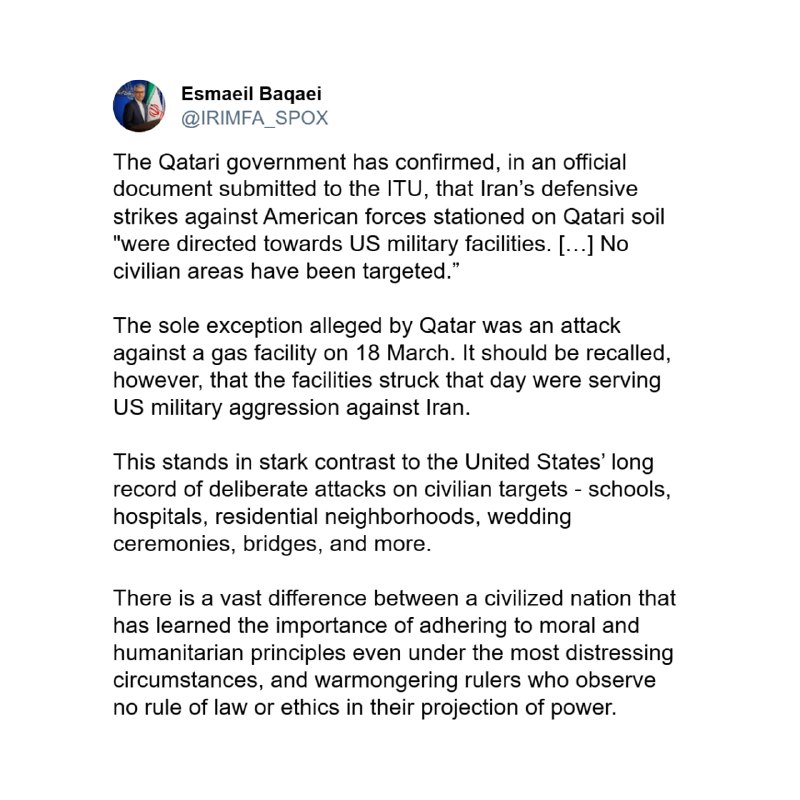
Qatar's Interior Ministry moved quickly on the evening of 21 June 2026 to frame a powerful explosion near the capital as the result of a "technical incident," a careful choice of words that buys Doha time before any verdict on the cause, the casualties, or the implications for one of the world's largest liquefied natural gas export complexes.
The blast was heard across Doha at approximately 20:27 UTC, according to the open-source monitor OSINTdefender, which posted that smoke was visible from the site of an industrial explosion at the Ras Laffan Liquified Natural Gas Plant, with civil-defence teams and authorities en route. Telegram channels that aggregate footage from the war-and-crisis beat, including War Footage Witness (@wfwitness), carried the Interior Ministry's "technical incident" line roughly twenty-one minutes later, at 20:48 UTC, alongside footage showing the immediate aftermath. By 21:54 UTC, Iran's Al-Alam network was reporting that an explosion had been heard in Doha.
The story is the first acute shock to hit Gulf energy infrastructure of 2026, and it lands on a market structure that has very little tolerance for surprises.
What we know — and what Doha is saying
Doha's instinct in the first hour of any major incident at Ras Laffan has, in past episodes, been to compress the information environment: a single line from the Interior Ministry, no speculation, no death toll until it is verified, and a polite request that residents stay away from the area. That script appears to be playing out again. The "technical incident" formulation is deliberately ambiguous — it could cover a process-safety failure inside one of the LNG trains, a gas-leak ignition in the utilities area, a storage-tank incident, or, in the more alarming reading, an external strike. By using a term that does not exclude any of those possibilities, the ministry has left itself room to revise the assessment once its own engineers, and Qatari state energy operator QatarEnergy, have a clearer picture.
The geography helps. Ras Laffan sits roughly eighty kilometres northeast of central Doha, on a purpose-built industrial city that hosts LNG processing trains, condensate stabilization, helium plants, and the export berths that load Qatari gas onto the world's largest LNG carrier fleet. The plume reported by OSINTdefender and the audible blast felt across the capital both fit a major industrial event at the complex, rather than a smaller municipal incident in Doha proper. What does not yet fit is any confirmed casualty count, any official identification of the affected train or unit, and any word on whether loading operations have been suspended.
The read on the region's information layer
It is worth pausing on how this story is travelling. Within minutes of the first OSINTdefender post identifying Ras Laffan by name, an adjacent post placed a "possible gas explosion" at the same plant and linked a photo via a tweet from the same account. War Footage Witness, a Telegram channel known for redistributing verified war and disaster footage with minimal commentary, layered the Interior Ministry's "technical incident" line on top of geolocated video of the aftermath. Iran's Al-Alam, a state broadcaster with a Persian-Gulf editorial line, picked the story up as a general "explosion in Doha" report without yet naming Ras Laffan.
This is the region's now-standard incident pipeline: a single open-source account with strong geolocation instincts breaks the location, a verification-focused channel attaches official language to footage, and regional state broadcasters amplify the headline on a lag, often with less specificity. Readers who follow only one layer get a partial picture — either the location without the official framing, or the official framing without the location. The full picture only emerges when both streams are read together.
Why Ras Laffan matters, structurally
Ras Laffan is not simply a Qatari asset; it is a load-bearing node in the global LNG market. Qatar is the world's largest LNG exporter, and Ras Laffan is the engine room of that position. A sustained outage at even a single train would tighten a market that has, over the past eighteen months, become accustomed to operating near nameplate capacity to meet European demand displaced from Russian pipeline gas and Asian demand growth from the region's biggest importers. Even a short-lived shutdown tends to pull benchmark prices the moment traders price in the possibility of extension.
This is also an asset that sits inside a wider Gulf security conversation. Qatari LNG infrastructure was repeatedly discussed, during the 2017–2021 Saudi-led embargo and its aftermath, as a target-rich environment in any escalation between Gulf states. The current regional environment — with the wider Middle East still adjusting to the post-October 2023 order, ceasefire negotiations in their stop-start phase, and the persistent shadow of the Iran file — means that any explosion at a Gulf energy asset is read by markets not only as a process-safety question but as a security question. Doha's choice of the word "incident" rather than "accident" is, in that light, a deliberate signal that the official line on cause remains open.
There is also a longer-running structural story. Gulf states have spent the last five years diversifying their gas export portfolios — the Qatar North Field expansion, the UAE's FID on Ruwais LNG, Oman shipping its first LNG cargo from its Qalhat train — precisely because concentration risk at single mega-complexes like Ras Laffan has become harder to insure and harder to underwrite politically. An incident that takes even a single train offline accelerates the case for that diversification, and it gives rival suppliers, from the United States to Mozambique to Egypt's Idku, a momentary commercial opening.
Counter-reads and what remains uncertain
The most plausible competing reading of the available footage is the boring one: a process-safety failure inside one of the older LNG trains at Ras Laffan, of a kind that has historically produced large audible blasts and dramatic fireballs without necessarily taking the affected unit offline for long. Gulf industrial complexes run hot and tolerate a baseline rate of incidents; not every plume is geopolitics.
A second reading, harder to dismiss outright in the current security environment, is that this was an external act — a strike, a drone, or a sabotage operation against a target that several regional and extra-regional actors have reasons to want to degrade. The Interior Ministry's careful wording leaves this possibility open without endorsing it. A third reading, more speculative, is that the blast originated outside the LNG complex proper, perhaps at one of the petrochemical or fertilizer plants that share the Ras Laffan industrial city, and was simply louder and more visible than initial accounts suggested.
What the sources do not yet establish is any of the figures that will determine the market reaction: how many trains are affected, whether export berths are operating, the state of the loading queue, whether QatarEnergy has issued an operational statement, and whether any casualties have been confirmed. Each of those data points is likely to land in the next twenty-four to forty-eight hours, and each will move the story from "incident near Doha" to a specific operational and financial read.
The other contested question is attribution. Western wire reporting on Gulf energy incidents has, in past episodes, defaulted quickly to the most geopolitically charged framing — drone strike, Iranian proxy, Houthi escalation — often before Qatari or Gulf engineers have had time to publish a process-safety assessment. That framing is not implausible, but it is also not the only reading, and Monexus will treat any premature attribution with the scepticism the evidence base demands.
Stakes and the next forty-eight hours
If the damage is contained to a single process unit, with no casualties and a short repair window, the story will fade inside a week and the market will treat it as a reminder rather than a turning point. If even one of the major LNG trains is offline for a meaningful period, the implications run wider: tighter spot LNG prices in Europe and Asia, a windfall for non-Qatari suppliers, and a fresh argument inside the Gulf about whether the concentration of export capacity at mega-complexes has become a strategic liability. If the official cause turns out to be an external act, the regional security conversation changes character overnight.
For now, the most defensible read is the most cautious one. An explosion was heard across Doha at approximately 20:27 UTC on 21 June 2026. Smoke rose from the Ras Laffan industrial area. Qatar's Interior Ministry has called it a technical incident. The open-source community has geolocated the plume to the LNG complex. Everything else — cause, casualties, operational impact, attribution — is work for the next forty-eight hours, and Monexus will update as Qatari authorities, QatarEnergy, and the wire services publish verified detail.
Desk note: Monexus is leading with the Qatari Interior Ministry's framing while preserving the OSINTdefender geolocation, on the principle that the official line is the official line until contradicted by evidence, but that the location and visual record speak for themselves. The two reads — "technical incident" and "explosion at Ras Laffan" — are not in conflict; they are the same event described at different layers of the information stack.
Wire provenance
This editorial synthesis draws on the following public wire/social posts:
- https://t.me/wfwitness
- https://t.me/OSINTdefender
- https://t.me/OSINTdefender
- https://t.me/alalamfa
- https://t.me/sentdefender