Hormuz reopened — for now. The bargaining chip is back in play.
Tehran briefly choked the world's most important oil chokepoint again — then walked it back. The pattern says more about the negotiating table than the strait itself.
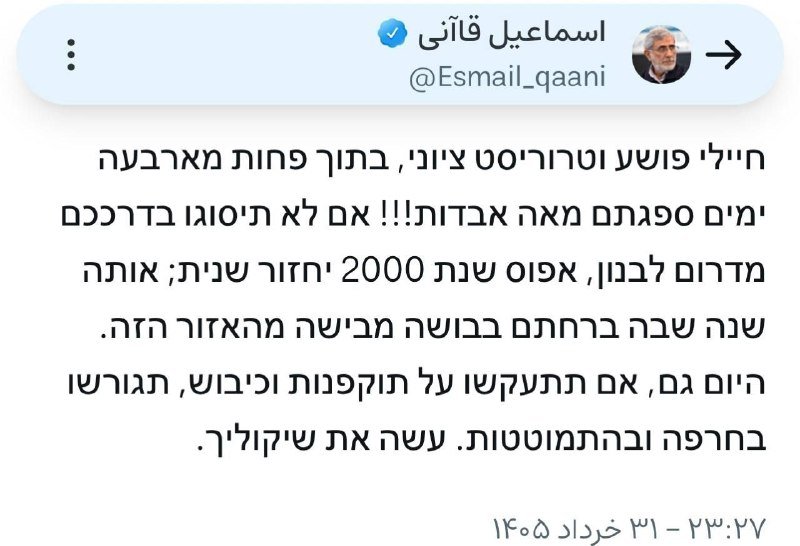
On 20 June 2026, Iran's joint military command announced it had closed the Strait of Hormuz in retaliation for continued Israeli operations in Lebanon, according to Iranian state-linked reporting reviewed by Monexus. Within hours, the language softened: Tehran accused mediators of "breach of contract" and the strait was, in practical terms, back open. By 21 June, Financial Times–cited briefings from a political source suggested the Swiss-mediated channel was refocusing on the mechanism for monitoring any eventual nuclear deal — not on the closure itself.
The sequence matters. A closure that lasts hours is not a closure; it is a price signal. Read in that light, the past 48 hours are less about the world's most consequential oil chokepoint being physically shut than about a negotiating posture that uses the threat of shutting it as leverage.
What actually happened on the water
The Strait of Hormuz handles roughly a fifth of globally traded oil. Any sustained closure moves the Brent benchmark within minutes. Iran's joint command framed the 20 June announcement as a direct response to Israeli strikes inside Lebanon — a position SBS News Australia and Iranian state media both carried, with the latter using a "breach of contract" formulation that, in diplomatic idiom, treats the strait itself as a contractually guaranteed asset.
Two things are worth noting about the framing. First, the closure was declared, walked back, and recast as a grievance inside a single news cycle. Second, the choice of the word "contract" implies Tehran sees the unimpeded flow of Hormuz traffic as something owed to it — by mediators, by the Swiss venue, or by parties to a nuclear track it believes it is being denied.
The counter-narrative: this is not about Lebanon
Western wire reporting, including Axios's 20 June exclusive first surfaced on X via Unusual Whales, treats the closure declaration as a pressure move designed to land the nuclear conversation on American terms. On that read, Israel's Lebanon operations are a useful pretext, not the actual cause. Iran wants the negotiating room back; the strait is the lever.
The Iranian counter is not without weight. Casualty reporting from Lebanon, where Israeli operations continued through the reporting window, gives Tehran a defensible moral posture in the eyes of the broader Middle East. A state under bombardment framing its response as retaliation is intelligible to audiences that are unmoved by Western energy-market anxiety. Both readings can be partly right, and the dominant one depends on whether you weight the negotiating table or the battlefield more heavily.
What "mediators in Switzerland" are actually mediating
The 21 June Financial Times brief — relayed by Mehr News — narrows the agenda to a monitoring mechanism. That is a specific, technical question: who verifies what, on what timetable, with what enforcement teeth, and with what rollback if verification fails. It is also the question every previous nuclear framework has died on.
A monitoring mechanism is not a deal. It is the infrastructure of a deal. Putting it at the centre of the Swiss talks suggests two things at once: that the broad political framework is closer to landing than at any point in the recent cycle, and that both sides still trust each other too little to write the framework down without it.
The stakes, in concrete terms
If Hormuz becomes a recurring lever — open during good faith, throttled during grievance — the energy market will price that as a permanent risk premium rather than a one-off shock. Importers from Asia, the only large customer bloc still buying Iranian crude at scale in current conditions, will hedge. Refiners will adjust. Insurance war-risk premia for the Gulf will ratchet upward every time Tehran uses the word "breach."
The countervailing gain for Tehran is real: a credible ability to move the global oil price on demand converts diplomatic marginality into leverage. It is, in effect, a balance-of-payments instrument with no Treasury department required.
For the Israeli-Lebanese track, the read-through is colder. Each round of strikes generates a Hormuz headline, which generates a monitoring-mechanism headline, which leaves the underlying military operations on Lebanese territory unaddressed in the diplomatic channel. The body count in Lebanon pays for leverage in Geneva. That is the bargain Tehran is offering, and the bargaining chip has just been returned to the table.
What remains genuinely uncertain
Three things the sources do not resolve. First, whether the 20 June closure declaration was a coordinated Iranian move across military and diplomatic channels, or a military announcement that surprised even parts of Iran's own negotiating team — a distinction that determines whether the pattern repeats. Second, what "monitoring mechanism" means in operational terms: IAEA-style inspections, a third-party state presence, a US-Iran bilateral arrangement, or a hybrid that none of the parties have publicly sketched. Third, whether the Israeli operations in Lebanon are themselves a variable Tehran can influence, or an independent track that periodically gifts Iran with plausible deniability for escalation.
Monexus will be watching whether the Financial Times–cited monitoring-mechanism text surfaces in concrete form before the next Hormuz headline does. The order in which those two events arrive will tell us who is actually driving.
— This article sits at the intersection of two wires Iran-watchers follow: the Financial Times/Switzerland nuclear track and the SBS/Israeli-strikes military track. Monexus treats the strait closure as a diplomatic signal, not a logistical fact — a frame most energy desks resist because it strips the headline of its drama.
Wire provenance
This editorial synthesis draws on the following public wire/social posts:
- https://t.me/unusual_whales
- https://t.me/mehrnews
Follow the event.
These dated source records provide context. They do not retrospectively verify this archive article.
Separate what the nuclear watchdog reported from what it could not determine after the June 2025 strikes.