Huckabee's Biblical-Geography Pitch and the Quiet Erasure of Palestinian Nationalism
At a JNS conference on 21 June 2026, US Ambassador Mike Huckabee framed the US-Israel bond in biblical terms. The language is theological, but the political payload is a twenty-first-century land claim.
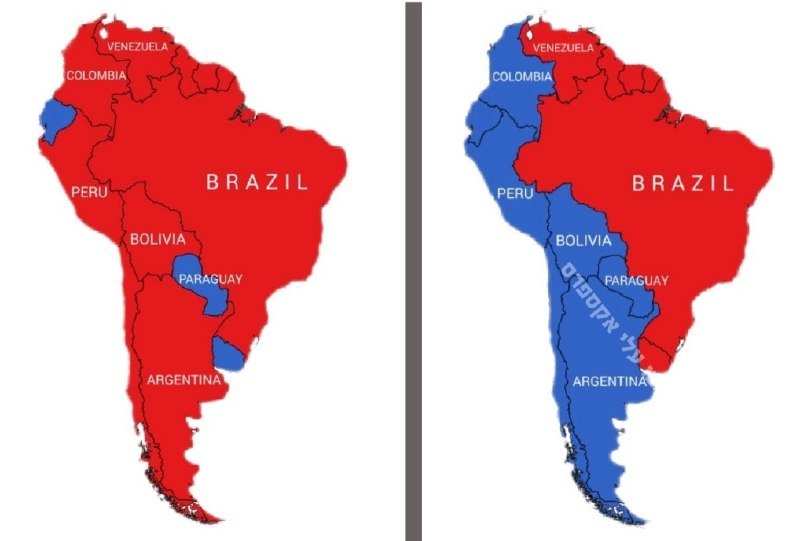
On 21 June 2026, US Ambassador to Israel Mike Huckabee took the stage at a Jerusalem News Syndicate (JNS) conference and described the connection between the United States and Israel as a bond rooted in scripture, in the Jewish people's attachment to the Land of Israel, and in a shared civilisational vocabulary. The address, circulated in the afternoon hours (UTC) by Telegram channels monitoring the speech, lands in a different diplomatic register than the boilerplate of US envoys past. Huckabee was not merely restating the bipartisan commitment to Israeli security that has anchored American policy for decades. He was placing that commitment inside a theological architecture — one in which the territory itself is the point.
The political payload of that framing is harder to miss than the rhetoric is to ignore. A US ambassador publicly describing the relationship as organic, scriptural, and territorially grounded is not just offering comfort to a domestic audience in Jerusalem. He is signalling, in real time, that the question of Palestinian self-determination — the political project that has been the principal diplomatic obstacle to annexationist impulses inside the Israeli coalition — is, from Washington's vantage, no longer the obstacle it once was.
What Huckabee actually said
According to clips and transcripts circulated on 21 June 2026, Huckabee's central argument was that the US-Israel relationship rests on three pillars: a political-strategic alignment between two democracies; a civilisational-religious kinship between the American and Jewish experiences; and, crucially, a third pillar — the Jewish people's connection to the Land of Israel as a matter of faith and history rather than negotiation. The third pillar is the consequential one. Strip the language of its scriptural register and it reads as a land claim. Frame it as a civilisational kinship and you have removed the space in which Palestinian national identity, with its own history of attachment to the same territory, can be treated as a co-equal political fact.
This publication has watched a string of US ambassadors describe the relationship in terms of shared values, intelligence cooperation, and democratic alignment. Huckabee's framing is more specific. It is also more compatible with the maximalist wing of the Israeli coalition, which has long argued that the 1967 lines are not a starting position for diplomacy but a historical aberration to be reversed.
The diplomatic erasure built into the language
There is an obvious political fact that the JNS speech did not engage. The territory Huckabee describes as the historic homeland of the Jewish people is also the territory on which roughly five million Palestinians live, in conditions that range from citizenship in Israel proper to permanent residency in East Jerusalem to military rule in the occupied West Bank. The Palestinian Authority, weakened as it is, still claims this territory as the foundation of a future state. The PLO and the broader Palestinian national movement have, since the late 1960s, framed their project in explicitly national rather than confessional terms — a choice that, on the diplomatic chessboard, was supposed to be the basis for a two-state resolution.
A US ambassador asserting that the US-Israel bond is grounded in the Jewish people's attachment to the Land of Israel is, by omission, asserting that the Palestinian national claim is not a comparable fact. That is not a slip of the tongue. It is a position. And it is one that converges, almost perfectly, with the political logic of annexationist voices in the Israeli coalition who treat the Palestinian national project as a project that can be negotiated away rather than one that has to be addressed.
The counter-narrative the address forecloses
A serious counter-narrative exists, and it does not require sympathy for any particular party to articulate it. It holds that the bond between the United States and Israel can be defended on strategic and democratic grounds — shared intelligence, shared technology, shared threats from regional non-state actors, shared parliamentary culture — without invoking scripture, without converting a diplomatic alignment into a confessional one, and without collapsing the political question of Palestinian national rights into a theological footnote. That is the version of the relationship that has been the bipartisan default since at least the Reagan era. Huckabee's JNS speech reads as a deliberate departure from it.
The most plausible counter-read of the address is that Huckabee was speaking as a religious conservative, not as a diplomat, and that the Trump administration's policy remains technically committed to the framework of the Abraham Accords, which are agnostic on the territorial question. That reading has some force. But ambassadors do not normally give keynote addresses at JNS conferences in their official capacity, and the message of the speech is, in any case, what the audience heard. A 21 June 2026 audience in Jerusalem is not the 1996 audience that would have parsed the same words as a domestic-cultural statement.
The structural frame: when theology replaces diplomacy
What is happening in Washington is not best read as a single ambassador's quirk. It is the steady replacement of a political-diplomatic vocabulary — land for peace, two states, settlement blocs, the Clinton parameters, the Oslo architecture — with a civilisational one. The shift began before Huckabee's appointment; the embassy move to Jerusalem in 2018, the closure of the PLO mission in Washington, the recasting of Palestinian national claims as a question of refugee welfare rather than sovereignty — these were earlier moves in the same direction. Huckabee's JNS address is the latest instalment. The pattern matters more than the speech, because the pattern is what the next administration's choices will be made inside.
For a publication that treats Israeli security concerns as legitimate and first-order, the question this address raises is not whether the US should be a friend of Israel. It obviously should. The question is what kind of friend. A friend that helps Israel negotiate the impossible demographics of a single state in which millions of people have no vote and no civil equality is not a friend. It is a sponsor of a problem that, by every available projection, gets worse with each passing year.
The serious stakes
The stakes of this rhetorical shift are concrete. If the United States abandons the political-vocabulary frame, the Palestinian Authority loses its most important diplomatic leverage, the two-state solution loses its already-weakened institutional scaffolding, and the international consensus that has underwritten Israeli legitimacy for decades — UN resolutions, the Geneva Conventions, the Oslo-era architecture — becomes background noise. In that scenario, the choices narrow to a single binational state with no civic equality, or a formalised system of territorial control that international law has, since 1967, refused to recognise. Neither outcome is a foreign-policy success for the United States. Neither is in Israel's long-term interest. Neither is what Huckabee's audience in Jerusalem was being promised on 21 June 2026.
The honest note to end on: a single address does not determine a policy. But a single address, by a sitting US ambassador, at a conference with explicit ideological positioning, in a city where the diplomatic consequences of every sentence are read by every embassy, is not nothing. It is a marker. And it is one this publication will be watching.
How Monexus framed this: where wire coverage treated the JNS speech as a feel-good reaffirmation of the US-Israel relationship, Monexus read the third pillar — the scriptural-land attachment — as the operative one, and treated the omission of Palestinian national claims as the lead rather than the subtext.
Wire provenance
This editorial synthesis draws on the following public wire/social posts:
- https://t.me/englishabuali
- https://t.me/englishabuali
- https://t.me/abualiexpress