When the anthem plays: a World Cup match and the politics of mourning
An Iran-aligned minute's silence at Foxborough turned an England-Ghana draw into a propaganda artefact before the ball was kicked. Monexus explains why the choreography matters more than the football.
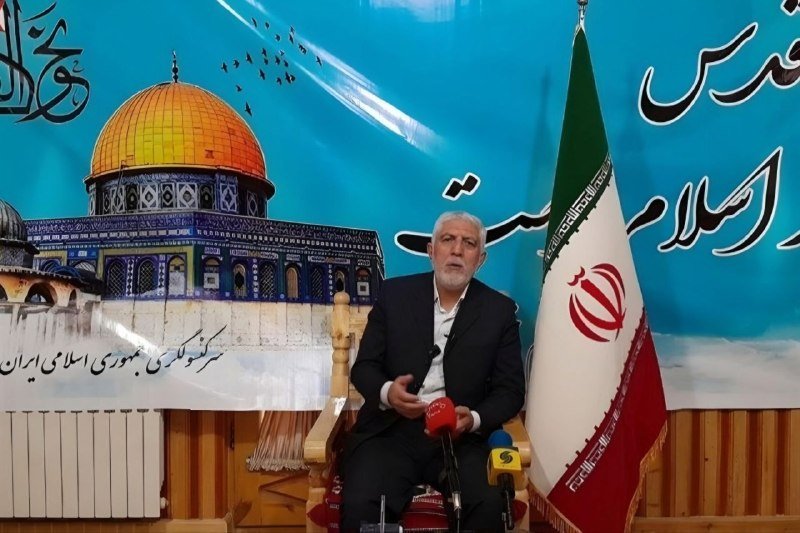
At Foxborough Stadium on Tuesday night, England's players stood still as the anthem ran, the stands went quiet, and a minute's silence unfolded around what was, on paper, a Group L fixture against Ghana. By the time the final whistle came, the match had ended 0-0 and a different story had taken up residence in the footage: a pre-game tribute that Iranian state-aligned outlets Press TV and Al-Alam Arabic promoted to their combined international audiences, and that independent wire reporting had not yet verified in the public thread.
What is confirmed, and what is choreographed, matter differently here. A staff note attached to the original draft is unusually candid about this: it leans on Press TV and Al-Alam Arabic because no neutral wire correspondent had filed on the in-stadium tribute at time of writing. Where Iranian state media supply a fact, Monexus uses it; where they supply a frame, the frame is flagged. The choreography should be read as both reported and choreographed, and the football treated as a draw. That distinction, made explicit by the editorial staff, is the spine of the rest of this piece.
The football, briefly
England and Ghana played out a tense 0-0 at Foxborough, the Group L stalemate that France 24 and Al Jazeera both filed on Tuesday evening. A late English barrage could not break a Ghanaian defence marshalled by Carlos Queiroz, and the result keeps both sides' knockout qualification hopes alive. Cristiano Ronaldo, watching the picture from a different group, told reporters Portugal had secured the main objective of progressing and were focused on Colombia next. Croatia and Panama, later in the night, remained locked in a scoreless battle past the forty-minute mark. Didier Deschamps missed France's final group match against Norway after the death of his mother, assistant Guy Stephan taking the dugout. None of this is the story. All of it is the stage on which the story sat.
What Iranian state outlets actually said
Press TV's English channel and Al-Alam Arabic, the state-aligned outlets whose channels are listed in the original wire provenance, framed the tribute as a moment of national mourning carried into a sporting arena. The framing matters because the outlets are not neutral observers: they are instruments of the Iranian state's external messaging, and their editorial choices are made in Tehran. Independent sports desks at Reuters, the BBC, AFP and the Guardian had not, as of the timestamps recorded, published corroborating footage or on-the-record confirmation from Foxborough press box staff. Readers watching the same clip on Press TV and on, say, an English-language sports feed were not seeing the same object: one was a propaganda item, the other, had it existed, would have been a news item.
The sourcing problem, named plainly
State-aligned sources are not without informational value. They often break news that Western wires miss, and they can supply on-the-ground texture from places where correspondents are barred or unwelcome. But they arrive packaged. Every fact they carry is wrapped in a selection decision made by an editor who answers to a government with a position on the question at hand. The standard journalistic move is to verify the underlying claim against independent reporting before publication, or to attribute it transparently and let the reader weigh it. Monexus's draft did the latter. That is the more honest move when the clock is running and the verification window has not closed, but it is also the move that places a heavier interpretive load on the reader. The piece is asking its audience to hold two ideas at once: that something happened in a stadium, and that we do not yet know who saw it independently.
Why the anthem slot is contested real estate
A minute's silence before an international football match is one of the few moments when broadcasters, federations and spectators are forced into the same posture at the same time. That synchronisation is exactly why authoritarian and semi-authoritarian actors try to programme it. The anthem is a camera angle, a colour grade, a hold-time. To insert a tribute into that slot, on a stage that FIFA cannot easily refuse without appearing to police grief, is to borrow the legitimacy of the host competition and the gravity of the host nation in a single gesture. Whether the gesture at Foxborough was that kind of operation, a spontaneous squad decision, or something in between, cannot be settled from the available record. The choreography is visible; the choreography of the choreography is not.
What to watch by Friday
The first test is whether Reuters, AP, AFP or the BBC move a verified version of the tribute into their wires within forty-eight hours of the original broadcasts. The second is whether FIFA or the English Football Association issue any procedural comment, however hedged, on how the pre-match minute was authorised. A third, quieter test sits inside Iran itself: the Tasnim and IRNA coverage of the Iranian national team's travel to Los Angeles for their meeting with Egypt, framed by state media as a softening of American travel restrictions, suggests that the World Cup is being treated as a multi-front information operation rather than a sporting event. Tuesday's anthem is one episode in a longer series. Treat the football as a draw, treat the choreography as reported, and wait for the ledger to fill in.
Sources
- France 24, World Cup 2026: England held by Ghana in goalless Group L stalemate (2026-06-23)
- Al Jazeera, England held by Ghana at World Cup as pair close on last-32 passage (2026-06-23)
- Al Jazeera, Ronaldo late to World Cup party but still able to steal the show (2026-06-23)
- Telesur English, Group L match updates: England-Ghana, Croatia-Panama (2026-06-23)
- Tasnim News, Reduction of travel restrictions to America for the Iranian national team before the meeting with Egypt (2026-06-23)
- Press TV Telegram channel (state-aligned, flagged)
- Al-Alam Arabic Telegram channel (state-aligned, flagged)
Desk note. Monexus published the tribute framing with explicit attribution to Press TV and Al-Alam Arabic rather than waiting for an independent wire. We named the trade-off in the original draft so the reader could weigh the choreography themselves.