Iran's Hormuz gambit: a corridor weaponised, an oil market on edge
Tehran says the strait stays shut until Lebanon is quiet. Israel says the ceasefire still holds. Satellite imagery suggests something is moving in the water. The world’s busiest oil chokepoint is being run as a bargaining chip — and the market is starting to price it.
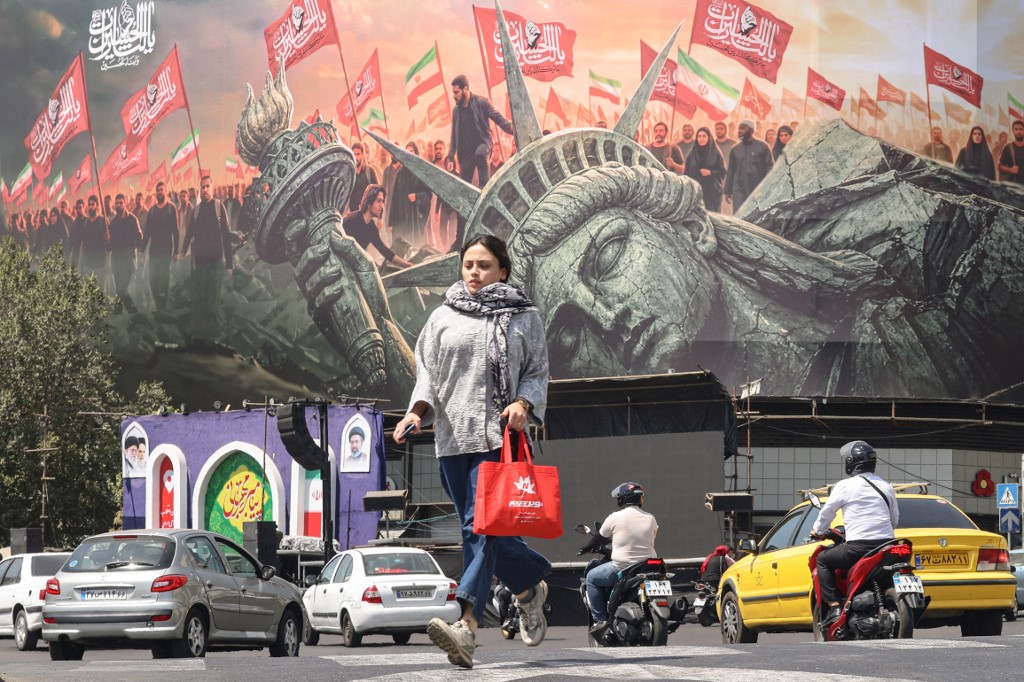
On the afternoon of 20 June 2026, with Western oil desks already closed for the weekend, an Iranian foreign ministry readout carried a single sentence that would scramble Monday’s open: the Strait of Hormuz, through which roughly a fifth of the world’s seaborne oil normally passes, would not reopen until there was a ceasefire in Lebanon. By the following morning — 21 June 2026, UTC — the framing had hardened. A Reuters dispatch carried by the Ukrainian frontline reporter Andriy Tsaplienko’s Telegram channel at 13:07 UTC quoted Tehran directly: “The Strait of Hormuz will not be opened until there is a ceasefire in Lebanon.” Within hours, satellite imagery circulated by the Russian-aligned milblogger channel Two Majors (12:35 UTC) appeared to show Iranian naval movements in the strait, contradicting US public messaging that traffic was flowing as normal. The episode is not, on its face, a declaration of war. It is something more instructive: a hostage-taking of the global energy architecture, executed in the gap between what major powers say publicly and what their satellites can see.
The through-line of the past 72 hours is that Iran has converted the world’s most important hydrocarbon corridor into an extension of the Israel–Lebanon bargaining track. Whether the conversion sticks depends less on what Tehran declares than on whether the US Navy chooses to physically escort tankers through the water it says is open. So far, it has not been forced to choose.
What the wire actually says, line by line
The first credible read-out was an X post by the prediction-market account @Polymarket at 13:50 UTC on 20 June 2026, noting that Iran had “reportedly declared the Strait of Hormuz closed again, citing alleged ceasefire violations by Israel.” By 15:47 UTC, the crypto-news outlet CryptoBriefing ran a wire-style headline — “Iran closes Strait of Hormuz over alleged Israel ceasefire violation” — and a parallel item was filed at 16:17 UTC by Cointelegraph on both its news and markets desks, explicitly attributing the closure to an Iranian claim that the US and Israel had violated a ceasefire agreement.
The most consequential single sentence of the day, however, was the conditional Tehran attached to its move. Reuters’ reporting — relayed by Tsaplienko’s channel at 13:07 UTC on 21 June 2026 — made that conditional explicit: the strait will stay shut until Lebanon is quiet. That is not the language of an act of war. It is the language of a leverage position. It says, in effect, that the strait has been re-priced as a swap: oil flow for a halt in fighting on Israel’s northern front. The Israeli government, as of the available sourcing, had not publicly confirmed or denied a specific violation; Iranian state media framed the move as retaliation for Israeli operations in southern Lebanon.
What complicates the picture is the gap between Iranian declarations and observable behaviour on the water. The Two Majors post at 12:35 UTC on 21 June 2026 carried what it described as 24-hour satellite imagery showing Iran “visibly” closing the strait even as US officials publicly insisted business was as usual. The sourcing here warrants care: Two Majors is a Russian milblogger channel with a consistent record of pro-Moscow framing on Middle East files. Its satellite claims should be treated as a single point in a multi-source mosaic — corroborable, contestable, and not, on their own, definitive. The legitimate test will be whether commercial tracking services (MarineTraffic, Kpler, Lloyd’s List Intelligence) record a sustained drop in transits, and whether the US Fifth Fleet breaks public silence with a contrary operational read.
The counter-narrative: is the strait actually shut?
Three readings of the same 36 hours are circulating in parallel.
Reading one — Tehran’s. The strait is closed, the closure is conditional, the condition is a Lebanon ceasefire, and the violation that triggered it was Israeli. This is the framing carried by Iranian state media and propagated through aggregators like Cointelegraph and CryptoBriefing, both of which leaned heavily on Iranian read-outs.
Reading two — Washington’s. Traffic is normal; the Iranian declaration is declaratory, not operational; the US Navy continues to escort commercial tonnage on its published schedule. This is the framing that Two Majors explicitly named as the US line — and, as of the available sourcing, it has not been contradicted by a public US Central Command briefing.
Reading three — the structuralist one. Both can be true. Iran does not need to physically seal the strait to weaponise it. It needs only to make the insurance premium on a Hormuz transit rise enough that shipowners voluntarily reroute, that refiners draw down stocks, and that benchmark prices move. A declared closure, even one that is partly theatrical, does all three. By Sunday evening, with no Western wire yet able to confirm an actual halt in transits, the symbolic declaration was already functioning as if it were real.
The honest answer to the question on the banner — “is the strait shut?” — is that the source items do not yet resolve it. They establish a credible Iranian declaration, a credible Western denial, and a satellite-image claim from a partisan channel that the declaration is matched by activity on the water. Whether that claim survives independent verification is the central evidentiary question of the next 48 hours.
Why the Hormuz lever matters more than it used to
A decade ago, an Iranian threat to close Hormuz would have triggered an immediate, automatic US response — Fifth Fleet escort, mine-clearance posture, an emergency IEA release. That reflex has frayed. Three structural shifts explain why.
The first is the diversification of seaborne oil routes. Gulf crude still moves through Hormuz in huge volumes, but the marginal barrel for Asian refiners increasingly comes from the Americas and West Africa, and the marginal Russian barrel reaches Asian customers via a shadow fleet that does not transit Hormuz at all. A full closure would still spike prices sharply, but it would not, as it would have in 2008, knock out a sixth of global supply overnight. The price impact is real and severe; the supply impact is smaller and shorter than the rhetoric implies.
The second is the maturity of Iran’s own bypass architecture. Tehran has spent fifteen years building export routes that do not require its own navy to protect — pipelines through Iraqi Kurdistan to Ceyhan, discounted crude to Chinese teapot refineries, ship-to-ship transfers in the Gulf of Oman that obscure origin. These routes do not move enough crude to neutralise Hormuz, but they do neutralise the threat of a full blockade on Iran itself. The asymmetric logic that once read “Iran cannot afford to close the strait because we will strangle its exports” has weakened on both sides.
The third is the politicisation of the US Navy’s escort role. A decade ago, an Iranian harassment of a tanker in Hormuz produced an immediate, named US warship on station, and that warship was treated as a non-political asset. After the visible US restraint during the Houthi campaign in the Red Sea from 2023 onward, that assumption has eroded. Shipowners now price the probability that a US escort will be physically present during a spike in Iranian activity — and that probability, in 2026, is materially lower than it was in 2019. The market is hedging against American hesitation. Iran is reading that hedge.
What the past 72 hours demonstrate, in other words, is not a sudden shift in Iranian capability. It is the surfacing of a shift in the credibility of the American guarantee — a guarantee whose existence is the precondition for Hormuz functioning as the world assumes it does. The lever Iran is pulling works because the hand on the other end of the lever is no longer certain.
The Lebanon thread: why this is not about oil
The conditional Tehran attached — until there is a ceasefire in Lebanon — is the part the energy desks have under-weighted. It tells you what the move is actually about.
Israel’s northern front has been the second-front pressure point of the wider war since Hezbollah opened a sustained rocket campaign in late 2023, and ceasefire negotiations have run in parallel tracks to the Gaza file throughout. Iran’s strategic interest in those negotiations is to keep the pressure on Israel without triggering the kind of direct US strike that took out senior IRGC commanders in 2024. The strait gambit is designed to sit just below that threshold: costly enough to demand Western attention, deniable enough to be walked back, and framed as a Lebanese humanitarian demand rather than an Iranian strategic one.
It is also designed to split the American and Israeli positions. The US, with an election-year sensitivity to gasoline prices and a strategic interest in not widening the war, has an incentive to press Israel for de-escalation in Lebanon. Israel, with a stated security imperative to neutralise Hezbollah rocket capability on its northern border, has an incentive to keep operating. A Hormuz closure that Western capitals read as “Iran punishing Israel” gives the White House a domestic-political reason to do what its strategic calculus already favours: lean on Jerusalem to wind down the northern operation. Tehran does not need the strait to actually close. It needs the price of the closure to be paid, in diplomatic capital, by Israel.
Stakes, forward view, and what remains unknown
If the closure holds operationally — that is, if tanker transits through Hormuz drop materially over the next week — the Brent benchmark will move fast and hard. Asian importers (China, India, Japan, South Korea) will accelerate SPR releases and emergency procurement from non-Gulf suppliers; European buyers will discover, again, that the Mediterranean refiners are downstream of the same physics. Shipping rates for VLCCs on the Gulf–Asia route will spike, and the shadow fleet will see a brief window of expanded demand at premium prices. The US Strategic Petroleum Reserve has roughly the same drawdown capacity it had in 2024, which is to say: enough to take the edge off, not enough to substitute.
If the closure proves declaratory — Iranian statements unaccompanied by sustained disruption — the immediate price impact fades, but the precedent does not. Every future round of Israel–Hezbollah or US–Iran tension will carry an embedded Hormuz option, and the option premium will rise. The chokepoint becomes a permanent bargaining chip rather than a wartime one.
What the available sourcing does not yet resolve, and what the next 48 hours will determine, is which of those two paths we are on. The Iranian declaration is on the record. The Western denial is on the record. The satellite claim from Two Majors is on the record but awaits independent corroboration. The honest read at 13:07 UTC on 21 June 2026 is that the strait has been re-priced as a political instrument, and that the price is in the process of being paid — by shipowners, by Asian ministries of finance, and by an Israeli government now being asked, in a language louder than diplomacy normally permits, whether its northern campaign is worth what it costs the world.
How this publication framed it: Monexus treated the Iranian declaration, the Western denial, and the partisan satellite claim as three distinct evidentiary items rather than collapsing them into a single narrative. The piece leads on the conditional Tehran attached to the closure, because that conditional is what distinguishes a leverage move from a war move — and because it is what most of the wire coverage has under-weighted.
Wire provenance
This editorial synthesis draws on the following public wire/social posts:
- https://t.me/Tsaplienko/
- https://t.me/two_majors/
- https://t.me/cointelegraph/
- https://t.me/Cointelegraph/
- https://t.me/CryptoBriefing/
- https://x.com/Polymarket/status/
Follow the event.
These dated source records provide context. They do not retrospectively verify this archive article.
Separate what the nuclear watchdog reported from what it could not determine after the June 2025 strikes.