Iran's Hormuz closure is a stress test the world economy didn't plan for
Fars News is reporting the Strait of Hormuz closed to all but Iranian-bound vessels. If Tehran means it, the consequences travel well beyond the Persian Gulf.
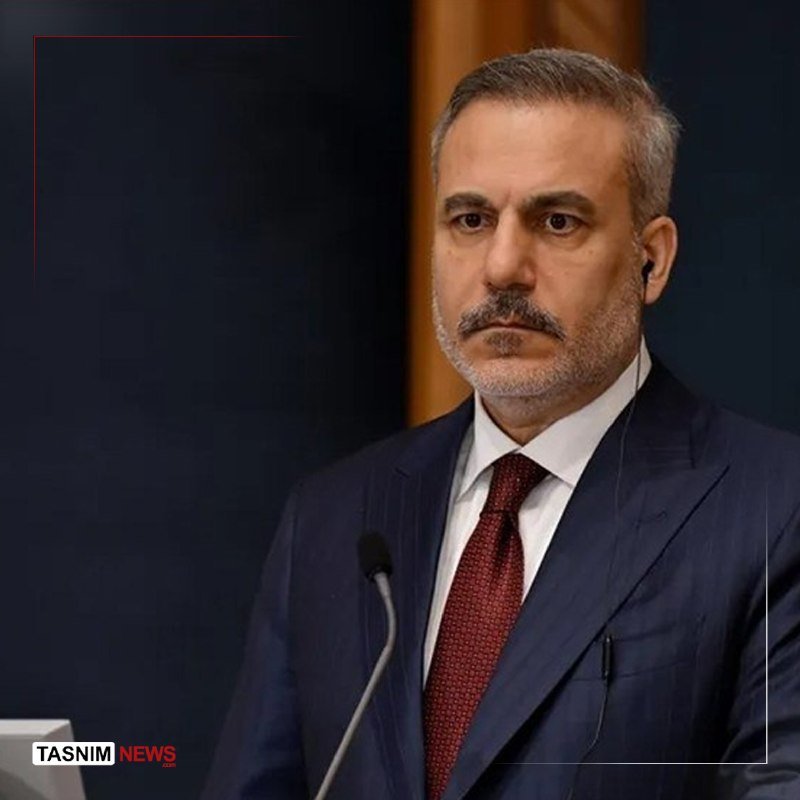
On 21 June 2026, Fars News Agency, quoting an Iranian military source, reported that the Strait of Hormuz remains closed and that the naval force of the Islamic Revolutionary Guard Corps will not issue passage permits to any vessels until further notice. The same reporting, circulated across Telegram channels including @intelslava, @wfwitness, @ClashReport and @abualiexpress, adds that since the closure began only Iranian-bound vessels have transited the waterway — a claim attributed by Fars to oil and gas investment research firm HFI. Taken at face value, this is the most acute disruption to a critical maritime chokepoint since the 1980s tanker-war phase of the Iran–Iraq war.
The question is not whether Iran can technically seal the strait — it cannot, for any extended period, without consequences for itself — but whether the closure signal is a bargaining chip, a calibrated coercion, or a rehearsal. The world's planning assumptions assume the former. The reporting out of Tehran is, increasingly, designed to make the latter two feel plausible.
What Fars is actually saying
Fars's framing is short and operational. The IRGC Navy, it reports, has suspended transit clearances for all vessels. The phrase used in Persian-language reporting — relayed verbatim in the English-language Telegram posts — is that permits will not be issued "until further notice." That is the language of an open-ended order, not a 48-hour drill. HFI's observation, as cited by Fars, that only Iranian-bound tonnage has moved in the last 24 hours gives the announcement an empirical veneer: this is not just rhetoric, the framing suggests, traffic patterns have already changed.
Two things to keep in mind. Fars is an Iranian state outlet and, on matters of national security, functions as a channel for the messaging the security services want amplified. HFI is a small, specialist research outfit and not a tier-one data source for shipping flows. Independent confirmation from Lloyd's List, Bloomberg ship-tracking, or the US Navy's 5th Fleet — none of which has been reported in this thread — is the standard that would convert "Fars reports" into "the strait is closed." Right now, what we have is one Iranian-aligned account of a closure and one industry-adjacent firm repeating it.
The counter-read: leverage theatre
The most plausible alternative reading is that Tehran is performing a closure rather than executing one. Iran has used the strait as a bargaining lever for decades — most recently during the 2019 limpet-mine incidents and the 2023–24 seizure of commercial tankers. Each time, the pattern was the same: a calibrated escalation, a period of ambiguity over which vessels could pass, and a quiet unwinding once the political point had been made. The IRGC's institutional logic favours reversible pressure over irreversible disruption, because a real, multi-week closure would alienate the very customers — China, India, the Gulf petro-monarchies — that buy Iranian crude at a discount and keep the riyal-and-yuan shadow-payment rails running.
The case for taking the closure literally is that this round looks different in tone. The phrasing is not hedged. The reports do not name a deadline or a demand. And the absence of any visible negotiation track — no third-party mediator cited, no leaked condition — is the kind of opacity that usually precedes a fait accompli.
The structural frame
The Strait of Hormuz is the most consequential pinch-point in the global energy system, and the global energy system is no longer the system it was in 2019. Three shifts matter. First, the United States is now a net exporter of crude and LNG, which means a Gulf shock hits the US economy as a price story, not a supply story — politically easier to absorb, but politically more inflationary for everyone else. Second, China's crude imports run heavily through the strait, which means Beijing is the customer with the most to lose and the least public leverage to do anything about it. Third, the Gulf petro-monarchies have spent fifteen years building pipeline bypasses — the Abu Dhabi crude line to Fujairah, Saudi Arabia's east–west pipeline to Yanbu — precisely so that a Hormuz closure would not be a total shutdown. Those bypasses were never designed to carry full Gulf export volumes for long, and the spare capacity has not been publicly stress-tested at war-footing tempo.
In other words: the global economy has spent two decades half-preparing for this scenario and is now discovering, as it always does, that half-preparations are worse than none, because they generate the illusion of optionality.
Stakes, and the clock
If the closure holds for a week, the price signal is sharp but absorbable. If it holds for a month, the political signal becomes the dominant one: insurance war-risk premia spike, Gulf-state shippers reroute, and the question stops being about oil and starts being about which governments recognise which transit rights. The longer the order is in force, the harder it is for Tehran to walk it back without losing face — and the harder it is for Washington to treat it as theatre.
The honest summary: Iranian-aligned reporting is asserting a closure that, if real, is the most serious unilateral disruption to seaborne energy supply in a generation. If it is leverage theatre, it is the loudest such performance Tehran has staged. The evidence is too thin — one state outlet, one industry-adjacent firm, four Telegram relays — to call which it is. The world is being invited to price the worst case, and pricing the worst case is itself an outcome Tehran can use.
The Monexus desk frames this as a stress test of a global energy architecture that has been talking about Hormuz risk for two decades without ever quite preparing for it. We will update as independent ship-tracking data and 5th Fleet statements become available.
Wire provenance
This editorial synthesis draws on the following public wire/social posts:
- https://t.me/intelslava/130001
- https://t.me/wfwitness/44012
- https://t.me/ClashReport/91550
- https://t.me/abualiexpress/22030
- https://t.me/englishabuali/11800