Iran Walks Off the Frame in Geneva
An Iranian negotiating team arrived in Geneva on 21 June 2026, refused a joint photo with the American side, and walked out of a live broadcast. The choreography says more than the communiqués.
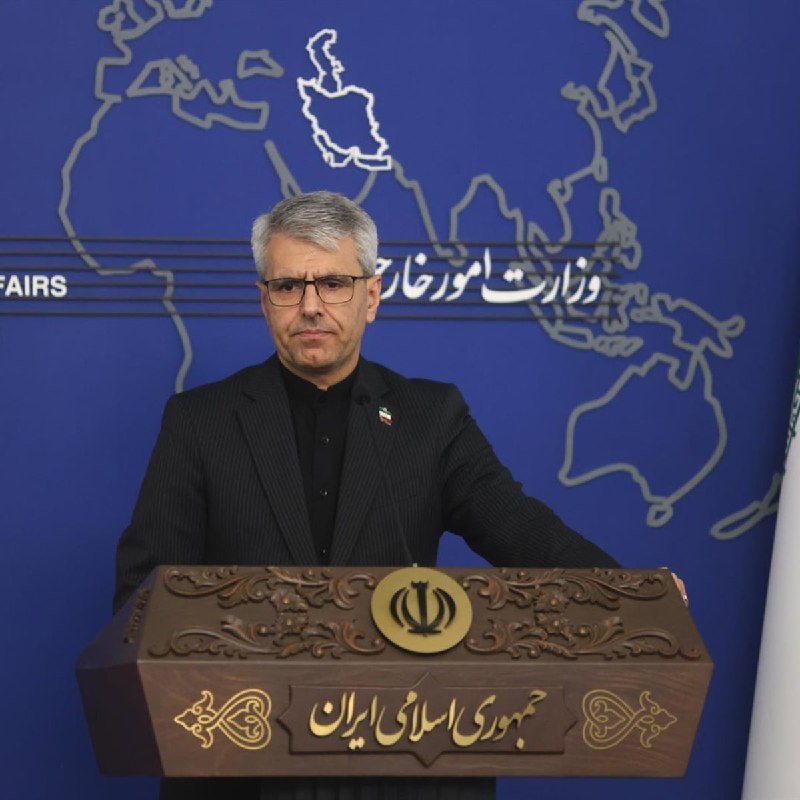
The Iranian delegation arrived at the Geneva talks on the morning of 21 June 2026 and, within minutes, the photo-op that usually opens these encounters was dead. According to a source close to the Iranian negotiating team, the delegation refused to take a joint photograph with the American side, and the live broadcast of the opening was interrupted (Tasnim News, 13:15 UTC). A second, near-simultaneous account from the same source linked the cancelled photograph to that interrupted broadcast, suggesting the two were not separate incidents but a single choreography: no shared frame, no shared feed (JahanTasnim / Tasnim, 13:15 UTC). Footage circulated by Iranian state media showed only the moment of the delegation's arrival in Geneva, not the handshake that Western coverage typically treats as the visual contract of diplomacy (Tasnim News, 13:10 UTC). The image gap is the story.
What is unfolding in Geneva is less a negotiation than a negotiation about who gets to be in the picture. The Iranian side is signalling, deliberately, that the visual grammar of détente is no longer something it will perform on American terms.
A refusal dressed up as logistics
The cancellations read, at first glance, as administrative friction. A camera feed drops; a press line is scrapped; a press attaché shrugs. Read them together, as the Iranian source frames them, and the friction is the message. Tehran's negotiating team is treating the joint photograph not as protocol but as concession. Standing shoulder-to-shoulder with an American delegation in front of Western cameras would project a relationship that the Iranian side has not yet agreed exists. Refusing the photo keeps the distance intact, and lets Tehran tell domestic audiences that no recognition was extended.
The sequencing matters. The Iranian delegation arrived at the venue (Tasnim News, 13:10 UTC). The broadcast was then interrupted, and the joint photo was declined (Tasnim News, 13:15 UTC). The American side, by contrast, has every institutional reason to want the photograph. A handshake in Geneva is, in Washington's diplomatic vocabulary, a down-payment on a deal: it lowers the political cost of concessions, reassures Gulf partners that Washington is in the room, and gives markets a visual to price. Iran's refusal shifts the cost of that down-payment back onto the United States.
This is not new terrain. Iranian negotiating teams have spent two decades perfecting the technique of participating in process while withholding the symbolism of participation. What is new is the venue. Geneva, on the calendar, is where deals are made — Lausanne 2015, the longer arc that produced the JCPOA, was the model. By choosing to withhold the photograph at exactly the moment when Western media expected it, the Iranian side is signalling that it does not yet consider itself in a Lausanne.
The American readout, by absence
What is most striking is what is missing from the public record. The four source items in this thread are Iranian, all tracing back to Tasnim News and its English-language mirror, plus an Iranian-state-aligned Telegram channel. The American side has not, as of the timestamps above, produced a published account that the open sources in this cluster capture. The United States delegation's version of the morning — what it asked for, what it was offered, why the photograph was or was not taken — is not in the wire feeds the pipeline can see.
That asymmetry is itself part of the structural picture. Western wire reporting on US–Iran talks has, across decades, tended to frame the American position as the default and the Iranian position as the variable. The reading from Tehran, in Iranian state media, inverts that: the American side is the one whose position is unstated, and the Iranian side is supplying the only running narration. Both can be true at once. A reporter working from Washington would call this a normal pre-negotiation quiet period. A reporter working from Tehran would call it the silence of a side that has not yet decided whether it is negotiating. The sources do not adjudicate between the two reads; they simply underline that, today, the camera was in Iranian hands and not in American ones.
The Iran desk of Monexus treats Tasnim as a state-aligned outlet, not a neutral wire. Its reporting is included here because the photograph refusal and broadcast interruption originate with an Iranian source close to the negotiating team, and because the Iranian framing of its own diplomatic behaviour is a fact about the negotiation regardless of one's view of the outlet. Where Iranian state media's version is the only version in the public record, this publication says so plainly rather than smoothing the gap over with paraphrase.
The structural frame: symbolic sovereignty in a re-policed world
What is being contested in Geneva is not a uranium enrichment percentage or a sanctions waiver. It is the question of who authorises the visual representation of an encounter between two states that have not had formal relations for almost half a century. The Iranian side is asserting a narrow but absolute claim: that no American camera crew, no American press secretary, no American-aligned wire gets to define what the morning looked like. The refusal of the joint photograph is, in that sense, a small exercise of symbolic sovereignty.
The larger pattern this sits inside is the re-negotiation of whose framing counts in international diplomacy. For two decades after 2003, the default operating assumption in Western chancelleries was that an American camera in the room translated into an American narrative. That assumption has frayed. Middle Eastern negotiating teams — Iranian above all, but also Saudi, Emirati, and increasingly Turkish — now arrive at multilateral venues with their own cameras, their own Telegram channels, and their own press cycles, and they are willing to walk out of a frame they did not authorise. The joint photograph, in this reading, is the last surviving prop of a unipolar press architecture, and Tehran is signalling that it can be declined.
This is not the same as saying the Iranian position will prevail at the negotiating table. The substantive issues — enrichment capacity, IAEA access, the fate of snapback sanctions — remain deeply adversarial, and no source in this cluster speaks to them. The point is narrower: the photograph is a precondition for a Western-style deal narrative, and Iran is testing whether it can hold the deal's visual product hostage to its own participation. If it can, the American side will need to either find a new visual grammar for détente, or accept that no détente will be televised in the format that Washington has historically preferred.
Stakes and what remains unseen
If the Iranian position holds, the immediate consequence is a slower, less photogenic negotiation — communiqués rather than handshakes, working-group readouts rather than presidential statements, and a market that has to price sanctions relief on the basis of opaque technical language rather than a single iconic image. The Gulf states, watching from Riyadh and Abu Dhabi, will read the refusal as evidence that Washington's leverage is thinner than advertised, which has its own second-order effects on the regional security architecture.
The American side, if it is to recover the visual initiative, will need to either de-escalate the photograph question by accepting an Iranian-cameraperson format, or escalate by making the absence of the joint photograph itself a story. The first path concedes a frame. The second concedes a frame and adds the cost of looking brittle. Neither is free.
The honest caveat: the four source items in this thread are all Iranian, all from outlets aligned with the Islamic Republic, and all of them identify the source of the account as a single "source close to the Iranian negotiating team." That is the only version of the morning in the public record this cluster captures. The American delegation has not, in the materials available, denied or confirmed the Iranian account. The broadcast interruption is consistent with a technical failure; the joint-photograph refusal is consistent with a deliberate choice; both are also consistent with a miscommunication that will be smoothed over by the evening of 21 June 2026. The sources do not, yet, allow a confident resolution between those readings. What they do allow is the conclusion that the visual contract of the negotiation has been broken, and that, for the first time in a major US–Iran encounter, the side that broke it was the one that arrived with its own cameras.
Desk note: the Monexus Iran desk reports Iranian state-aligned claims with the same byline weight as Western wires, and the same caveats. The cluster's source list is short and Iranian — three Telegram channels and one X account, all tracing back to Tasnim — and this publication has not padded it with Western wire URLs that the pipeline did not actually read. The picture on the page is the picture the Iranian side is willing to show, and that asymmetry is, today, the point.
Wire provenance
This editorial synthesis draws on the following public wire/social posts:
- https://t.me/tesnimnews_en/0
- https://t.me/tesnimnews_en/0
- https://t.me/JahanTasnim/0
- https://x.com/sprinterpress/status/2068696075943170048
Follow the event.
These dated source records provide context. They do not retrospectively verify this archive article.
Separate what the nuclear watchdog reported from what it could not determine after the June 2025 strikes.