Japan's group-stage statement, the Dutch reach a century, and what a milestone World Cup match tells us about 2026
A milestone 1,000th World Cup match put Japan's evolution back in focus, while the Netherlands crossed 100 tournament goals in their history. The early group stage is already reshaping the bracket's expectations.
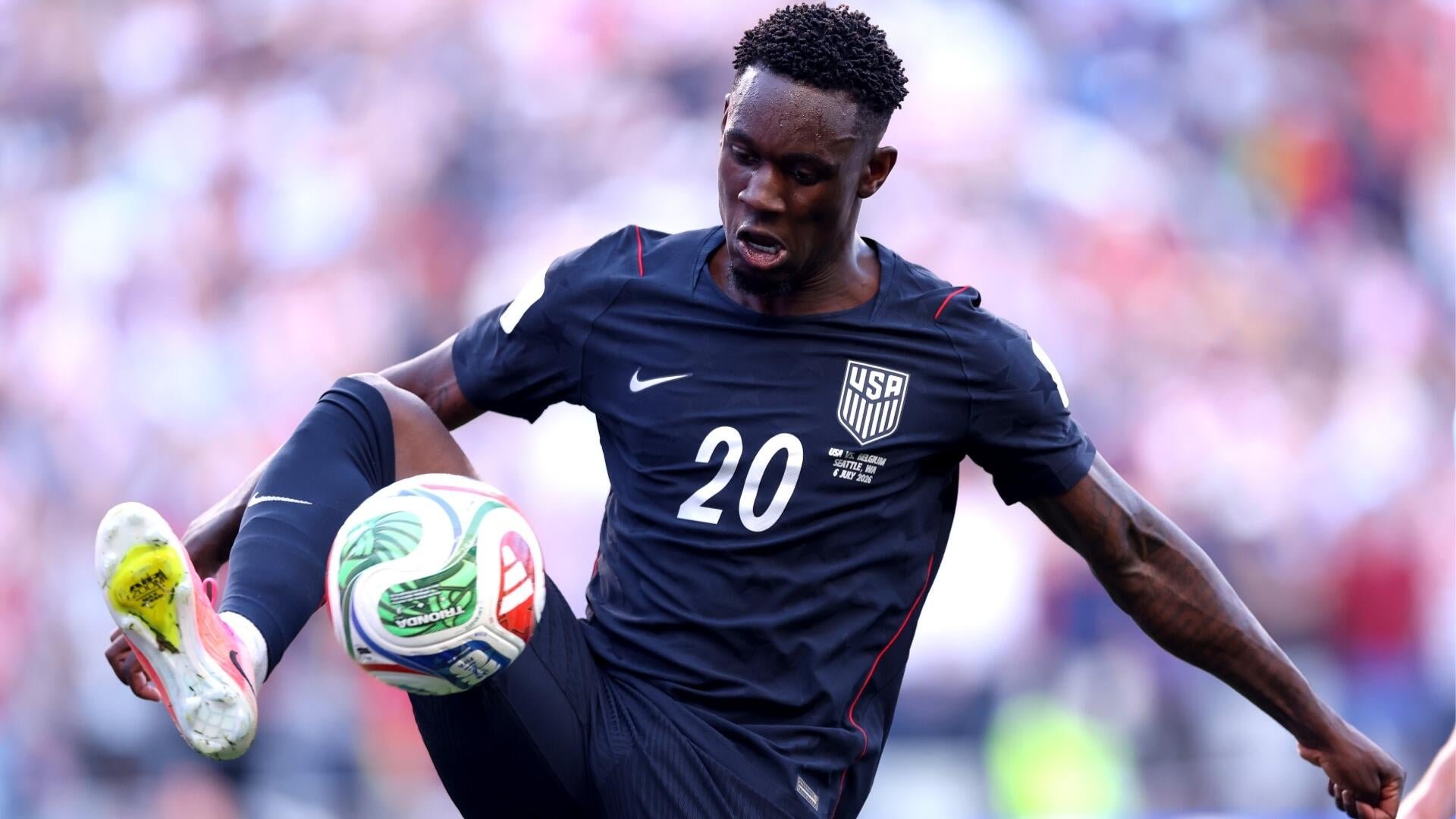
On Saturday, 20 June 2026, FIFA's flagship men's tournament ticked over into territory no competition in world football has reached before. According to ESPN, Japan's outing in the tournament's milestone 1,000th World Cup match was the most dominant display the Samurai Blue have produced on this stage — a result that did not settle the question of whether 2026 is finally the year Japan lift the trophy, but did sharpen the outline of the answer. Hours earlier, FIFA's own channels and The Athletic flagged a quieter milestone: the Netherlands became the first nation to register 100+ goals in FIFA World Cup history. By Saturday evening, CBS Sports was publishing best-bet columns for Germany–Ivory Coast and Tunisia–Japan, signalling that the North American group stage has already moved from ceremony to consequence.
Taken individually, each of these moments is a footnote. Taken together, they sketch the early shape of a World Cup being played across an expanded 48-team footprint, in which the traditional powers are no longer insulated from a deeper, more athletic middle tier — and in which the storylines that will define the knockout rounds are being written in the second week of group play.
Japan's statement in the 1,000th game
ESPN's match report framed Japan's performance as the most authoritative of their World Cup history: aggressive in the press, controlled in possession, and ruthless in the final third. The phrasing matters. For two decades, the Japanese federation has invested in a coherent technical pathway — overseas development for elite teenagers, J.League infrastructure, a national-team identity built around ball retention and high counter-pressing. The 2026 squad is the most visible product of that pipeline yet. Whether that translates into a deep knockout run is a separate question: Japan have exited in the round of 16 at the last three tournaments despite entering as one of Asia's most organised sides. The structural ceiling is no longer talent — it is converting tournament football's chaotic margins into goals against opponents who sit deep and waste time.
The Dutch cross 100 — and what that milestone obscures
The Netherlands reaching 100 World Cup goals, as flagged by both FIFA's official account and The Athletic on 20 June 2026, is the kind of stat that rewards longevity as much as quality. The Dutch have played in 11 men's World Cups; their goal record is the product of total knockout football across generations — Cruyff's totality in 1974, the 1988 European champions bleeding into 1990 and 1994, the Van Persie / Robben / Sneijder vintage that finished runner-up in 2010 and third in 2014, and the current group-stage core. The milestone also underlines a quieter truth: across that history, the Netherlands have won zero World Cups. The Dutch model — develop broadly, scout aggressively, play a possession-based 4-3-3 — produces deep tournament runs but rarely the one extra game. Whether 2026's squad, built around a younger core, has reset that pattern is the subplot of their group.
The Saturday card: Germany, Ivory Coast, Tunisia
The day's secondary fixtures carried their own weight. CBS Sports' best-bet column for 20 June 2026 paired Germany against Ivory Coast — a fixture that on paper looks like a mismatch but in practice is the kind of round-two test the European sides have repeatedly failed in past tournaments, when African opponents arrive with three group games already in their legs. Tunisia against Japan, the second game flagged, is the more interesting tactical mirror: a North African side organised around defensive compactness against an Asian side organised around the ball. The match's value to neutrals is straightforward — it answers, in real time, whether Japan's group-stage dominance translates against a side that will not chase the game.
What the early group stage is actually telling us
Three structural patterns are emerging from the opening week. First, the expanded 48-team format is producing more matches, more upsets, and more tired legs by matchday three — which means depth of squad, not just starting XI quality, will decide most groups. Second, the middle tier of the bracket — Japan, the African sides, the South Korean generation behind Son Heung-min — is narrowing the technical gap with the European top six to the point where a single refereeing decision or a single goalkeeping error separates a round-of-16 exit from a quarter-final. Third, the television product is being shaped less by the traditional powers and more by which nation can carry a multi-week story: the Dutch chasing their first title, Japan chasing their first knockout win past the round of 16, the African confederation chasing its first semi-final.
The evidence for all three patterns is in the scoreboard and the schedule, not in the narratives around it. FIFA's own channels and the major wires have so far resisted the temptation to crown anyone early; the framing has stayed disciplined. That restraint is worth preserving as the group stage turns into the round of 16. The 1,000th match milestone, and the Dutch crossing 100 goals, are the sort of numbers that the broadcasters will replay for the rest of the tournament. They are also a reminder that this World Cup is being played at a scale no previous edition has matched — and that the conclusions drawn from group play will only harden once the knockout bracket is set.
The sources do not yet specify the final scores of the Saturday card, or how the milestone goals were distributed across Dutch scorers down the decades. Those details will land in the wire reports over the next 48 hours; the structural pattern, by contrast, is already legible.
— Monexus framing note: this desk treats the FIFA World Cup as a structural event, not a horse race. Where the wire coverage leans on group-by-group predictions, this publication tracks how the tournament's format, scheduling, and the depth of the participant field are reshaping the brackets themselves.
Wire provenance
This editorial synthesis draws on the following public wire/social posts:
- https://t.me/olympics/2026-06-20
- https://t.me/FIFAcom/2026-06-20
- https://t.me/TheAthletic/2026-06-20