Pakistan's Swiss talks and the quiet geometry of post-conflict reconstruction
A Pakistani delegation in Switzerland is holding the first official talks since the signing of the Islamabad Memorandum of Understanding. The geometry of the meeting — who is at the table, who is conspicuously absent, and what the document actually obliges — will shape South Asia's next phase.
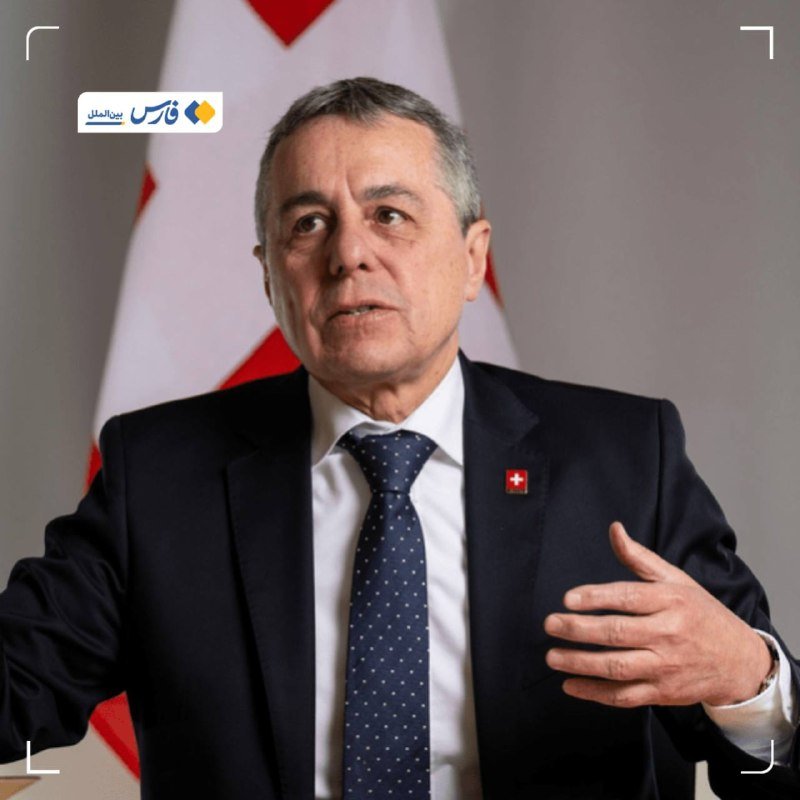
On 21 June 2026, a Pakistani foreign ministry delegation sat down with counterparts in Switzerland for the first official exchange since the signing of the Islamabad Memorandum of Understanding. The Pakistani foreign ministry framed the encounter in a single, repeated phrase: a "commitment to dialogue and a balanced approach" to implementing the document, delivered in three near-identical readouts carried by Al Alam Arabic's Telegram channel between 07:04 and 07:12 UTC on Sunday morning.
The framing matters. A memorandum of understanding is not a treaty. It does not bind parties in domestic law, and it does not, on its own, change facts on the ground. What it does is something more architectural: it locks a vocabulary, a sequence of meetings, and a set of assumed obligations into a written form that subsequent negotiations can cite. Pakistan's foreign ministry is signalling, by the very act of travelling to a neutral European venue for a first follow-up, that the document is meant to be operational — not commemorative.
What the readouts actually say
Strip the urgency markers and channel branding from the three Al Alam Arabic dispatches, and a consistent picture emerges. The first, timestamped 07:04 UTC, identifies the location and the document: a Pakistani delegation in Switzerland for talks on implementing the Islamabad Memorandum of Understanding. The second, at 07:06 UTC, adds a procedural claim — that the Swiss encounter is the "first official participation and communication" since the memorandum was signed. The third, at 07:12 UTC, returns to the same substantive language used in the first: a "commitment to dialogue and a balanced approach." That third item, with its explicit reference to the memorandum's signing, is the most analytically useful of the three.
What is conspicuous by its absence is the name of the other party. The readouts name Pakistan and Switzerland as a venue; they do not name a counterpart delegation, a host institution, or a co-signatory to the memorandum. For a story about a bilateral follow-up, that silence is itself a piece of information.
Why Switzerland, and why now
Neutral European venues have, for four decades, served as the default stage for exchanges that one or both parties cannot afford to host at home. Geneva, Bern, and the surrounding diplomatic infrastructure carry a particular weight in South Asian negotiations: they imply confidentiality, third-party good offices, and a press environment calibrated to readouts rather than to spectacle. The Pakistani foreign ministry's choice of Switzerland — rather than, say, a Gulf capital or a Chinese city — suggests an intent to be read as even-handed, and to insulate the technical work from the louder regional politics that would attend a meeting in Islamabad, Delhi, or any of the contested border zones.
The timing — late June, on the heels of an unspecified but recent signing of the memorandum — points to a familiar pattern. The first follow-up after a headline agreement is the moment when the abstract verbs of a joint statement ("to engage," "to consider," "to work toward") are translated into schedules, working groups, and lists of technical issues. If that translation is botched, the agreement tends to die a quiet death within ninety days. If it succeeds, it acquires the bureaucratic momentum that even politically weakened leaders find difficult to reverse.
The structural frame, in plain language
Post-conflict and post-crisis memoranda do not settle the underlying dispute. They buy time and structure: time for domestic political costs to recalibrate, and structure for the next escalation to be processed through a channel rather than through a hotline scramble. The Islamabad document, on the evidence available, appears designed for exactly that role. The Pakistani readouts emphasise "dialogue" and "balance" — the words of a party that wants the process to look symmetrical even if the underlying asymmetries are not.
There is a global precedent here. Similar memoranda, from the Oslo-era documents in the early 1990s to more recent regional arrangements, have tended to be read in two ways simultaneously: as historic breakthroughs by the political class that signs them, and as damage-control exercises by the bureaucracies that draft them. Both readings are usually partially correct. The question that the Swiss talks will begin to answer is which reading applies to Islamabad.
Stakes and what remains genuinely unknown
If the implementation work proceeds, the winners are predictable: a Pakistani foreign-policy establishment that gains a venue for managing a difficult relationship without domestic political cost; the diplomatic infrastructure in Bern and Geneva that benefits from a recurring client; and, more broadly, the regional states that prefer managed friction to open rupture. The losers, at least in the short term, are the constituencies on both sides of the underlying dispute who measure progress by the absence of meetings rather than by their content.
What the three Al Alam Arabic dispatches do not settle is the most basic question of the next phase: who, exactly, is sitting across the table from the Pakistani delegation. The thread context names the venue, the document, and the Pakistani framing — and nothing else. A judgment on the talks' significance will have to wait for that omission to be filled, either by a subsequent readout from the foreign ministry or by an independent wire account. Until then, the geometry of the meeting — one party named, one party unnamed, one memorandum in the middle — is itself the story.
This publication treats the Pakistani foreign ministry's readouts as the primary source for its own framing. Independent confirmation of the counterpart delegation was not present in the available reporting.
Wire provenance
This editorial synthesis draws on the following public wire/social posts:
- https://t.me/alalamarabic/1
- https://t.me/alalamarabic/2
- https://t.me/alalamarabic/3