Iran's parliament speaker tells Washington: threats have bought you nothing
Tehran's parliamentary leader publicly rejects fresh US threats, framing American pressure as a sign of strategic failure rather than leverage — a rhetorical move that puts distance between any future deal and the domestic hardliners who could yet veto it.
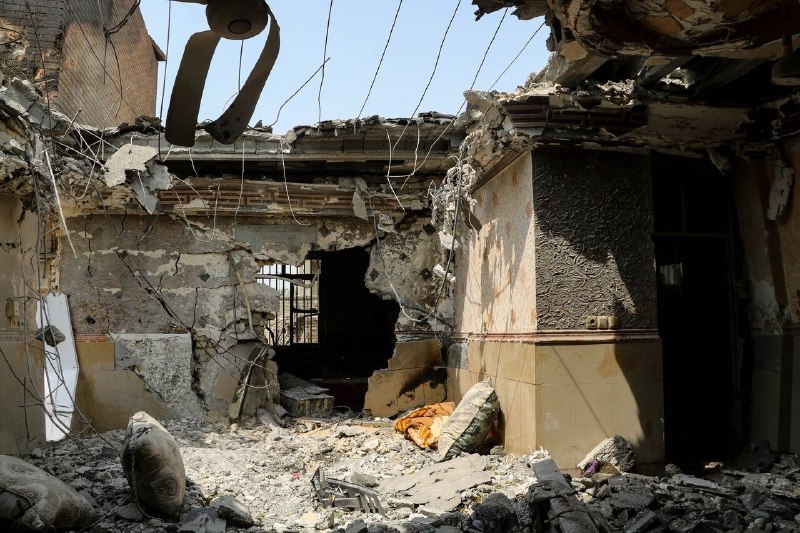
On 21 June 2026, Iran's Speaker of Parliament, Mohammad Bagher Ghalibaf, used a public address to dismiss fresh threats from Washington in unusually personal terms. The message, carried by Press TV and amplified by Iranian-aligned outlets including the Middle East Spectator channel, framed the threats less as a pressure tactic than as evidence of American failure: if those threats had worked, Ghalibaf said, the United States would not be in the predicament it now finds itself in. He went on to declare Iran's armed forces ready to respond differently. The exchange reads, on its face, as a rhetorical restatement of positions Tehran has taken before. The timing — and the venue, the parliamentary floor — is the news.
The point of the speech is not persuasion. It is positioning. By putting the rejection of US threats inside the legislature rather than the foreign ministry, Ghalibaf ties any future diplomatic opening to a domestic political price: any deal with Washington would have to clear a parliament that has, on this record, already declared the American posture unacceptable. That is a constraint worth understanding for anyone reading the next round of negotiations, and it is the structural reason a senior Iranian official chose the floor of the Majles rather than a foreign ministry podium.
What Ghalibaf actually said
The text carried by Press TV on 21 June 2026, at 16:52 UTC, runs in two registers. The first is the public repudiation: Iran dismisses US threats entirely, the Speaker's office said, and Iranian armed forces stand ready to respond differently. The second is a pointed political question directed at Washington: do those issuing the threats not consider, Ghalibaf asked, that if those threats had achieved anything, they would not have arrived at the present moment of desperation? The wording was republished in parallel by the Middle East Spectator channel and the Fotros Resistance account on Telegram, both of which carried the quote within minutes of one another on 21 June 2026, the first at 16:14 UTC and the second at 16:13 UTC.
The line worth underlining is the conditional structure. The Speaker is not arguing that Iranian power is unrivalled; he is arguing that American power has failed to produce results at an acceptable cost. That is a different claim, and a more durable one. It also mirrors a framing Tehran has used before in moments when the regime wanted to harden domestic opinion against a deal: threats, in this telling, are a confession of weakness rather than a demonstration of capability.
Why the venue matters
Iran's foreign policy is formally directed by the president and the Supreme National Security Council, with the Supreme Office holding final say. The parliament's role is usually confined to ratifying treaties and approving budgets. When the Speaker takes a public position of this kind on a question of war and peace, he is doing one of two things — either echoing a line already agreed at higher levels, or signalling to higher levels that the parliamentary base will not accept what is being negotiated behind closed doors.
Ghalibaf is no backbencher. As a former commander of the Islamic Revolutionary Guard Corps air force and a former mayor of Tehran, he is one of the few Iranian political figures who combines hardline security credentials with the institutional standing to speak for the political class that surrounds the Supreme Office. A speech from that seat carries weight in Tehran's internal bargaining in a way a foreign ministry statement does not. The message to any future Iranian negotiating team is that the floor of the Majles has, in advance, pre-committed to a position of no concessions under duress.
The counter-narrative from Washington
From the US side, the position is structurally different. The threats to which Ghalibaf was responding have not been published in full in the materials available to this publication, and the open record of what precisely was threatened, in what forum, and on what date is thin. That matters. Statements attributed to senior US officials in recent weeks have spanned a wide register, from routine reaffirmations of maximum-pressure policy to reports of specific military deployments and explicit warnings of strikes. Each of those carries a different signalling weight, and each implies a different cost-benefit calculation for Tehran.
The argument that runs through the Washington end of the conversation is essentially this: Iran's regional position is weaker than at any point in the last decade, its proxies are overstretched, its economy is contracting under sanctions, and the window in which a comprehensive deal can be struck is closing. Under that read, threats are not empty; they are an attempt to compress the timeline. The Ghalibaf speech, on this reading, is what bargaining under that pressure looks like from the Iranian side — a public stiffening designed to make any climbdown politically toxic at home.
What is striking is that neither side, in the public record, has been willing to put a specific number, date, or demand on the table. That absence of specifics is itself the story. The threats and the rejections of them are both being staged for audiences that do not include the other negotiating party.
The structural frame
What this exchange sits inside is a familiar pattern in the long US–Iran standoff: a period of resumed or anticipated diplomacy produces, on both sides, a parallel public hardening that serves to widen the space inside which any eventual deal can be sold. The Speaker's speech is the legislative version of that move. Its effect is not to close the door; it is to ensure that whoever walks through it will have to pay a domestic political cost first.
That dynamic has a long history. Iran's parliamentary elections in 2024 produced a chamber dominated by hardliners, and the current Speaker reflects that composition. A parliament of this kind does not need to be hostile to a deal in principle to constrain the terms on which one can be reached. By publicly declaring that the armed forces are ready to respond differently to threats, the legislature is signalling that any future agreement will have to come framed as a victory, not a concession. The structure of the bargaining space has, in other words, narrowed before the bargaining has visibly begun.
What remains uncertain
Three things are not in the open record and the available sources do not resolve them. First, the precise content of the US threats to which Ghalibaf was responding — the date, the venue, the seniority of the official, the specific measures threatened. Press TV paraphrases the threats as having been issued; it does not quote them directly. Second, the degree of alignment between the Speaker and the Supreme Office. It is plausible that the speech was coordinated; it is also plausible that the Speaker was speaking first to lock in a position the executive might otherwise have been pressed to soften. Third, the operational posture of Iran's armed forces in the days that follow. "Ready to respond differently" is a statement of capacity, not of intention, and the gap between those two is exactly where miscalculation tends to live.
What this publication can say is that on 21 June 2026, at 16:52 UTC, the public posture of Iran's parliament is that of a body that has chosen, in advance, not to make negotiations easy for its own government. The rest is a matter of what happens in rooms the cameras do not enter.
Desk note: Monexus ran the Iranian public framing alongside the structural context of who in the Iranian system benefits from public hardness, rather than the wire-default read in which Tehran's statements are treated as self-contained evidence of intent. The point is not to match either side's rhetoric; it is to show the reader where the bargaining space actually sits.
Wire provenance
This editorial synthesis draws on the following public wire/social posts:
- https://t.me/presstv/
- https://t.me/Middle_East_Spectator/
- https://t.me/FotrosResistancee/
- https://en.wikipedia.org/wiki/Mohammad_Bagher_Ghalibaf
- https://en.wikipedia.org/wiki/Islamic_Consultative_Assembly
- https://en.wikipedia.org/wiki/Supreme_National_Security_Council_(Iran)
- https://en.wikipedia.org/wiki/2024_Iranian_legislative_election
- https://en.wikipedia.org/wiki/United_States%E2%80%93Iran_relations
- https://t.me/presstv/
- https://t.me/Middle_East_Spectator/
- https://t.me/FotrosResistancee/
- https://en.wikipedia.org/wiki/Mohammad_Bagher_Ghalibaf
- https://en.wikipedia.org/wiki/Islamic_Consultative_Assembly
- https://en.wikipedia.org/wiki/Supreme_National_Security_Council_(Iran
- https://en.wikipedia.org/wiki/2024_Iranian_legislative_election
- https://en.wikipedia.org/wiki/United_States%E2%80%93Iran_relations