Spain's First Family on Trial: A Corruption Probe Reaches the Doorstep of Sánchez
A Madrid court has barred the prime minister's wife from leaving Spain as a long-running graft inquiry inches closer to the seat of government. The case is testing the limits of Spain's separated-powers compact.
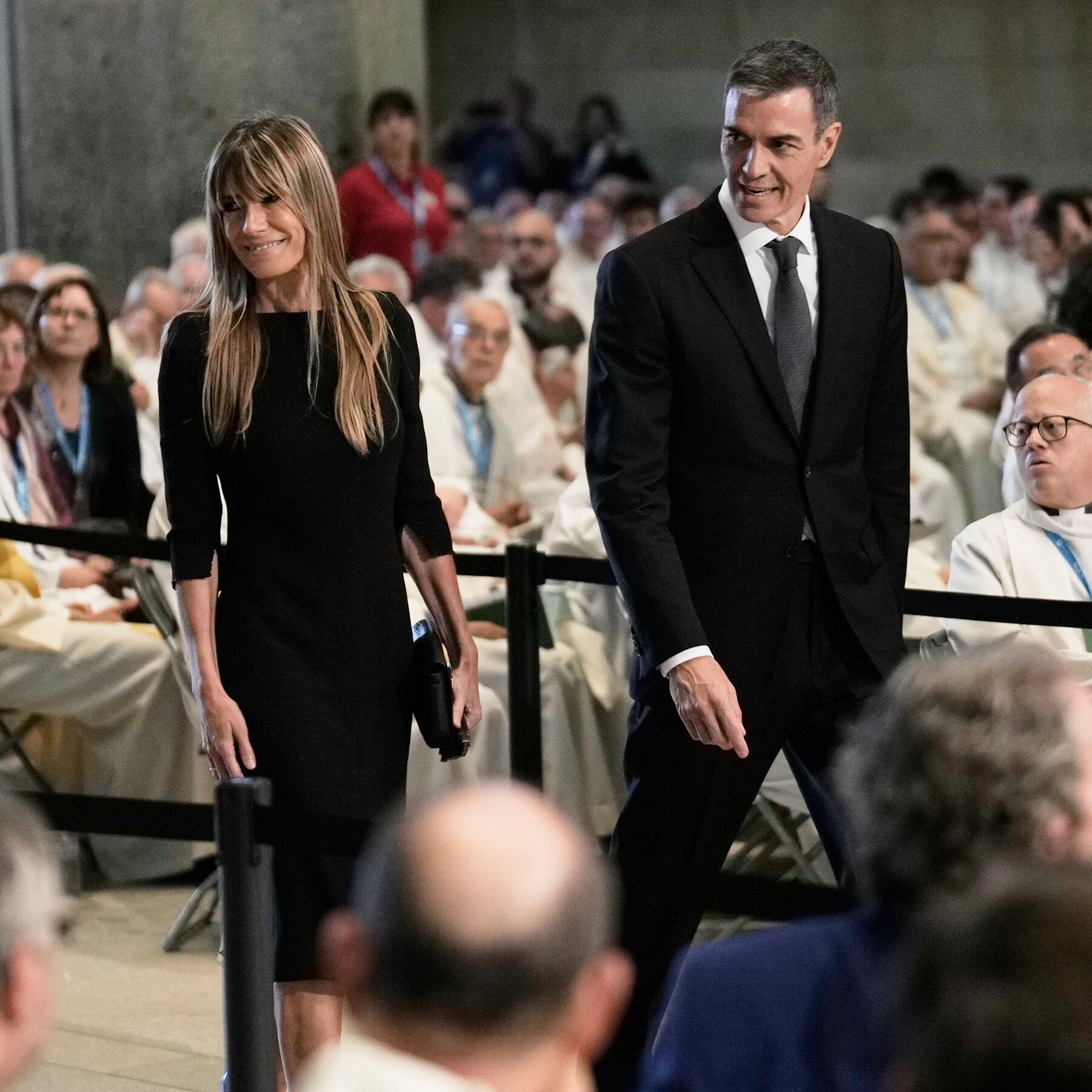
A Madrid court has barred Begoña Gómez, the wife of Prime Minister Pedro Sánchez, from leaving Spain while prosecutors prepare a corruption case against her, according to reporting by The Indian Express dated 21 June 2026. The travel ban is the most concrete judicial consequence yet in a graft inquiry that has been inching, file by file, toward the prime minister's household for the better part of two years.
The move is a small procedural step with outsized political weight. Spain's judiciary has now used its independence to constrain the freedom of movement of the spouse of a sitting head of government. The Sánchez government has framed the case as a politically motivated operation mounted by a conservative-leaning prosecution; the investigating judge has framed it as ordinary anti-corruption work that happens to touch the powerful. Both readings can be partly true. The hard fact is that a court has decided there is enough risk of flight, or of evidence-tampering, to justify a measure that would be unremarkable if imposed on a mid-level regional councillor and is destabilising when imposed on a first lady.
The case so far
The investigation touches Gómez's professional dealings, including advisory roles and her involvement with an Africa-focused business school linked to a Complutense University institute, according to reporting carried by The Indian Express. The complaint was originally lodged by anti-corruption activist Luis Perdices, and prosecutors later opened a formal probe. Spanish media have reported on emails and corporate filings that allegedly show favouritism in public contracts. None of this has been tested in open court. The travel ban is, in effect, the judiciary's answer to the question: is the file serious enough that the accused should not be allowed to board an Air Europa flight to Brussels for the weekend?
The answer, for now, is yes. That answer is not a conviction. It is, however, a signal — and in a parliamentary system with a thin majority, signals matter more than verdicts.
Why the political class is reading it differently
Inside the PSOE and the wider governing coalition, the framing is consistent: Spain's conservative judiciary, long institutionally aligned with the Partido Popular, is once again using its procedural armoury to hound a Socialist prime minister. The historical context is real. The Spanish judiciary was reconstituted under Franco and only partially reformed after 1978; associations like the Asociación Profesional de la Magistratura have run openly conservative slates. The 2018 Supreme Court sentencing of nine Catalan independence leaders under a PSOE government deepened the perception, on the left, that the courts are not a neutral referee.
The centre-right reading is equally coherent: the Socialists enjoy immunity-style political protection while in office, and the judiciary's slow, careful work on the Gómez file is the only institutional check that remains. Both narratives are partial. A travel ban does not, on its own, prove guilt. It also does not, on its own, prove persecution. It proves that a judge, on the available record, preferred the risk of flight to the liberty of a suspect with a Spanish passport and no known second residence.
The structural frame
Spain is not a backsliding democracy in the conventional sense — its elections are clean, its press is plural, its regional tensions are real but constitutionally managed. What Spain has, increasingly, is a separation-of-powers crisis of expectation. Each side reads the same procedural event through the lens of the last decade's grievances. The judiciary sees itself defending the rule of law against a captured executive; the executive sees itself defending democratic mandates against a captured judiciary. Neither can be adjudicated from within the system, because the system is what is in dispute.
This is the Europe-wide story of the mid-2020s, not a Spanish original. The pattern repeats in Poland, where the Tusk government is unwinding the judicial reforms of the PiS years; in France, where successive governments have collided with the Conseil d'État over immigration rules; in Italy, where the constitutional court has repeatedly redrawn the boundaries of executive decree power. In every case, the formal institutions function. The legitimacy of the people staffing them does not.
What it means for the Sánchez government
The immediate arithmetic is unchanged: the PSOE and Sumar hold a working majority in the Congreso, Junts's seven votes in the lower house remain the swing bloc, and the Catalan amnesty law has bought quiet on the separatist front. The travel ban does not, in itself, threaten the government. What it threatens is something more corrosive: the narrative that Sánchez and his circle are clean operators who modernised Spanish social democracy and now have to govern a hostile state apparatus. If the case proceeds to indictment, the optics become a prime-time question.
A travel ban on a first lady is also a precedent. Future Spanish prime ministers — and Spain has cycled through seven in the past decade — will now operate in a more constrained domestic environment, in which the family is officially back on the docket. The long-run effect on executive authority is likely modest. The short-run effect on a coalition that survives on the thinnest of margins is not.
What remains uncertain
The Indian Express dispatch does not specify the exact charges expected, the date of any preliminary hearing, or the precise evidentiary basis for the flight-risk finding. It also does not identify the judge by name. Spanish-language outlets will carry that detail in the coming days; until they do, readers should treat the travel ban as a confirmed procedural fact and the underlying allegations as a still-developing story. The independence of the investigating judge, the duration of the ban, and any appeal by Gómez's lawyers will all be the next moves worth watching.
For now, the file is open. Spain's institutional plumbing is doing what it is designed to do. Whether what comes out the other end is justice or politics will be decided later — and possibly in a general election, rather than a courtroom.
— Monexus framed this as an institutional-legitimacy story, not a morality play. The wire service line is leaning toward the personal; the structural read is that Spain's separation of powers is functioning procedurally while losing ground politically.