Strait of Hormuz, reopened: how a 24-hour shutdown ended with a Lebanon ceasefire and a Trump threat
Iran's brief closure of the Strait of Hormuz coincided with a Lebanon ceasefire. Tehran is claiming leverage; Washington is claiming a win; the oil market is trying to figure out which story to believe.
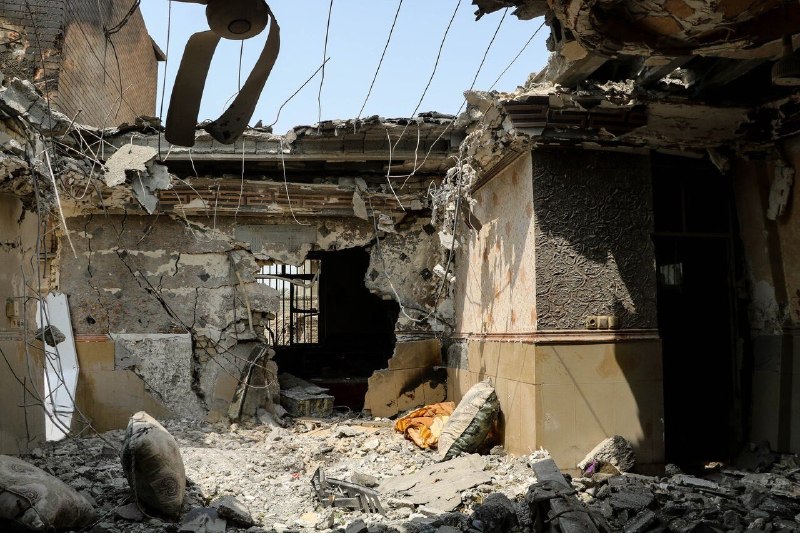
For roughly twenty-four hours, the most consequential shipping lane on the planet was in dispute. Iran's state-linked commentary said Tehran had closed the Strait of Hormuz in retaliation for Israeli strikes on Lebanon; by morning on 21 June 2026, Iranian voices said the waterway was being gradually reopened, citing a ceasefire in Lebanon that had taken hold. Within hours, US President Donald Trump was on video addressing Iran's delegation directly, in language that mixed geopolitical menace with personal insult. By the close of the European trading day, oil futures had spiked, eased, and re-spiked, and analysts were arguing over whether the episode marked a demonstration of Iranian leverage, an American bluff called, or a coordinated unwinding of a near-miss.
What is certain is that the three moving parts — the closure claim, the Lebanon ceasefire, and the Trump threat — were compressed into a single news cycle, and that each actor is now telling a different story about who blinked first. This publication's reading of the public record: the strait was probably never fully closed, the ceasefire was the price Tehran extracted for not closing it longer, and the Trump intervention was calibrated to claim credit for the reopening while warning Iran not to try the tactic again.
The strait that wasn't quite closed
The episode began on the night of 20 June 2026, when Iranian outlets began signalling that commercial traffic through the Strait of Hormuz — the narrow corridor through which roughly a fifth of the world's seaborne oil normally transits — was being restricted. Tasnim News English, the English-facing service of Iran's IRGC-linked news agency, quoted international affairs analyst Mohammad Marandi describing the closure as retaliation for ongoing Israeli operations in Lebanon. "Within a few hours after Iran closed the Strait of Hormuz, the Zionist regime agreed to a ceasefire and stopped killing Lebanese children," Marandi wrote on X on 21 June 2026 at 14:14 UTC, framing the sequence as proof of Iranian deterrence. By that same morning, Marandi added, Iran had "gradually reopened" the waterway.
The crucial ambiguity is the word "closed." Iran does not have the naval capacity to physically seal the strait against the US Fifth Fleet, the Royal Navy, or the French marine nationale, all of whom operate in the Gulf. What it can do — and has done before, in 2012, in 2019, and most recently during the April 2024 exchanges — is signal to commercial shippers, through IRGC Navy boarding actions, seizure threats, and limpet-mine attacks on tankers, that transit is unsafe. Insurance war-risk premia spike; commercial tonnage reroutes around the Cape of Good Hope; the price of Brent crude moves. None of that requires a blockade in any classical sense. Whether the 20–21 June episode crossed that threshold into actual kinetic interference with shipping is not, at the time of writing, established in the public record. The Marandi thread frames it as a full closure; the Iranian government's English-language messaging is more careful, describing restrictions rather than interdiction.
The market, for now, is taking the "near-miss" interpretation. Brent settled the Asian session up several dollars a barrel before retracing as the reopening signals firmed. The pattern is consistent with the way previous Hormuz scares have resolved: prices move first on the threat, then on the appearance of de-escalation, and only later on the harder question of whether tanker traffic was actually impeded. That harder question is not yet answered in the public sources available for this article.
The Lebanon ceasefire as the price
The more durable fact in the sequence is the Lebanon ceasefire itself. The Marandi commentary explicitly links the two events: a closure of the strait, followed rapidly by a halt to Israeli operations in Lebanon, followed by a gradual reopening. The implied causal chain — Iran pressures, Israel de-escalates, Iran de-escalates in turn — is the version Tehran wants recorded. Israeli and US framing of the ceasefire, where it has been made public, generally describes it as a unilateral Israeli decision reached through back-channel Egyptian and Qatari mediation, with the US playing a convening role. None of that Western-side sourcing is in the immediate thread of public posts that drove this article; readers looking for a definitive account of who mediated what will have to wait for subsequent reporting from the wires.
What can be said from the available record is that the timing is tight. Marandi's posts on 21 June place the strait's reopening "by morning," local Iranian time, several hours after the ceasefire took hold. If the chronology holds, the sequence is: Israeli operations continue; Iran signals a Hormuz closure; within hours an Israel-linked ceasefire in Lebanon is announced; Iran walks back the closure in stages. Read one way, this is deterrence working as advertised. Read another, it is a deal — Iran's threat produced a Lebanese concession from Israel, and Iran's de-escalation was the matching concession in return. Read a third way, the two events were on parallel tracks and the apparent linkage is the result of Iranian messaging more than of causal force. The available public material does not yet permit a confident adjudication between these three readings.
Trump's threat, in his own words
The third piece of the cycle, and the one most likely to set the terms of the next 48 hours, is the direct US intervention. On 21 June 2026 at 14:15 UTC, an account identifying itself as associated with the press pool covering Trump posted video of the US president addressing Iran's delegation in unusually explicit terms: "If you close the Strait of Hormuz, you won't have a country. You won't even make it back to your fucking country." The post, captured by the X account @sprinterpress, has circulated widely.
Two things are notable. The first is the venue. Trump is not addressing the Iranian public, or the UN Security Council, or the domestic American audience through a podium statement. He is addressing Iran's representatives directly, in what appears to be a closed or semi-closed setting. The second is the form of the threat. It is not a policy commitment — there is no specific military action described, no operational timeline, no congressional or allied consultation referenced. It is a personal warning, in the second person, with a profanity that strips out the diplomatic register that usually buffers such messages.
The most plausible reading is that this is the kind of remark designed to be leaked. The Trump administration's preferred mode of escalation against Iran since 2025 has been a combination of maximum personal pressure on named Iranian officials and rhetorical red-lines that are not backed by a clear operational doctrine. The Strait of Hormuz threat fits that pattern. Whether it represents a real shift in US willingness to use force in the Gulf, or whether it is the same kind of verbal pressure that has produced headlines and then receded on multiple occasions since 2018, is a judgment the public record does not yet let a reader make.
What is more certain is the effect on the negotiation. Iran's official line, as expressed by Marandi, is that the strait was closed briefly as a measured retaliatory step, that the goal of forcing a Lebanon ceasefire has been achieved, and that the waterway is now being reopened. Trump's threat collapses that narrative into a binary: either Iran was bluffing and was just told not to do it again, or Iran is being deterred by an American president who is not bluffing. Iranian state-aligned commentary is unlikely to accept either framing; the next 24 to 48 hours of Iranian messaging will be a deliberate attempt to recover the "we won" frame.
What the wires will and will not be able to tell you
The Anglophone wires that will report this story over the next news cycle — Reuters, the Associated Press, the BBC, Bloomberg, and the Financial Times — are likely to converge on a story that looks roughly like this: a brief Iranian signalling operation in the Strait of Hormuz, a coincident or near-coincident ceasefire in Lebanon, a sharp but ultimately empty threat from the US president, and a market that shrugged. The Global South and non-Western-aligned outlets — Al Jazeera English, Middle East Eye, The Cradle, Iranian state outlets like Tasnim and PressTV — will frame the sequence as Iranian leverage working as designed, with the US threat registering as desperate noise from an administration that did not get the outcome it wanted in Lebanon.
The structural frame that the wires are less likely to make explicit is the one that matters: a regional order in which the capacity to threaten energy transit has become the most reliable Iranian bargaining chip, and in which the United States' principal counter has been rhetorical rather than operational. That pattern — threat, partial closure, diplomatic unwinding, reversion — has repeated itself often enough since 2012 that it should be treated less as crisis and more as a recurring ritual. The ritual has costs. War-risk insurance premia in the Gulf spike with each iteration. Long-term contracts between Asian buyers and Gulf suppliers are repriced. Investment in pipelines and LNG terminals that bypass Hormuz — through the UAE, Oman, and Saudi Arabia — accelerates. Each cycle pushes the world slightly further from the assumption that the strait is a reliable transit corridor under all conditions. The market does not price that drift in any single episode; it prices it across decades.
Stakes, and what to watch
The immediate stakes are narrow. If the ceasefire in Lebanon holds for the next 72 hours, the Hormuz signalling operation has achieved its apparent objective and the market will settle. If the ceasefire collapses — and there is no public-source basis to forecast that it will, but there is also no public-source basis to be confident it will hold — the strait signalling resumes, the Trump threat acquires operational weight, and the next cycle of escalation begins in earnest.
The larger stakes are structural. Lebanon, Iran, the US, and Israel are operating inside a system in which all four actors have reasons to avoid full-scale war, in which none of them have reasons to trust each other's restraint, and in which the Strait of Hormuz functions as a kind of pressure valve that is opened and closed to communicate intent. The danger of that system is not that it produces war — the rational-actor case against a US-Iran or Israel-Iran war remains strong, for both sides. The danger is that it normalises a baseline of disruption in the world's most important energy corridor, and that the cumulative effect of that normalisation, over a decade, is to push the global oil trade into a more expensive, less efficient configuration. The winners in that configuration are the Gulf states that own the bypass infrastructure, the Russian and West African suppliers that benefit from sustained price premia, and the major oil traders. The losers are the Asian and European importers that have to absorb the higher cost, and the Iranian and Lebanese populations whose leverage is being cashed in on their behalf without their consent.
What remains uncertain — and what the available sources do not resolve — is whether the Lebanese ceasefire in question was brokered, and by whom; whether the Strait of Hormuz was physically obstructed or only signalled; whether the Trump threat reflects an actual shift in US posture or a leaked negotiating tactic; and whether the Iranian frame of "we won" will be the one that survives in the regional conversation a week from now. Each of those questions will be answered, in due course, by the wires and by the official readouts. Until then, the cleanest description of the past 24 hours is the one the data already supports: a closure that was not quite a closure, a ceasefire whose origin is contested, and a threat that may or may not be operational, all compressed into the kind of news cycle in which actors can claim victory before the facts have settled.
This publication frames the 20–21 June sequence as a recurring Hormuz signalling pattern rather than a one-off crisis. The wire consensus will likely treat it as a resolved episode; the structural reading is that the system, not the news cycle, is the story.
Wire provenance
This editorial synthesis draws on the following public wire/social posts:
- https://t.me/tasnimnews_en
- https://t.me/s/sprinterpress
- https://x.com/s_m_marandi/status/2068699346070081536
- https://t.me/tasnimnews_en
- https://t.me/s_m_marandi
- https://en.wikipedia.org/wiki/Strait_of_Hormuz
- https://en.wikipedia.org/wiki/2024_Strait_of_Hormuz_incidents
Follow the event.
These dated source records provide context. They do not retrospectively verify this archive article.
Separate what the nuclear watchdog reported from what it could not determine after the June 2025 strikes.