The Switzerland Walkout: How a Six-Hour Negotiation Collapse Reshapes the Trump-Iran Track
Within hours of US Vice President Vance sitting down with Iranian counterparts near Geneva, Tehran's delegation walked out. The episode exposes how a deal track is now hostage to presidential rhetoric.
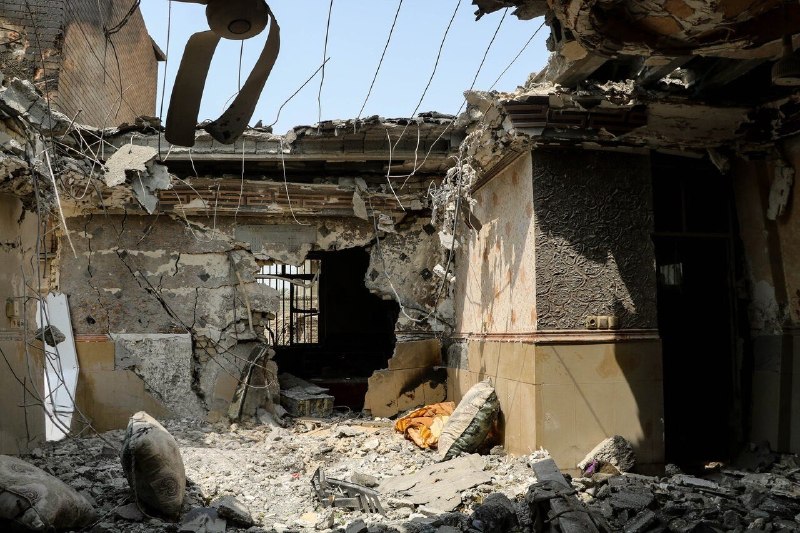
At 17:18 UTC on 21 June 2026, a wire notice flashed across trading desks and diplomatic channels: Iran's negotiating team had walked out of talks in Switzerland in protest over threats attributed to President Donald Trump. By 20:37 UTC, footage circulated on Telegram purporting to show the moment the Iranian delegation left the venue. An hour later, a second wave of reporting placed Vice President J.D. Vance in the room — apparently on the American side of a meeting that, by the time the second headline landed, had already collapsed. The sequence captures the precise shape of the Trump-era negotiation: a deal track run in parallel with a rhetoric track, each deliberately calibrated to pressure the other party, with the actual diplomats left to reconcile what their principals have publicly contradicted.
This publication finds that the Switzerland episode is less a breakdown than a working illustration of how the current US-Iran channel is being managed. The walkout is real; the underlying meeting was real; the volatility is structural. Understanding the pattern matters more than the day's headline, because the same forces will shape whatever comes next.
What actually happened on 21 June
The chronologies do not quite match — a feature, not a bug, of how this negotiation is being covered. The earliest item on the wire, posted at 17:18 UTC by the unusual_whales account, attributed the walkout to Iranian state media and framed the trigger as "President Trump's threats." That formulation places the causation squarely in Washington: whatever the Iranian delegation objected to, it was reading from statements attributed to the White House. Four hours later, the Epoch Times reported that Vance and other Trump-administration negotiators were, in fact, sitting down with Iranian officials in Switzerland — confirming that a meeting occurred and that the American side was led by the vice president.
At 20:37 UTC, a Telegram channel called megatron_ron published footage of what it described as the Iranian delegation "supposedly" leaving the venue. The hedge is worth noting: this is user-captured video, not an official handout, and the channel itself flags the evidentiary status. It is the kind of material that fills the gap when both governments are saying as little as possible. The Iranian state media framing — the only attribution in the breaking notice — establishes that Tehran chose to publicise the walkout rather than absorb it quietly. That is itself a signal.
The geography is also revealing. US-Iran talks have, in past rounds, surfaced in Muscat, Doha, and Geneva. Switzerland on this occasion suggests the European track is being kept warm even as the Gulf intermediaries recede — a hedge against the more combustible venues of the past two decades. The choice matters because it tells the Iranian side that the channel survives a Trump second term; the choice also tells European capitals that they still have a role.
The counter-narrative: a managed walkout, not a meltdown
Read narrowly, the walkout is a humiliation for the diplomatic track. Read structurally, it is something stranger and more interesting. Two governments that have spent decades failing to close the nuclear question have, since the start of the second Trump administration, opened an unusually direct channel. The channel runs through intermediaries and through intermediaries' intermediaries, but the principals — Trump on one side, the Iranian negotiating team on the other — are now publicly trading threats and counter-threats in near-real-time. That is not how negotiations were conducted in 2015, and it is not how they were conducted in any of the failed 2019 and 2020 episodes either.
The alternative reading of 21 June is that Tehran walked out because the cost of staying in the room exceeded the cost of leaving it. Iranian state media framed the cause as Trump threats; if accurate, the implication is that the Iranian side judged public posture at home more valuable than private progress abroad. Walkouts, in this register, are not failures but signals — a way of writing into the domestic record that the Iranian team refused to be disrespected, while leaving the door open for the next round.
There is a precedent. The 2019 episode in which Trump abruptly cancelled a strike in retaliation for the downing of a US drone produced the same pattern: a public escalation that read as brinkmanship, followed by a quieter back-channel that produced no visible result. What the Switzerland footage adds is visibility. Past walkouts were communicated through diplomatic notes; this one was filmed.
The structural frame: rhetoric and negotiation running in parallel
The pattern this fits is not unique to US-Iran relations, but it has been sharpened in this administration to a degree worth describing in plain terms. The American side appears to be running two tracks simultaneously. The first is a public-rhetoric track, calibrated for the domestic political market — statements attributed to the president that establish a credible threat of escalation. The second is a diplomatic track, in which senior officials, including the vice president, sit with counterparts and try to extract concessions.
When both tracks are functioning, the dynamic is familiar from any coercive negotiation: the threat sets the ceiling, the conversation sets the floor, and the gap is where a deal lives. When the rhetoric track moves faster than the diplomatic track — as appears to have happened on 21 June — the result is the kind of walkout on display. The Iranian side cannot stay in the room with a senior American official while the American president is publicly threatening the outcome the official is trying to negotiate. That is not a moral judgement; it is a description of how diplomatic credibility works.
The same logic is visible from Tehran. Iranian state media's decision to publicise the walkout, rather than treat it as a procedural pause, is itself a rhetoric-track move. The Iranian side is signalling to its domestic audience, to Gulf intermediaries, and to the wider Global South that it will not be dragged into talks whose terms are being reset by tweet. The diplomatic channel survives — it always has — but the cost of using it rises each time the public-rhetoric channel overwrites it.
The corollary is that any deal produced by this process will be unusually fragile. A framework agreed in private must survive being tested in public by both principals, in real time, on platforms that reward escalation over restraint. The 2015 Joint Comprehensive Plan of Action did not face that test; its successor, if there is one, will.
The Gulf and the Global South: who else is in the room
Coverage of US-Iran talks routinely treats them as a bilateral, with the rest of the world as audience. That framing is incomplete. The Gulf states — particularly Saudi Arabia and the United Arab Emirates, which normalised relations with Tehran in 2023 after years of proxy conflict — have a direct stake in whether the nuclear file produces a new security architecture or a renewed arms race. The Swiss venue matters to them precisely because it suggests an American willingness to use European intermediaries, which keeps the channel one step removed from the Gulf.
For the wider Global South, the Switzerland talks are also a reference point. A nuclear-armed Iran is not a bilateral problem; it is an arms-control problem with consequences for non-proliferation policy from Brasília to Jakarta. Conversely, a diplomatic solution that locks in enrichment constraints without addressing sanctions architecture or the outstanding IAEA file would be read in many southern capitals as a settlement imposed on Tehran rather than negotiated with it. The Iranian walkout, framed as a response to Trump threats, lands differently in those capitals than in Washington: as evidence that the Iranian side is prepared to absorb costs to defend its position.
This is the structural context in which the day's events sit. The Switzerland walkout is a single data point, but it sits inside a longer arc in which the diplomatic track is being tested against a rhetoric track operating at a higher tempo. Both governments have agency in producing that dynamic, and both have incentives to manage it.
Stakes and what comes next
The immediate stakes are narrow. A meeting collapsed; no agreement was on the table that day, so nothing was lost in substance that was not already contested in posture. The medium-term stakes are wider. If the rhetoric track continues to outrun the diplomatic track, the cost of staying in the room rises for Tehran, and the Iranian side will, over time, raise the price of re-engagement. Each walkout is a small depreciation of the channel.
The forward view, on the available evidence, is for a pattern rather than a breakthrough. The walkout will be followed, in the coming days, by calibrated de-escalation from both sides — quiet statements, indirect contacts, the reappearance of intermediaries. The channel will not close. The terms on which it reopens will, however, be slightly worse than the terms on which it was suspended. That is the trajectory, and 21 June is one of its better-documented waypoints.
What remains uncertain is the response from Washington. If the Trump administration treats the walkout as a reason to escalate, the diplomatic channel will compress further; if it treats it as a signal to be read and responded to, the channel survives. The Iranian side has, by walking out, transferred the next move to the American side — a familiar gambit in this kind of negotiation, and one that the available evidence suggests is being executed deliberately rather than reactively.
The sources do not specify what "threats" from Trump triggered the walkout, nor do they name the Iranian officials who left the room. The footage circulating on Telegram is described as "supposed" footage; the Iranian state media attribution is the only official framing on the wire. Where the evidence thins, the analysis thins with it. The walkout is documented; the precise trigger is not. That is the honest state of what is known at 21:00 UTC on 21 June 2026.
This publication read three wire items and one Telegram channel on 21 June 2026 and found a negotiation track running in parallel with a rhetoric track at higher tempo. The pattern, more than the day's walkout, is the story.
Wire provenance
This editorial synthesis draws on the following public wire/social posts:
- https://t.me/megatron_ron
- https://t.me/epochtimes
Follow the event.
These dated source records provide context. They do not retrospectively verify this archive article.
Separate what the nuclear watchdog reported from what it could not determine after the June 2025 strikes.