Tehran's Diplomatic Theatre: What the Quadripartite Track Actually Means
A late-morning cascade of Tehran-friendly dispatches claims the Iran-US track is alive. The subtext — mediators, leverage, and who gets to write the joint statement — matters more than the choreography.
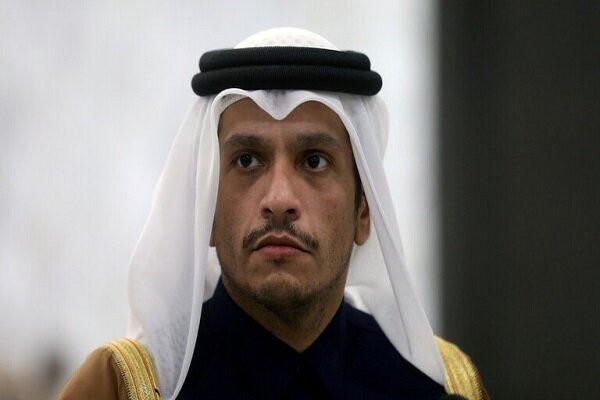
At 08:36 UTC on 21 June 2026, Iranian Foreign Ministry spokesperson Esmaeil Baghaei announced that quadripartite meetings would convene in the afternoon between Iranian and United States delegations, in the presence of representatives of Qatar and Pakistan. Eleven minutes earlier, at 08:25 UTC, Iranian state television had framed the same choreography more cautiously: those preliminary meetings, it said, would determine the method of holding the main meeting with the American side. By 08:36 UTC, a separate dispatch carried Iranian President Masoud Pezeshkian asserting that every provision of the memorandum of understanding signed between Iran and the United States was, in his reading, in Iran's favour. Three messages, one Telegram cluster, eleven minutes. The pattern is familiar: Tehran's information space is staging a negotiating round before the negotiating round has technically opened.
The substantive question is not whether delegations will sit in the same room. They will, and Doha is the likeliest venue given Qatari mediation. The question is whether the mediated format — two regional interlocutors flanking the principal parties — produces a document or a photo opportunity. The available reporting, drawn from Iranian state-aligned channels, supports neither conclusion yet. What it does support is a reading of the diplomatic choreography as a managed information environment, in which every utterance is calibrated for a domestic audience before it is offered to a foreign one.
Reading the mediator track
Qatar and Pakistan are not interchangeable seats at the table. Doha has hosted indirect Iran-US exchanges since at least the 2023 hostage-for-funds arrangement and retains a working channel to both governments. Islamabad's role is newer and more pointed: a nuclear-armed Muslim-majority state with a documented interest in keeping the Strait of Hormuz open and Iranian border pressure off its western flank. A quadripartite format that pairs a Gulf state with a South Asian one signals to Tehran that the conversation is being widened beyond the standard European-troika frame that preceded the 2015 deal. It also signals to Washington that the regional cost of failure now includes capitals beyond Vienna and Geneva.
The Baghaei announcement, carried by Al Alam Arabic at 08:36 UTC, used the precise formulation that Iranian spokespeople deploy when a track is alive but not yet locked: a meeting will be held, in the afternoon, in the presence of regional representatives. No venue. No agenda. No named American counterpart. The deliberate thinness of the language is itself the message — enough for the bazaar and the bourse, not enough for the IAEA boardroom.
What Pezeshkian is selling
President Pezeshkian's claim that every provision of the memorandum is in Iran's favour requires unpacking. Iranian state-aligned coverage has long framed negotiations in win-loss terms; the framing tells the domestic audience that engagement has not required concession. Whether the text on the table reflects that framing is unverifiable from open sources at this hour. What is verifiable is that Pezeshkian's government came to office promising to unwind the maximum-pressure inheritance and to restore the foreign-currency liquidity that sanctions architecture compressed.
The structural context matters. Iranian oil exports have continued to flow through opaque channels even under the toughest enforcement regimes; the question in this round is whether a formal agreement loosens the financial plumbing — correspondent banking, insurance, secondary-sanctions clarity — fast enough to matter before Iran's 2026 budget cycle absorbs another year of discount-priced crude. If Pezeshkian's "in our favour" framing tracks the document's sanctions-relief sequencing, the deal is doing real work. If it tracks optics only, the document is a placeholder.
The American side of the silence
What the available sourcing does not contain is a counterpart American readout. The thread items are exclusively Iranian state-aligned: Al Alam Arabic (Iranian state television's Arabic service) and ClashReport, a channel that aggregates Persian- and Arabic-language coverage sympathetic to the Iranian position. No US State Department briefing, no White House statement, no Axios scoop from Barak Ravid's reporting bench appears in this cluster. That asymmetry is not, on its own, evidence of bad faith. It is evidence that the present information cycle is being seeded from one capital, and that Western-wire confirmation has not yet arrived.
A fair reading: Iranian diplomacy often front-runs its own negotiations to lock in a domestic baseline before a deal can be characterised by others. A more skeptical reading: the quadripartite format itself may be a delay device, padding the negotiating clock with regional interlocutors while the principal parties remain far apart on the verifiable question — the scope and pace of sanctions relief against the verifiable question of nuclear constraints. The truth is likely in the document, when and if a document exists.
Stakes and the next forty-eight hours
The narrow stakes are immediate: oil markets reading the Strait of Hormuz risk premium; Israeli and Saudi intelligence planners reading the mediator list; IAEA inspectors in Tehran reading whether the technical file advances in parallel with the political file. The broader stakes are structural. A working Iran-US channel with regional co-signatories would be the first such channel since the 2015 architecture collapsed, and would reset the negotiating geography away from the European capitals that have carried the file for a decade. It would also clarify, for the first time in this cycle, whether Washington's Middle East policy can hold two tracks at once — the Gaza-mediated de-escalation and the Tehran-mediated nuclear file — without one cannibalising the other.
What remains genuinely uncertain, and what the available sourcing cannot resolve, is the distance between the two principals. Iranian state media will report success-in-progress; American state media, when it engages, will report concessions-extracted. The verifiable facts will arrive in the form of a joint statement, an IAEA report, or a sanctions waiver — none of which are on the wire as of 08:36 UTC on 21 June 2026. Until one of those artefacts appears, treat the quadripartite meeting as an event in search of a document.
Desk note: Monexus framed this round through the Iranian state-aligned information stream that broke the news, flagging the absence of a Western-wire counterpart and the standard domestic-framing pattern that accompanies Tehran's negotiating disclosures. The piece reads the choreography, not the deal.
Wire provenance
This editorial synthesis draws on the following public wire/social posts:
- https://t.me/alalamarab/
- https://t.me/ClashReport/
- https://t.me/alalamarabic/
Follow the event.
These dated source records provide context. They do not retrospectively verify this archive article.
Separate what the nuclear watchdog reported from what it could not determine after the June 2025 strikes.