Mediation, not breakthrough: what Switzerland tells us about US-Iran
Quadrilateral talks convened in Switzerland under Qatari and Pakistani mediation amount to a confidence-building exercise, not a negotiating breakthrough — and the venue tells its own story.
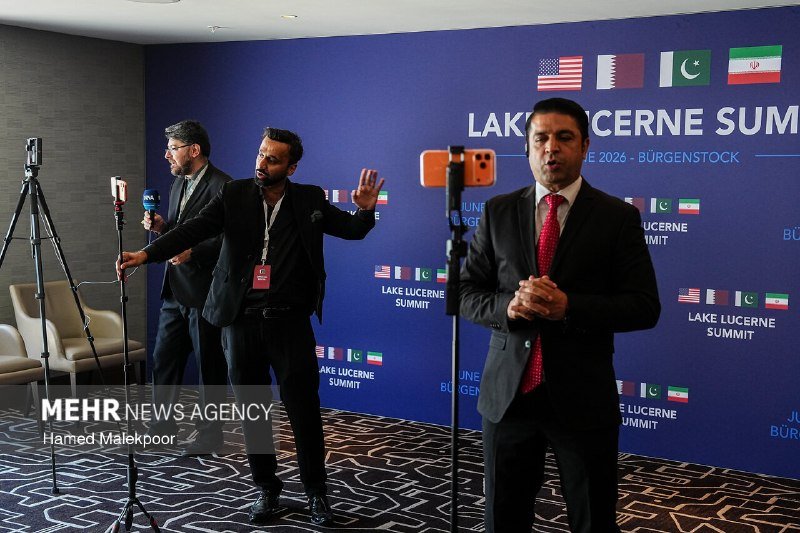
Quadrilateral talks between the United States and Iran opened in Switzerland on 21 June 2026 under Qatari and Pakistani mediation, with Doha and Islamabad effectively serving as the political cover for a channel that Washington and Tehran have not been able to run by themselves. The format, announced by Qatar's foreign ministry, places two Gulf-and-South Asian intermediaries in the room and signals that neither the White House nor the Islamic Republic is willing to absorb the cost of talking without witnesses. The mediation arrangement, not the agenda, is the news.
What is being billed as a possible inflection point in a long standoff is, on the evidence available, a confidence-building exercise — a setting in which the venue, the third parties, and the choreography carry more diplomatic weight than any text the two sides might produce. Reading the framing carefully tells the reader where the leverage actually sits.
A quadrilateral by design
The "quadrilateral" label is not accidental. By admitting Qatar and Pakistan as co-mediators, the two principals have converted a bilateral dispute into a four-cornered table — and in doing so, they have shifted the cost of any walkout. Iran's state-aligned Tasnim news agency confirmed the start of talks and the presence of the Qatari and Pakistani mediators, while Telegram channels carrying visuals from the launch described the meeting as having "officially launched" under the same dual-mediation framework announced by Qatar's foreign ministry. The geometry matters: a US delegation that walks out walks out on Doha and Islamabad, not just on Tehran. An Iranian delegation that storms out does the same. That is the political function of the mediators — to make the optics of collapse expensive for both sides.
The choice of Switzerland as host follows a long diplomatic convention of using neutral ground for US-Iran contact, and a longer one of using Swiss or Omani venues when neither side wishes to be seen conceding domestic political ground. Switzerland is not a mediator in the negotiating sense; it is infrastructure.
What the framing is doing
Coverage has converged on the word "launched," which is the language of the official communiqués and of the Telegram reporting that picked them up. "Launched" is forward-looking and theatrical. It implies a process with stages, not a single meeting. A careful read of the public statements suggests the parties have agreed to keep talking, not to settle. The Iranian framing — carried by Tasnim and amplified through the Telegram ecosystem — emphasises the mediators' role and the multilateral character of the channel. That framing serves Tehran by domesticating the talks: a quadrilateral hosted in Geneva is easier to defend inside Iran than a bilateral surrender in Muscat or Vienna.
A counter-reading is worth taking seriously. The US side has an interest in presenting the same format as a pressure track: a multilateralised negotiation in which Iran's behaviour is being adjudicated by regional partners, with the implicit threat that a collapse returns the file to coercion. Qatar and Pakistan, for their part, have an interest in being seen as indispensable. Doha has spent years cultivating a mediation brand; Islamabad has its own reasons to demonstrate relevance to both the Gulf and Washington. Neither mediator is neutral in the strict sense, and the choice of two mediators with overlapping but not identical interests is itself a piece of the design.
Structural frame, in plain prose
What is being constructed is a managed relationship, not a settlement. The US-Iran file has cycled through escalations and de-escalations for decades, and each iteration has produced its own architecture of intermediaries — Omani backchannels, Iraqi relays, Swiss good offices, and now a Qatari-Pakistani pairing. The pattern is consistent: when direct contact is politically toxic, third parties absorb the visibility cost, and the principals retain deniability. The architecture outlives any individual round.
The current quadrilateral also reads as a hedge against a regional environment in which other channels have narrowed. Doha's relationship with Tehran, deepened through years of quiet diplomacy, makes Qatar one of the few Gulf states able to host Iranian delegations without a domestic political crisis. Pakistan brings a border, a large Shia minority, and a long relationship with both Washington and Tehran. Together they widen the diplomatic surface of the talks. Whether they widen the substantive surface is the open question.
Stakes, in concrete terms
If the quadrilateral holds, the immediate effect is a pause in escalatory signalling — and that pause has value. A working channel reduces the probability of miscalculation in the Gulf, sustains a degree of predictability around the nuclear file, and gives regional actors a forum in which to compete for influence. If it collapses, the file returns to coercion, and the mediators' brand suffers alongside it. Doha and Islamabad have each staked diplomatic capital on the format's durability; their willingness to absorb the next round of bad news will be a real test.
The uncertainty the sources do not resolve is substantial. The public reporting names the venue, the mediators, and the launch — and stops there. The agenda, the level of the delegations, the presence or absence of technical experts, and any reference to sanctions, enrichment, or regional proxies are not specified. A reader who treats 21 June 2026 as the date of a substantive turn would be over-reading the sources; a reader who treats it as the opening of a managed process is closer to the evidence.
This publication reads Switzerland as scaffolding, not settlement. The mediators are the news; the deliverables are not.
Wire provenance
This editorial synthesis draws on the following public wire/social posts:
- https://t.me/tasnimnews_en
- https://t.me/intelslava
- https://t.me/intelslava
Follow the event.
These dated source records provide context. They do not retrospectively verify this archive article.
Separate what the nuclear watchdog reported from what it could not determine after the June 2025 strikes.