The Switzerland talks end on Monday — and that is the most important detail
An American diplomat tells Axios the political track wraps in Switzerland on Monday 22 June 2026, with technical teams staying on. The procedural line matters more than the warm language around it.
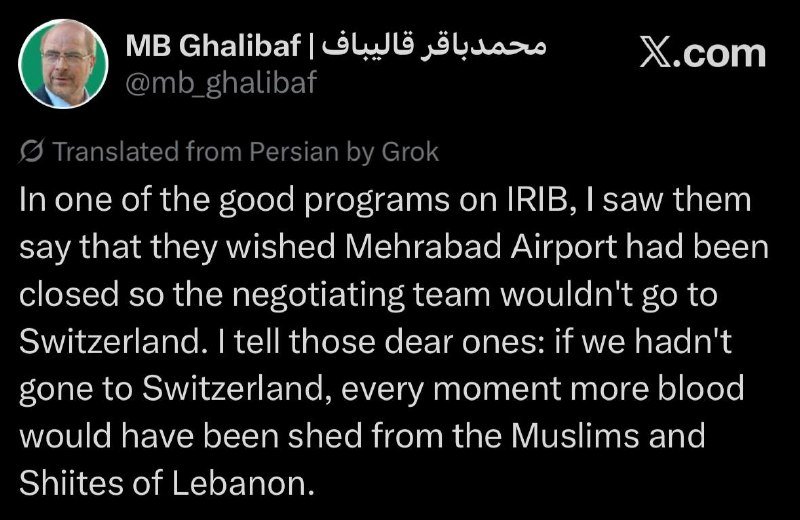
A first round of US–Iran talks in Switzerland is drawing to a close, and the most consequential line in the weekend's readouts is the one that almost got buried in the diplomatic niceties. An American diplomat, quoted by Axios on Sunday 21 June 2026 at 20:21 UTC, said high-level political talks are "expected to end on Monday," while technical teams "are likely to remain in Switzerland to continue their work." That split — politicians leave, technicians stay — is the actual shape of the negotiation, and it tells you where the leverage really sits.
The pattern is familiar. A political round produces a joint statement heavy on "confidence-building" and light on binding language, then recedes from the cameras while working-level drafts circulate through the back channels. The phrase the diplomat used — that the first round "lays the necessary foundations for building confidence in the next stage" — is the diplomatic equivalent of a placeholder. It does not commit either side to a deadline, a sequencing of concessions, or a sanctions architecture. It commits them to keep talking.
What the Sunday readouts actually said
Across a roughly twenty-minute window on the evening of 21 June 2026, Axios carried a series of attributed lines from the same American diplomat. Talks, the diplomat said, were "continuing in Switzerland until now" with "serious discussion on various aspects of the agreement." The two sides had "discussed a plan to continue talks, whether at the level of senior leadership or technical teams" — code for a deliberate bifurcation of the track. The political principals will leave Geneva-area venues on Monday; the working groups will not. The framing the diplomat offered was studiously modest: foundations for confidence, not a framework.
For readers who do not follow these talks closely, the temptation is to read that modesty as progress. It is worth resisting. In nuclear diplomacy, the gap between "foundations for confidence" and a verified, reciprocal constraint on enrichment is measured in years, not communiqués. The Sunday language is consistent with the earliest stage of a multi-round process, not with a near-term deal.
Why the political track ending first is the point
When the principals leave and the technicians stay, several things happen at once. First, the news cycle moves on. Theatrical photo opportunities disappear. Leaks dry up because there is no one on-camera to leak to. Second, the drafting work — which is where the actual constraint architecture is built — happens without political cover, which means working-level officials can trade redlines without committing their principals. Third, the absence of a visible deadline creates the conditions under which either side can blame the other for "walking away" when a familiar obstacle reappears. Each of these dynamics favours the side that is more willing to wait. On the current evidence, that is not a question this article can answer; the public readouts do not specify the relative patience of the two delegations.
The structural reading is straightforward. The United States is managing a regional file that includes an active war in which Iran's partners are engaged, a domestic political cycle that constrains how long any executive can hold a negotiating posture without visible movement, and an Israeli file whose red lines are not publicly identical to Washington's. Iran is managing a sanctions regime that has bitten deeply, an internal debate over the cost-benefit of even indirect engagement, and the same regional file from the other side. Both sides have reasons to talk and reasons to distrust the talking. The Switzerland arrangement — politicians in, politicians out, technicians never quite out — is a way to keep both sides at the table without forcing either to declare success or failure.
What the framing leaves out
Mainstream Western coverage of these talks tends to read the joint statement through the lens of who "conceded" what. That framing flatters the negotiators and obscures the larger architecture. There is no public indication from Sunday's readouts that any of the hard questions — enrichment levels, monitoring access, the fate of stockpile material, the sequencing of sanctions relief, the disposition of regional proxies — were moved in this round. The diplomat's own language, "various aspects of the agreement," is deliberately generic.
What is also missing is any concrete reference to the concerns of regional states that are not at the table but whose security is directly implicated. Gulf states, in particular, have historically treated US–Iran nuclear diplomacy with deep ambivalence: they want the file off the escalatory ladder, and they do not want a deal whose principal effect is the unfreezing of Iranian state capacity. On Sunday's record, that ambivalence is not addressed. The technical teams staying on does not change that. If anything, it pushes the politically uncomfortable questions further from the cameras and the headline cycle.
What to watch on Monday and after
When the political round ends on Monday 22 June 2026, watch for two things. First, whether the closing statement names a venue, a date, and an agenda for the next political round — or whether it substitutes "technical work continues" for a real commitment. Second, whether any of the regional capitals that have been quiet over the weekend begin to break silence in a way that signals either comfort or alarm with what the technicians are now drafting. The pace of sanctions enforcement actions, IAEA reporting, and any movement on detained nationals will be the granular signals that the political theatre has not actually gone anywhere.
The honest summary, on the public record available at the time of writing, is that two sides agreed to keep talking and agreed on a procedural shape for how that talking continues. That is a step, not a deal. Calling it more would flatter the diplomats; calling it less would ignore the cost of even this much engagement. The Switzerland arrangement is a holding pattern, and like most holding patterns, it is where the most consequential drafting is done while nobody important is watching.
Desk note: Monexus is reading these readouts against the wire framing, which has tended to treat every round of US–Iran talks as either breakthrough or collapse. The Sunday line is neither, and the bifurcation of the track is the story.
Wire provenance
This editorial synthesis draws on the following public wire/social posts:
- https://t.me/alalamarabic
- https://t.me/alalamarabic
- https://t.me/alalamarabic
- https://t.me/alalamarabic
- https://t.me/alalamarabic
Follow the event.
These dated source records provide context. They do not retrospectively verify this archive article.
Separate what the nuclear watchdog reported from what it could not determine after the June 2025 strikes.