Uranium, Ultimatums, and the Quiet Logic of a Renewed US-Iran Crisis
Within the span of thirteen minutes on 21 June 2026, Tehran and Washington traded direct threats over uranium enrichment and Lebanon — a sequence that exposes how thin the post-war settlement really is.
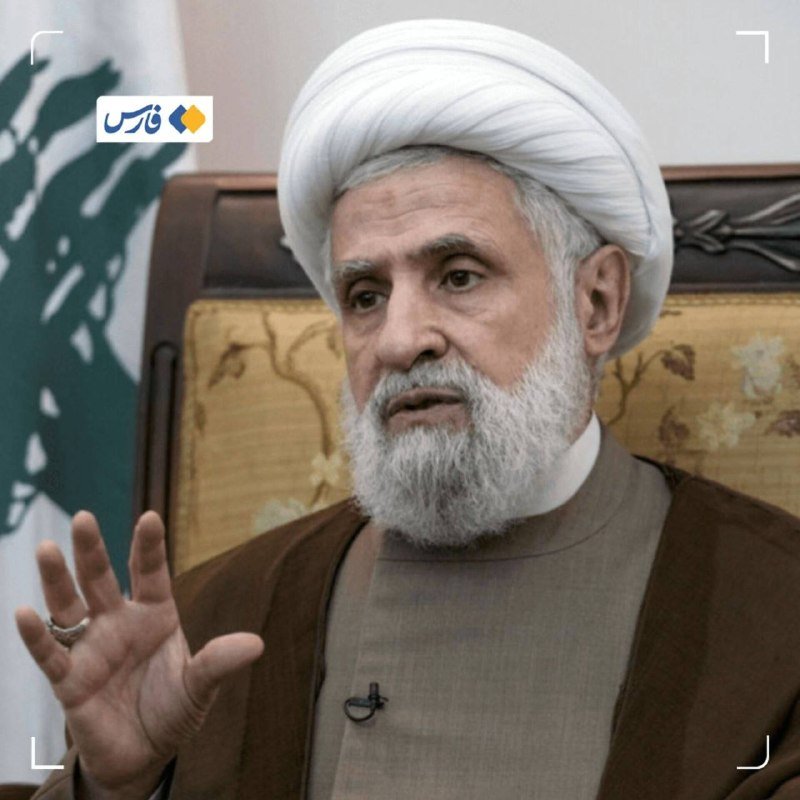
On 21 June 2026, within a thirteen-minute window between 14:25 and 14:38 UTC, the public posture of the United States and the Islamic Republic of Iran hardened into something closer to a standoff than a negotiation. Iran's President Masoud Pezeshkian declared, in remarks carried by the Telegram channel of his English-language translator, that Tehran "will never give up our right to enrich uranium" and that "the other side will have no choice but to accept this." Thirteen minutes later, a separate account relayed Donald Trump's response on Truth Social: if Iran does not restrain Hezbollah from "causing trouble" in Lebanon, the United States will attack Iran again. A third post, timestamped 14:36 UTC, framed the exchange as a direct rebuttal — Pezeshkian's line followed by Trump's: "He better watch his words. He better fix the situation." For readers who have spent the past two years watching a serial escalation calcify into something more durable, the sequence is familiar in shape but sharper in temperature than at any point since the June 2025 ceasefire.
What was actually said
The Iranian statement, as relayed by the English-language Telegram channel handling Pezeshkian's office, is a restatement of a familiar red line, not a doctrinal innovation. Tehran's negotiating position since the collapse of the 2015 Joint Comprehensive Plan of Action has been that indigenous enrichment is non-negotiable; the wording "we will never give up" simply formalises what every Iranian lead negotiator has said in private and public since at least 2021. The novelty is the audience. The remarks were issued at the moment Hezbollah's posture in Lebanon — long tolerated as a pressure point against Israel rather than a stand-alone issue — has become, in Trump's framing, the proxy battleground on which the bilateral relationship now turns.
The counter-narrative
Read from Tehran's side, the exchange looks less like a provocation than a structural defence. Pezeshkian's English-translated statement frames enrichment as a sovereign right and a fait accompli — "the other side will have no choice but to accept." The implied read: any deal worth signing is one in which the United States signs something resembling Iran's existing programme, not one in which Tehran dismantles it. Middle East Eye's parallel reporting on Trump's Truth Social post — that the US would resume strikes unless Tehran suppresses Hezbollah — supplies the counterweight. The two positions are not, strictly, about the same subject. Enrichment is a question of Iranian capability inside Iranian territory; Hezbollah is a question of Iranian behaviour on Lebanese territory. By yoking the two in a single ultimatum, the White House is asking Tehran to choose which lever it values more. From Tehran's vantage, the demand is not a concession but a transfer of strategic depth.
The plain-language frame
What is unfolding is a contest over what an Iranian commitment actually has to contain to qualify as compliance. The pattern is older than this exchange: a dominant power defines the agenda, a regional power draws a line, and the question becomes which line snaps first. The unusual feature here is the speed — two rhetorical positions issued inside the same news cycle, with both sides treating the other's words as casus belli. The non-proliferation machinery, which once sat at the centre of this dispute, has been displaced by an immediate political test: will Iran act against a non-state ally, and will the US calibrate its response to that answer rather than to enrichment itself?
Stakes and what comes next
The first-order stakes are in Lebanon. A US strike triggered by Hezbollah's behaviour, rather than by a discrete Iranian action, would be the first US attack on Iran responding to a third country's politics — a precedent that rewrites the rules of attribution. The second-order stakes are at the negotiating table. If Pezeshkian's red line holds, the negotiating space collapses to either an unannounced capitulation or an open-ended crisis; if it bends, the political cost inside Iran falls on a leadership already strained by economic pressure. The third-order stakes are nuclear. A US administration willing to re-strike on a Hezbollah-triggered pretext has effectively decoupled the uranium question from the military question, which means the leverage that was supposed to come from sanctions and isolation no longer maps cleanly onto the bomb's clock.
The honest register: the sources covering this exchange are Telegram relay accounts and a single Middle East Eye report on the Trump Truth Social post. None of the wire services cited in this article have yet published a corroborating story with on-the-record sourcing. What is verifiable is the text of the statements themselves and the timing of their release. What remains uncertain is whether the exchange represents an actual policy inflection inside either government, or the familiar choreography of leaders performing for domestic audiences while diplomats work behind closed doors. Both readings are plausible. The dominant framing — that we are watching a march toward renewed conflict — holds only if one assumes the statements are doing the work that policy has not yet done.
Monexus framed this as a structural contest over what compliance means, rather than as either a Trump provocation or an Iranian red line. Telegram relay accounts are cited as the primary wire for the Iranian statement; Middle East Eye supplies the corroborating Trump post.
Wire provenance
This editorial synthesis draws on the following public wire/social posts:
- https://t.me/englishabuali/1234
- https://t.me/operativnoZSU/1234
Follow the event.
These dated source records provide context. They do not retrospectively verify this archive article.
Separate what the nuclear watchdog reported from what it could not determine after the June 2025 strikes.