HBO Without the Cable Baggage: Inside the Warner Bros. Discovery Split and What It Says About Streaming's Next Phase
Warner Bros. Discovery's announced split is not a technology decision — it is a catalog decision. The company is finally admitting that HBO and CNN belong to different industries, and the streaming wars are about to look very different.
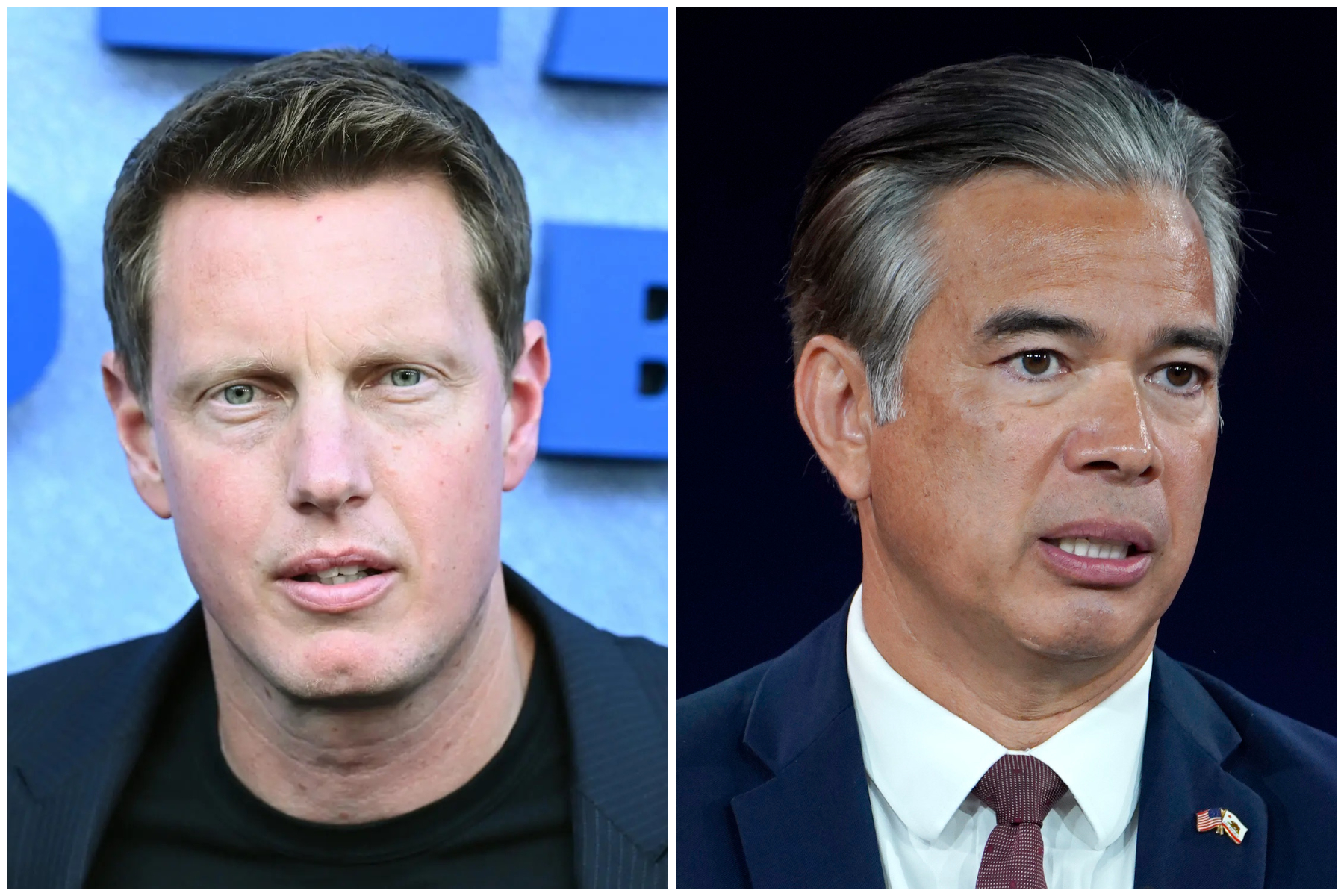
On 18 June 2025, Warner Bros. Discovery confirmed what a 59% drop in its share price since the 2022 AT&T-Discovery merger had been telegraphing for months: the company is breaking itself in two. By mid-2026, shareholders will hold two separate publicly traded entities. Global Networks — CNN, TNT, TBS, the cable portfolio — will be run by CFO Gunnar Widenfells. Streaming & Studios — HBO, HBO Max, and the DC universe — will be led by David Zazlov, who received options on roughly 21 million shares last week valued at more than $200 million, with a pay package that could exceed $150 million if post-split price targets are hit. To handle its $35 billion-plus debt load, Global Networks will retain a 20% stake in the streaming entity.
The split is being framed in some quarters as a cost-cutting exercise. It is not. It is an admission that HBO and CNN were never the same kind of asset. They share a corporate parent, not a business model.
That distinction matters enormously for the streaming wars, because the strategic logic of the next phase of competition will be decided by how cleanly media companies can separate the cash-generative, IP-heavy businesses from the linear-TV businesses that are slowly bleeding out.
What WBD is actually doing is splitting its intellectual property from its distribution. HBO is, at this point, a library — Westworld, Succession, the Game of Thrones catalog, the DC film slate, a growing Max originals pipeline. It is also a brand that, as Stratechery's Ben Thompson once put it, was "not TV" before AT&T decided it should be a "consumer frontend for a de facto Netflix competitor." That was always going to be a hostile environment for a cable-era premium cable network. Inside Streaming & Studios, free of CNN drag and free of Discovery reality-TV cash-flow obligations, HBO Max can be priced, financed and programmed like Netflix — not like a channel that happens to stream.
CNN goes the other way. It is a high-cost news operation whose economics depend on affiliate fees paid by the very cable bundle that is contracting every quarter. Stripped of HBO's premium glow, Global Networks becomes a pure-play cable company. Widenfells' job is to manage the decline and service the debt. That is not glamorous, but it is honest.
The IP/catalog split also explains the structure of the payout. Zazlov's options vest on share-price targets, not on revenue or subscriber numbers — a sign that the board is pricing him on the multiple Netflix trades at, not the multiple Comcast or Paramount does. Twenty-five times earnings, the kind of figure Netflix has commanded since 2023, would value Streaming & Studios several multiples higher than WBD's current blended valuation. WBD's enterprise value has been trapped by the cable assets' declining cash flows; the split removes that ceiling.
The second-order implication is for the rest of the legacy media stack. Paramount has been pursuing its own Skydance-driven restructuring. Comcast is reportedly weighing a Versant cable spin-off. Disney has, by general acknowledgement, the cleanest split in its bones — Hulu, ESPN and the parks vs. the linear networks — but management has so far declined to perform the surgery. WBD's move, if the share price responds in the way management clearly believes it will, makes the Disney case politically harder inside the C-suite. Bob Iger's successor will eventually have to answer the question: why are we still bundling ESPN with ABC?
There is a counter-story, and it is worth taking seriously. Cable is not yet dead. CNN still generates real affiliate revenue; TNT still has the NBA (until that contract expires); Discovery's lifestyle channels still rank in the top quartile of US cable. A clean split assumes two things: that the streaming entity can grow ARPU without the cross-promotional firepower of the cable bundle, and that the cable entity can service its debt without that same promotional lift. Neither is guaranteed. Critics inside the analyst community have pointed out that HBO Max's own churn rate has not improved at the rate Netflix's did after the latter's 2023 password-sharing crackdown. WBD is making a bet that HBO's brand alone is a sufficiently powerful acquisition tool.
The structural frame is the same one that has been reshaping American media for a decade: the unbundling of the cable bundle. Streaming is, at its core, a distribution technology. But the assets that are valuable in the streaming era are not distribution assets — they are content assets. Cable companies owned distribution. Netflix owns distribution too, but the moats in the next decade will be catalog and IP. WBD's split is, in plain terms, a recognition that the parent company had been confusing two different businesses for one.
Stakes are straightforward. Streaming & Studios shareholders get the upside of a re-rated Netflix-style equity; Global Networks shareholders get a yield play with declining cash flows and a heavy debt load. Talent will follow the equity currency that appreciates. HBO's creative bench, in particular, has long complained internally about the gravitational pull of CNN's news-cycle drama on corporate decision-making. Removing that friction is, on its own, a strategic asset.
Whether the bet pays off will be visible inside eighteen months. If HBO Max's ARPU growth tracks Netflix's, the Streaming & Studios entity will trade at a premium multiple and vindicate the board. If churn stays elevated and ARPU stalls, Global Networks will be left holding the bag. Either way, the lesson for Disney, Comcast and Paramount is now in writing: the bundle was a 1990s answer. The catalog is the 2020s one.
The streaming wars are not, in the end, about technology stacks. They never were. They are about who owns the rights to the stories people will pay to watch for the next decade. Warner Bros. Discovery has finally decided which side of that question it is on. The next move belongs to Iger.
Wire provenance
This editorial synthesis draws on the following public wire/social posts:
- https://www.youtube.com/watch?v=TPzjnu1SAAo