Sharing the pitch: why this World Cup lands differently for parents and children
A father-and-son tale from the stands and Dutch royals watching two flags fly on the same day capture what a first World Cup with a child actually feels like.
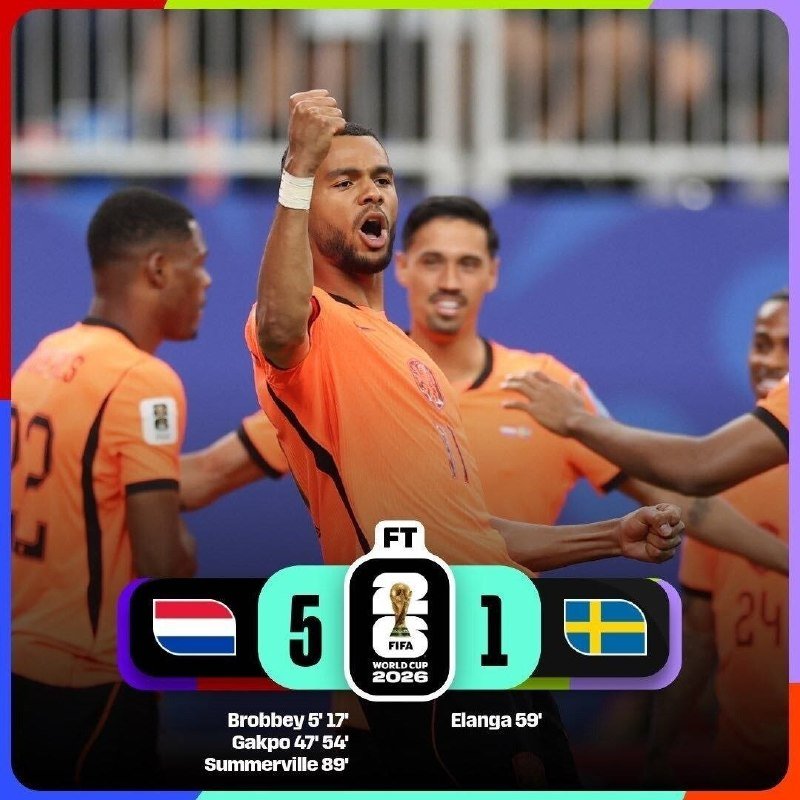
The first World Cup a parent shares with a child is not really a football match. It is a transfer of vocabulary — the long walk from the metro, the catalogue of songs, the player whose shirt number you can finally explain without checking your phone. On 21 June 2026, two pieces from BBC Sport made that small civic ritual visible: one about a father taking his son to his first tournament, and another about Dutch royals watching the Netherlands and former colony Curaçao both play on the same Saturday.
The thread connecting them is structural as much as sentimental. A World Cup staged across three North American countries compresses time zones, distances and diaspora into a single matchday. For parents, that compression produces a once-in-a-generation moment of shared attention. For smaller nations drawn from a global Dutch-speaking diaspora, it produces something rarer still: a day when two national shirts are equally legitimate.
A first tournament is mostly logistics
BBC Sport's account of a parent bringing a child to a maiden World Cup reads less like match reporting than a field guide to the small failures that make the day work. Which gate to enter, which scarf to pack, the moment a six-year-old finally understands why the crowd roars at a corner kick. There is no headline result in the piece. The point is the ritual itself — that the wide-eyed wonder through which a child sees the tournament is what gives the event its civic weight.
The reporting lands a quiet truth about modern fandom: the gatekeepers of any sport are increasingly not the broadcasters or the federations but the parents willing to do the work of translation. A kit, a hotel, a long airport queue, a packet of crisps sold at three times the going rate — these are the unit costs of producing a fan.
A royal schedule that doubles as a post-colonial map
The second BBC Sport piece is sharper, because it shows the geography of identity rather than just the geometry of the family. Members of the Dutch royal family, the broadcaster noted, managed to see both the Netherlands and Curaçao play on the same Saturday — roughly 5,000 miles apart on the Caribbean side of the Atlantic. The detail matters. Curaçao's national side plays in CONCACAF and, as a constituent country of the Kingdom of the Netherlands, travels on a Dutch passport. Their presence at the World Cup is the footballing equivalent of an imperial ledger being quietly balanced.
It also shows how a tournament broadcast on European primetime tends to flatten this. Dutch viewers see Oranje. Curaçaoan fans see their own flag, anthem and crest for the first time on the biggest stage. The royals, uniquely positioned to attend both, occupy the only seat in the house from which the two fixtures are the same fixture.
What the cameras miss
The wider story here is the one neither piece quite tells. Mega-events are sold on television as a parade of national anthems and a ranking of squads, but the lived experience — for a parent in a stadium concavity, for a Curaçaoan supporter in a borrowed shirt — is the opposite of abstraction. It is granular, embodied and unphotogenic.
A first World Cup with a child is also, increasingly, a first World Cup at a price point that excludes a lot of parents. Hospitality, ticket bundles and the long-haul travel demanded by the three-country footprint of the 2026 tournament push the realistic cost well above what working families in most participating countries can absorb. The BBC does not quantify that gap; the framing of both pieces assumes attendance. That is a real omission.
Stakes, plainly stated
If the tournament delivers on its stated ambition to be the most-watched in history, the production of new fans — the children who leave this month believing a World Cup is something that happens in their lifetime — will be its quietest and most durable legacy. The Dutch royal family can absorb the cost of two stadium visits in one day. Most families cannot. The structural question the 2026 tournament will eventually be judged on is whether the federation, the broadcasters and the host cities did anything to bring the second group along.
The honest answer in late June is: the evidence is not yet in. What is in, as of 21 June 2026, is the picture of a father pointing at a pitch and a royal box split across two national anthems. Both are forms of inheritance. The first is the one the tournament needs to scale.
This publication framed both items as inheritance stories — one familial, one post-imperial — rather than as match previews, which is where the BBC's own headlines largely sit.
Wire provenance
This editorial synthesis draws on the following public wire/social posts:
- https://t.me/s/BBCWorldoffl