Zelensky, Tusk and the unhurried diplomacy of a war that won't pause
A single day of presidential messaging — drones promised at 3,000 km, threats issued at the Belarusian border, a public invitation to Warsaw — exposes how a wartime alliance negotiates its history in real time.
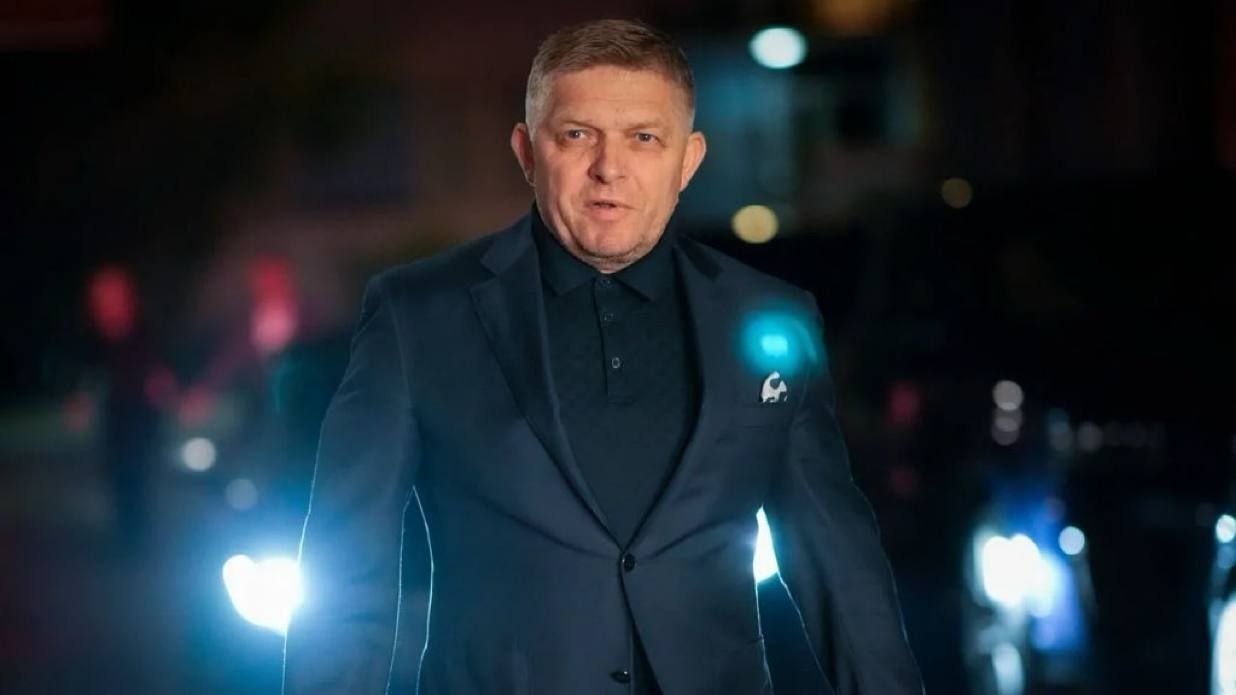
At 20:26 UTC on 21 June 2026, Polish Prime Minister Donald Tusk made an unusually long public comment about a neighbour he has spent four years trying not to offend. Volodymyr Zelensky, Tusk said, was aware of the historical issues between Warsaw and Kyiv concerning the shared past and the decisions involving the glorification of the Ukrainian Insurgent Army (UPA) through naming military units after its commanders. Tusk's tone, by the reading of the Telegram channel that carried his remarks, was matter-of-fact: the dispute exists, the Ukrainian president knows it exists, and the dispute will not vanish because the country is at war.
Eight minutes later, at 20:34 UTC, Zelensky answered from Kyiv. Belarusian border retranslators — radio relay equipment positioned along the frontier and used, in his account, to guide fire on Ukrainian civilians — had one week to be removed or switched off. If they were not, Ukraine would remove them itself. He also raised the pressure on Belarus's oil refining capacity, a sector that sits uncomfortably close to the revenue lines of the Lukashenka regime. Three minutes after that, at 20:35 UTC, Zelensky widened the frame again: Ukrainian drones, he said, would reach targets more than 3,000 kilometres from their launch points. Then, at 21:09 UTC, came the line that did the most diplomatic work of the day. Addressing Poland, Zelensky said Kyiv and Warsaw share a common enemy — Russia — and are "definitely not enemies of each other." The Polish president, he said, should come to Ukraine.
Read together, those four messages form a single negotiation. They are also a near-perfect illustration of how a wartime alliance conducts diplomacy in the open: public, in Telegram-friendly chunks, timed to the news cycle, and calibrated to multiple audiences at once. The subtext of the day is that the war is no longer a single theatre but a constellation of them — the Belarusian border, the Russian energy sector, the long-range strike programme, and the Polish-Ukrainian historical file that never quite closes.
This publication's reading of the 21 June messaging is that Zelensky is not improvising. The four interventions form a coherent diplomatic package, addressed to four different audiences in sequence. To Warsaw, the message is: we will not weaponise UPA history against you, but we will not rename our brigades either. To Minsk, the message is: the equipment that helps kill our civilians has seven days. To Moscow, the message is: the strike envelope is expanding, and the public announcement of that envelope is itself a pressure tool. To the Ukrainian public, the message that closes the day — at 21:20 UTC, Zelensky explaining that his daughter studies in Ukraine because "it is important not to hear secondhand what your country is going through" — is that the leadership's own family is on the same side of the border as the rest of the country.
A single day, four audiences, one negotiation
The temptation in Western coverage is to treat the Poland and Belarus strands as separate stories. They are not. Warsaw is the keystone of Ukraine's logistics, the corridor through which the bulk of Western military aid physically reaches the front, and the political capital most exposed to a right-wing opposition that frames historical grievance as a sovereigntist cause. Minsk, by contrast, has been the quiet enabler of the war from the north, providing Russian forces with territory from which to launch missile and drone strikes into northern Ukraine. Targeting Belarusian oil refining is not a strategic curiosity; it is a way of imposing costs on the Lukashenka regime without the diplomatic price of striking Russian territory directly.
Zelensky's 21 June intervention is unusual in that it addresses both theatres in a single afternoon. The Belarus ultimatum, delivered at 20:34 UTC, gives Minsk a defined window — one week — to act on equipment that, in the Ukrainian account, is being used to target civilians. The Poland intervention, delivered at 21:09 UTC, makes the more delicate concession explicit: "We are definitely not enemies of each other." It is the kind of sentence that costs the speaker something to say, and is therefore useful to read as a price paid for something else. What is being purchased is Polish patience on the UPA question, and Polish willingness to absorb another cycle of historical grievance-management from its domestic politics.
For Polish readers, Tusk's own intervention is the more revealing document. By publicly enumerating the historical files still in dispute — UPA-glorifying unit names, decisions on shared memory — the Prime Minister is doing two things at once. He is signalling to a domestic audience that the government has not forgotten the file, and he is signalling to Kyiv that the file remains a load-bearing element of the bilateral relationship. The phrasing — "Zelensky is aware" — is diplomatic code for: this conversation is happening, but it is not yet resolved.
The Belarus vector: equipment, oil and a one-week clock
The Belarus strand deserves more weight than it usually gets. Ukraine's northern border, in the assessment that has hardened over four years of full-scale war, is not a passive line. Radio relay infrastructure placed on Belarusian territory and oriented southward has been a persistent feature of Russian strike operations, particularly for Shahed-type drone guidance and the calibration of glide munitions. The Ukrainian ultimatum of 21 June frames this infrastructure as a target, with a defined deadline and an implied enforcement mechanism.
The accompanying reference to Belarusian oil refining is the more interesting move. Belarus's refining sector — centred on the Naftan plant in Novopolotsk and the Mozyr refinery — has been one of the economy's most sensitive assets, supplying both domestic demand and a thinning export book that routes partly through Russian ports and partly through the Baltic. Striking those facilities, as Ukraine has signalled it is willing to do against Russian energy infrastructure, raises the cost of Minsk's complicity without requiring the political step of striking Russian soil directly. The logic is: if you provide the launchpad, you provide the bill.
What remains unclear is the technical means. The Telegram framing does not specify the platform or the warhead, and the one-week ultimatum is short enough that the diplomatic cost of non-compliance is meant to be the lever, not the kinetic one. Whether the Belarusian side moves on the equipment in time is the question the next seven days will answer.
Long-range strike as statecraft
The 3,000-kilometre figure, delivered at 20:35 UTC, is best read as a public calibration of expectations rather than a tactical briefing. Ukraine's deep-strike programme has visibly expanded across 2025 and into 2026, and the public announcement of a 3,000-kilometre envelope is itself a tool. It puts a number into circulation that Russian planners must price into their own risk calculations — not as a confirmed capability, but as a credible threat.
There is a parallel in the rhetorical history of this war. Early in the full-scale invasion, when Ukraine lacked the means to strike Russian logistics, the public-facing claim of intent was itself a weapon: a way of shaping adversary decisions and reassuring domestic audiences that the asymmetry was being addressed. The 21 June figure plays a similar role, but at a different scale. The 3,000-kilometre envelope, if even partially realised, places within theoretical range a much wider set of Russian assets — military-industrial sites in the Urals, energy infrastructure in the Volga region, and transport nodes well beyond the current Ukrainian strike footprint.
The accompanying phrase — "The war must return" — is the editorial heart of the statement. Return where, and to whom, is left deliberately undefined. The implied audience is the Russian public, and the implied message is that the cost of the war is no longer being absorbed only on territory already occupied or struck.
The UPA question, and the alliance's load-bearing file
The most politically fragile item in the 21 June package is also the oldest: the naming of Ukrainian military units after figures associated with the UPA. The Ukrainian Insurgent Army fought Soviet and Polish forces in the 1940s and 1950s, and its commemoration in modern Ukraine is read in Warsaw as a wound that has never properly healed. The 2023 episode, in which a Ukrainian brigade was named after a UPA-associated figure and Polish diplomacy reacted sharply, is the reference point. Tusk's 21 June remarks suggest the file is open again.
Zelensky's response is to address Warsaw personally. The President of Poland, he said, should come to Ukraine. It is an invitation, but it is also a reframing. By moving the conversation from historical grievance to face-to-face diplomacy, Zelensky is changing the venue of the dispute. Warsaw's instinct is to handle the UPA question through joint commissions and quiet diplomatic notes. Kyiv's instinct, in 2026, is to put the matter in front of cameras and ask the Polish head of state to engage with it directly. The two instincts are not compatible, and the next weeks will show which one prevails.
For the broader Western alliance, the UPA file is a useful reminder of an uncomfortable truth: the most consequential wartime coalitions are not held together only by shared threat perception. They are held together by the patient, low-grade work of managing the disputes that the shared threat has not dissolved. Those disputes — historical memory, agricultural trade, migration, the political weight of diaspora communities — are the file that is always open. The 21 June messaging is what managing that file looks like in public.
What the day does not tell us
Three uncertainties hang over the 21 June package. The first is operational. Telegram-channel reporting on the Belarus ultimatum and the 3,000-kilometre strike claim does not specify the technical means or the timetable, and the one-week deadline on the retranslators is short enough that it may be read as a diplomatic instrument rather than a kinetic one. The second is domestic. Zelensky's reference to his own daughter studying in Ukraine is a personal aside, but the political subtext — that the leadership's family shares the risk of the population — is the kind of claim that is difficult to verify and easy to over-interpret. The third is the Polish. Tusk's enumeration of the historical files in dispute is unusually direct, and the reaction from the Polish governing coalition, the opposition, and the Ukrainian embassy in Warsaw over the coming days will tell us whether the file is being managed or whether it is being allowed to drift.
The honest summary is that the 21 June messaging is best read as a working draft of the alliance's next phase, not a finished document. The headlines are firm; the operational details are thin; the diplomatic timing is dense. The war, as the day makes plain, is not a single story with a single narrator, and the diplomacy around it is correspondingly complex. The most that can be said with confidence is that on 21 June 2026, all four parties — Kyiv, Warsaw, Minsk, and by extension Moscow — were told something in public, and that what they were told was intended to constrain the choices available to them in the days that follow.
— Monexus desk note: the wire coverage of 21 June will likely lead on the 3,000-kilometre strike claim, because that is the headline a Western reader will click. Monexus has led instead on the diplomatic package, because the strike claim only makes sense once the Belarus ultimatum, the Poland invitation, and the historical-grievance management are read together. The day's subtext is that Ukraine's wartime statecraft has grown more sophisticated, not less, and that the load-bearing file inside the alliance is the one Warsaw most dislikes being asked to carry.
Wire provenance
This editorial synthesis draws on the following public wire/social posts:
- https://t.me/ClashReport/
- https://t.me/ClashReport/
- https://t.me/Kyivpost_official/
- https://t.me/wartranslated/
- https://t.me/ClashReport/
- https://en.wikipedia.org/wiki/Ukrainian_Insurgent_Army
- https://en.wikipedia.org/wiki/Naftan
- https://en.wikipedia.org/wiki/Mozyr_oil_refinery
Follow the event.
These dated source records provide context. They do not retrospectively verify this archive article.
A dated voting record is evidence of one decision. Use the original UN record before turning it into an alignment label.
Visual explainer · historical vote of 2022-03-02 →