Amazon Drops Sam Altman Biopic 'Artificial' After Deepening OpenAI Partnership
The retail and cloud giant has shelved a film chronicling the November 2023 OpenAI boardroom crisis, days after announcing an expanded commercial relationship with the very company its movie was about.
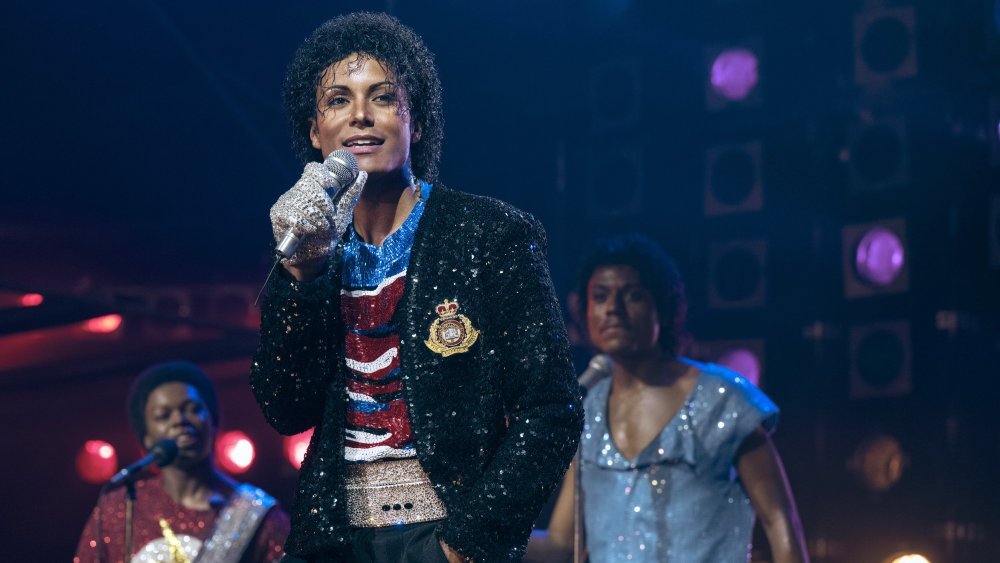
Amazon has shelved Artificial, a feature-length dramatisation of the November 2023 leadership crisis at OpenAI, according to a 20 June 2026 post on X by the account @pirat_nation. The film, which had been in development as part of MGM's slate following the studio's 2022 absorption into Amazon, traced the five-day boardroom revolt that briefly ousted Sam Altman as chief executive and the staff revolt that returned him. The decision, the post argues, follows Amazon's expanded commercial partnership with OpenAI — a relationship that makes a hostile on-screen portrait of Altman's company a commercially inconvenient artefact.
If accurate, the episode is more than a piece of corporate housekeeping. It places one of the most powerful distribution platforms in entertainment on the same side of the table as the subject of a film it had been financing, and removes the most public form of accountability — narrative cinema — at the moment when the partnership is deepening. The film industry has long understood that studios bury projects for commercial reasons; what is unusual here is the speed and the symmetry with a separate corporate announcement.
What the post claims, and what it does not
The @pirat_nation post is the only direct source for the shelving. It does not name studio executives, cite internal Amazon memos, or quote a company spokesperson. It frames the decision as a direct consequence of the OpenAI partnership without offering documentary evidence — a posture that makes the report a lead rather than a verdict. The OpenAI-Amazon commercial arrangement itself is separately verifiable: Amazon announced in late 2024 a multi-year collaboration with OpenAI to host the company's inference workloads on AWS, an arrangement that has been periodically expanded through 2025 and into 2026.
In short, the fact of the partnership is independently solid. The causal claim — that the film was killed because of it — is currently a single-source allegation. That distinction matters for readers trying to weigh the story.
The film that was, and the crisis it was built on
Artificial was conceived as a dramatisation of the five days between Altman's 17 November 2023 dismissal by the OpenAI board and his reinstatement on 22 November, an episode in which more than 700 of the company's roughly 770 employees signed a letter threatening to follow him out the door. The project fit a familiar template — the visionary founder, the panicked board, the institutional rebellion, the triumphant return — that has animated Silicon Valley biopics since the late 2010s.
The OpenAI board's stated rationale at the time was that Altman had been "not consistently candid in his communications." That language was widely read as a proxy for concerns about the pace of commercialisation, the structure of the company's governance after its 2023 transition to a capped-profit model, and Altman's parallel ventures. The staff revolt that returned him was, in effect, a referendum on those concerns by the technical workforce. Artificial, by all accounts, intended to dramatise that referendum.
A platform that owns the story, and the studio that owns the film
The structural fact that gives this episode its edge is concentration. Amazon's 2022 acquisition of MGM folded a nearly century-old studio into the same corporate envelope as Prime Video, the second-largest subscription streaming service in the United States, and AWS, the cloud platform that now hosts a meaningful share of OpenAI's production inference. There is no public evidence that Amazon's relationship with OpenAI required suppression of the film, nor any indication that OpenAI asked for the project to be killed. But the optics are unusually direct: the same balance sheet would have carried both the rights to dramatise an OpenAI crisis and the contract to compute OpenAI's next generation of models.
The pattern is not new. Studios regularly shelve projects that complicate active business relationships; the independent film world has, at various points, complained that the consolidation of distribution into five or six large platforms has narrowed what kinds of stories survive. What Artificial adds to that familiar tension is the subject matter itself — a company whose product has become central to the cost structure of the studios that might tell stories about it.
Counter-narrative: the boring explanation
There is a more prosaic read. Biopics of unfinished or unresolved stories are commercially hard. Altman remains in post, the underlying governance fight has continued to surface in lawsuits and regulatory filings, and any dramatisation would have to take a side on questions that are still contested in court. A studio with cold feet about a $100m-plus production can plausibly point to script problems, casting disputes, or simply a model in which audiences have moved on from the moment the film was meant to capture. The OpenAI partnership would then be a coincidence of timing rather than a cause.
That explanation is not falsified by the public evidence. But it leaves unanswered why Amazon would greenlight the project, presumably with full knowledge of its OpenAI commercial trajectory, and then reverse course after announcing a deeper partnership — rather than before announcing it, when the shelving would have been less conspicuous.
Structural frame
The underlying pattern is platform consolidation meeting the appetite for adversarial journalism. The fewer the independent distribution channels, the more the financial cost of telling inconvenient stories about the companies that own those channels rises. Artificial is not a banned film in any formal sense; it is a project whose economics stopped working. The distinction is the point. There is no editor to rally, no censor to confront, no order to defy — there is only a spreadsheet.
What remains uncertain
The sources do not specify whether the Artificial script, casting, or production status had advanced far enough for the shelving to be reversible. They do not name an Amazon spokesperson on the record, nor do they disclose whether the film's rights might be shopped to a non-aligned distributor. The causal link between the OpenAI partnership and the shelving is asserted by a single account and not, at this writing, corroborated by an outlet with editorial infrastructure. Monexus treats the shelving as reported but not adjudicated.
Stakes
If the shelving stands and no independent buyer emerges, the public-facing dramatisation of the most consequential governance crisis in contemporary AI is quietly retired by the same conglomerate that now co-signs OpenAI's commercial future. If it is acquired elsewhere, the story becomes one about the resilience of independent distribution. Either outcome will be read, fairly or not, as evidence about how comfortable the largest platform companies have become with the stories told about their suppliers — and about themselves.
— Monexus framing note: this piece leads with the single on-platform report, separates the verifiable partnership fact from the single-source causal claim, and treats the shelving as a structural story about platform consolidation rather than as a morality play about any individual executive. Where the public evidence is thin, the article says so.
Wire provenance
This editorial synthesis draws on the following public wire/social posts:
- https://x.com/pirat_nation/status/